Soil Stabilization Services in San Jose, CA

Testimonial

Verified Client Reviews

The land characteristic of San Jose is influenced by a combination of hillside areas, valley-floor areas, and fast-growing commercial areas- each one has soil conditions, which react differently throughout the year. The houses in the Almaden Valley, Evergreen, and the Silver Creek hillsides can be located on clay that swells up greatly with the winter rains and releases with a lot of force come summer time, which is long and hot. Even flat land in the areas of Cambrian, Blossom Valley and Japantown are prone to soil movement that raises uncertainties of soil movement that progressively destabilizes the structural support.

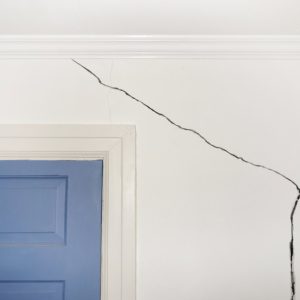
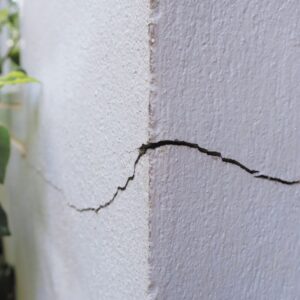
Minor indications, like sinking walkways, exterior cracks, soil wedging away along exterior edges or alterations in door and window swing, are usually good signs of initial soil instability. Our team is conversant with the intricacies of the San Jose soil types and that provide customized stabilization plans that enhance ground performance of the homes, landscaping, and structural safety in the long term.

Choosing the Best Soil Stabilization Method

The appropriate use of stabilization methods is dependent on the type of soil, the amount of moisture and the long-term objectives on performance. In San Jose where there is clay, fill soil and sandy pockets, the choice of method should be accurate.

We begin with soil analysis in terms of structure and density and moisture behavior. This will assist us in deciding on the degree of chemical stabilization, mechanical reinforcement, compaction enhancement or subsurface strengthening which is the dependable outcome. The site specificity of the strategy and consideration of the terrain and structural requirements of the property will guarantee that soil performance will not be subject to the seasonal changes in the climate of San Jose.

Why Our Methods Are the Most Effective

San Jose needs stabilization measures considering the intricate geology, urbanization and hillside dynamics. Our team applies the latest diagnostic equipment and established engineering standards to develop robust outputs that survive the changes in moisture as well as the changes in the structural load.

Engineered Solutions with Local Soil Research

Our plans are based on local data that is peculiar to the soil behavior of San Jose that will be compatible with the local landscape.

Exact Application to get to the highest strength

The approach by our team is to hit the layer of soils that are moving, without affecting the surrounding property.

Lasting Protection of Settlement

Our stabilization techniques reduce shrink-swell and compaction loss, thus giving foundations and other exterior embellishments with a reliable ground bearing.

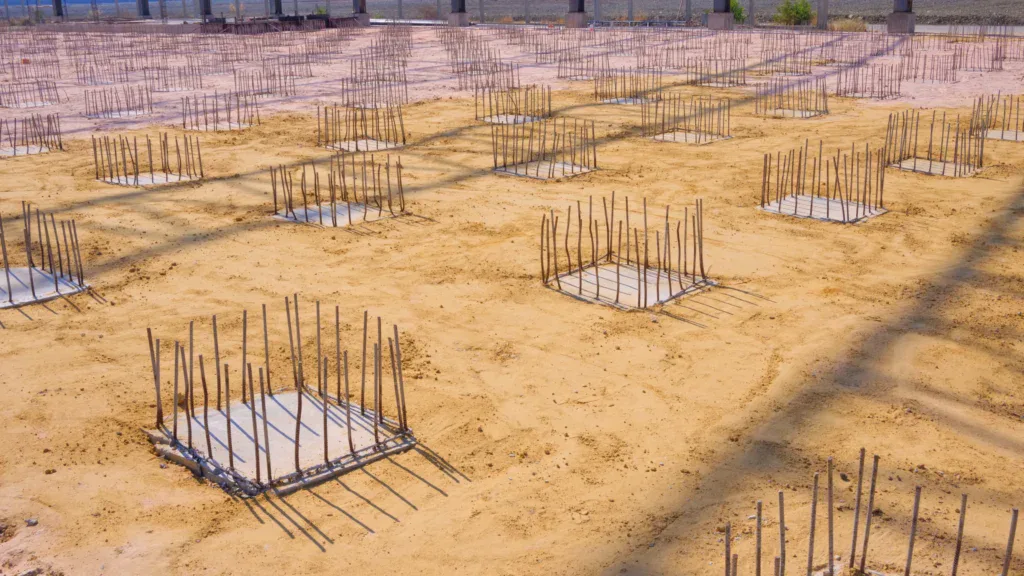
How Soil Stabilization Works Under Slab Foundations

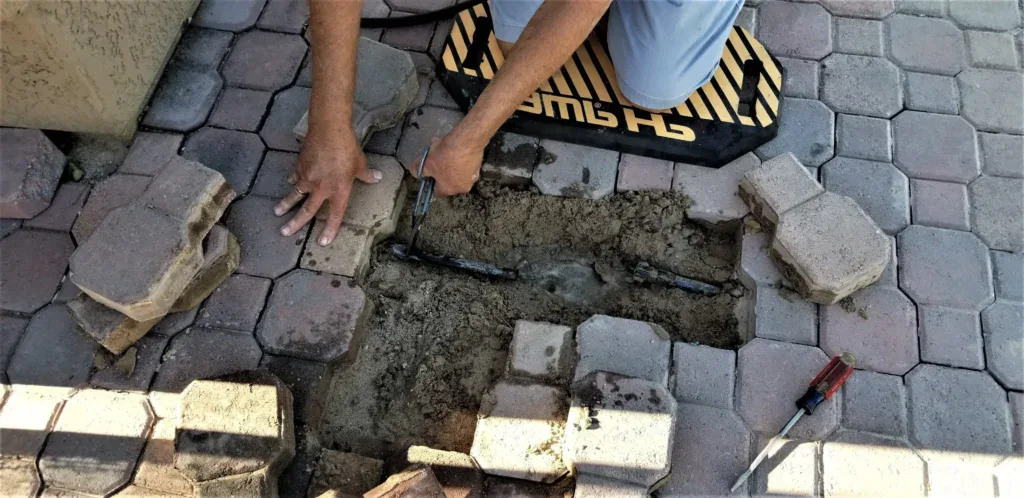
To stabilize soil under slab foundations, one needs knowledge of the impact of pressure, moisture and soil composition on the performance of load support. We look into the manner in which the slab interacts with the existing layers of soil before applying any technique and we find out what areas are mostly moved by it.

  • Locating Areas with Weak Support: We access soil pockets that are softened, compacted, or moved underneath the slab, which focus on areas where the settling is not uniform.
  • Stabilizing Deep Soil Layers: The ground layers are reinforced to create a uniform stable base that is able to sustain structural loads even during seasonal variations.
  • Enhancing Moisture Resistance Beneath the Slab: We make the soil more resilient such that it is not affected easily by changes in moisture making it swell, shrink, and permanently distort the slab.

These measures permit the slab foundation in San Jose to have a level support despite changing soil conditions with time.

How Soil Stabilization Helps with Landscaping

The stabilized soil not only helps in supporting foundations, but also help in preservation of landscaping features over a long period of time. Soil movement is a common occurrence in the San Jose neighborhoods where the soil changes every season and therefore the patios, retaining walls, plant beds and walkways will shift out of place unless there is some form of reinforcement of the ground beneath them.

The stabilization of the soil enhances the foundation on which the outdoor features are built on, decreases the erosion caused by irrigation or rainfall, and instead, the garden spaces are not sinking or sliding. This forms a more predictable landscape ground covering in which there is no up and down continuation of hardscaping or soft scaping that renders such areas functional and attractive throughout the seasons.

Get Stable Ground Now

The problems of soil just continue to become more disruptive over time, particularly in the changing terrain of San Jose. Our experts are able to inspect the soil under your foundation and outdoors areas, identify the unknown weak areas, and implement reinforcement based on your property. Call now to find competent stability in the soil before minor modifications turn out to be expensive issues.

Noticing any of these problems at home?

We’re here to help! Swiftly addressing these concerns is key. Our experts will promptly inspect and repair your foundation, ensuring the lasting strength and safety of your home. Reach out without hesitation for reliable assistance.

Crack in the wall of a home

Cracks in Interior Walls

Cracks in exterior wall

Cracks in Exterior Walls

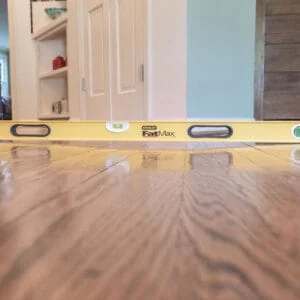
Sloping Floors

Sloping Floor

Foundation Repair Services

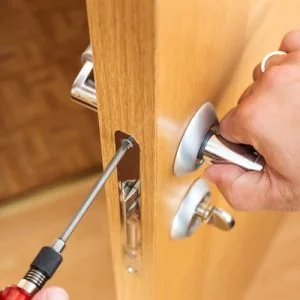
Sticking Door

Foundation Construction Services

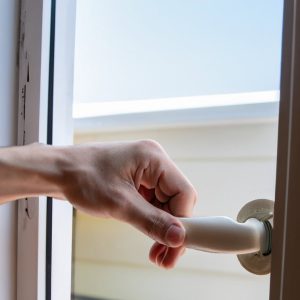
Sticking Window

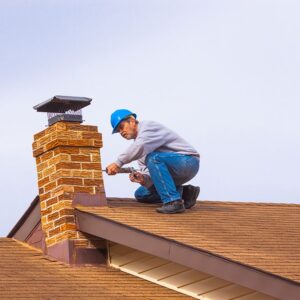
leaning-chimney

Chimney Leaning

Contact Us

East Bay Area

Communities We Serve.

We are happy to service communities throughout the East Bay Area and beyond. 

OUR SERVICES

Bay Area Foundation Contractor | Golden Bay Foundation Repair

img

Foundation Repair

Restore stability, fix cracks, and reinforce your foundation for lasting structural integrity

Read More
img

Foundation Inspection

Thoroughly assess foundation health, identify issues, and provide expert recommendations for maintenance.

Read More
img

Crawl Space Repair

Ensure a healthy crawl space environment by addressing moisture, insulation, and structural concerns.

Read More
img

Structural Replacement

Replace damaged or compromised structural elements with precision and quality craftsmanship.

Read More
img

Earthquake Retrofitting

Strengthen your property to withstand seismic activity, safeguarding against potential earthquake damage

Read More
img

Stem Wall Repair

Expertly repair and reinforce stem walls to maintain the overall stability of your property.

Read More
img

Drainage Services

Efficient drainage solutions to manage water runoff and prevent issues such as flooding and soil erosion. Our expert team designs and installs drainage systems tailored to your property's needs, ensuring effective water management.

Read More
img

Push Pier Foundation Repair Systems

Stabilize sinking foundations with push piers that reach load-bearing soil. Restore structure and prevent further settlement.

Read More
img

Foundation Replacement

Fully replace failing foundations with expert craftsmanship and durable materials for lasting structural strength.

Read More
img

Helical Pier & Push Pier Installation

Install helical and push piers to support foundations, lift settled areas, and ensure long-term stability.

Read More
img

Pier and Beam Foundation Repair

Repair damaged beams, replace supports, and level flooring to restore the integrity of pier and beam foundations.

Read More
img

Underpinning Services

Strengthen weak foundations by adding support beneath them, preventing movement and future damage.

Read More
img

Slab Foundation Repair

Fix cracks and unevenness in slab foundations to restore level surfaces and prevent structural issues.

Read More
img

Soil Stabilization

Improve ground support by treating unstable soil, reducing foundation movement and settlement risks.

Read More
img

Certified Soft Story Retrofit Experts

Trust our certified experts to retrofit soft-story buildings with precision, meeting all seismic safety standards.

Read More

People Also Ask

The longevity of soil stabilization depends heavily on the specific method used, soil conditions, and environmental factors. Generally, chemical stabilization using lime or cement can last for decades, often exceeding 20 to 30 years, when properly installed. Mechanical compaction, if left undisturbed, can remain effective for the life of the structure. However, in regions like Walnut Creek, where seasonal moisture changes and dry periods are common, the effectiveness can degrade over time if not maintained. For a deeper understanding of how these conditions affect your foundation, we recommend reading our internal article titled Why Slab Foundations Are Prone To Cracking In Dry Climates. At Golden Bay Foundation Builders, we assess each site to recommend the most durable stabilization approach for your specific property in Contra Costa County.

The primary difference between soil stabilization and soil improvement lies in their goals and methods. Soil stabilization focuses on altering the physical properties of the soil to increase its strength and durability, often through mechanical compaction or chemical additives like cement or lime. This process is critical for ensuring a stable foundation. Soil improvement, on the other hand, is a broader term that includes any technique to enhance soil performance, such as drainage control or moisture reduction, without necessarily increasing load-bearing capacity. For projects in Walnut Creek CA and Contra Costa County, understanding this distinction is vital. At Golden Bay Foundation Builders, we evaluate site conditions to determine whether stabilization or improvement is needed for long-term structural integrity.

For stabilizing soil in Walnut Creek and Contra Costa County, the choice between lime and cement depends on the soil type. Cement is generally better for granular soils like sand and gravel, providing rapid strength gain. Lime is superior for clay-rich soils, as it chemically alters the clay structure to reduce plasticity and swelling. At Golden Bay Foundation Builders, we often recommend lime for our region's expansive clay soils to prevent future foundation movement. For a cost-effective alternative on certain projects, our internal article What Is Poor Man's Concrete? discusses methods suitable for specific soil conditions. Always conduct a soil test before deciding, as the wrong stabilizer can lead to cracking or inadequate support.

To stabilize soil around your foundation, the most effective approach is to control water drainage and improve soil compaction. Ensure gutters and downspouts direct rainwater at least 5 to 10 feet away from the home. Grading the soil so it slopes away from the foundation is also critical. For more severe issues, such as expansive clay soils common in Walnut Creek CA, professional soil treatment or the installation of a deep drainage system may be necessary. For hillside properties in Contra Costa County, specialized techniques are required. For detailed guidance on this specific scenario, please refer to our internal article How To Stabilize Foundations On Hillside Properties Safely. Golden Bay Foundation Builders recommends consulting a geotechnical engineer for a tailored solution.

Google Yelp

Overall Rating

5.0
★★★★★

108 reviews