Soil Stabilization Services in San Francisco, CA

The Distinct landscape feature of San Francisco is dominated by steep slopes, reclaimed shoreline areas, as well as by thick layers of urban construction that are built and continued to be built over the decades. Districts like Twin Peaks, Noe Valley, Forest Hill, and Diamond Heights have been located on the slopes whose movements of soil are affected by the gravity and rainfall as well as seismic activities. In the meantime, such localities as Mission Bay, the Marina and South of Market are built on older fill material, which rapidly reacts to changes of moisture and to changes in groundwater. Such different soil profiles can be considered as having weak structural support which is not reinforced except through the use of some sure stabilization.

The indicators of early warning, including sinking pavers, cracks at the base of the walls, soil moving away of foundation or uneven walkways usually indicate a deeper problem under the surface. A combination of the hillside pressure, urban fill, and the frequent changes of moisture levels predetermines the fact that the soil instability may develop rapidly in San Francisco. The challenges are countered in our stabilization services by enhancing the foundation of homes, business premises, and new constructions in the entire city.

Understanding Soil Shrink-Swell Behavior

San Francisco has numerous soils with high clay content, particularly in high areas. When wet such soils swell at an incredible rate and during dry times contract, the stress under the foundations develops. One of the causes of settlement of the hillside homes is clay shrink-swell activity. When it is raining, the soil takes up water in huge quantities and swells up pushing structures up.

 The contraction that takes place when the soil becomes dry creates openings under foundations and hardscaping. Stabilization minimizes the effect of the moisture on the reactive clay and ensures that there are stable performances of soil throughout the year. This assists in avoiding sinking floors, cracks on walls and displacement of retaining systems. In much of San Francisco, controlled shrink-swell behavior is critical to long term structural reliability.

The Role of Vegetation in Stabilization of Soil

Planting materials are a natural resource that can be used to reduce erosion and enhance soil formation particularly in the hillside areas and coastal regions of San Francisco.

Improving Soil Structure with Root Systems

Soil particles are held together by the roots of plants making them cohesive and unlikely to surface during winter storms. This natural reinforcement is beneficial in maintaining slanting grounds.

Reduced Runoff in Heavy rain seasons

Vegetation reduces the velocity of storm water enabling the soil to absorb water in a more equal manner. This assists in limiting the washout as well as ensures that foundations are not eroded by water.

Enhancing Long-Term Soil Behavior

 Planned planting enhances higher layers of soil and decreases the surface movement, establishing a better and more sound environment around the surrounding buildings.

What Makes Soil Unstable?

The causes of soil instability in San Francisco are related to a number of natural and human made factors, each influencing the behavior of the ground over a period of time.

  • Weak or Loose Fill Material: Neighborhoods constructed on historic fill, e.g. the Marina District, tend to settle due to the placement of soil decades previously without current compaction requirements.
  • Moisture In equilibrium induced by Fog and Rainfall: Often there is an augmentation of soil moisture through seasonal storms and moisture. The surplus water will decrease the soil strength and it will form soft areas under structures.
  • Slope Pressure and Seismic Influence: Hill slopes add pressure towards the ground and earthquake can cause a loosening of the compacted layers, which is prone to movement.

With such causes being identified at an early stage, stabilization can be developed to offset each particular problem.

The Way Soil Stabilization Defends against Water Damage

The water is among the most significant dangers facing soil consistency in San Francisco. The stabilization methods enhance water resistance and minimize the impact of water infiltration on the soil performance. Soil that is stabilized retains water at a slow rate, thus, there is no fast saturation and consequently expansion, softening, or even erosion. 

This enhances the base of foundations, basements, retaining walls and outdoor features that minimize the chances of settlement or cracks following heavy precipitation. Stabilization is useful in the coastal region to overcome weakening under the influence of moisture due to the effect of the accretion of the fog and sea air. Stabilization helps reduce the water intrusion into the building by enhancing the drainage behavior and preserving the structures against the climate of San Francisco which is long-term protection.

Testimonial

Verified Client Reviews

Stick Your California Property in Solid Ground

The problem of the soils may develop rapidly in a city where the slope is sharp and the moisture levels are changing. Our experts are able to assess your property, identify the weak areas of the soil, and implement the techniques of soil stabilization that were designed in accordance with the San Francisco soil. Call us today and strengthen the ground before the structural issues start.

Noticing any of these problems at home?

We’re here to help! Swiftly addressing these concerns is key. Our experts will promptly inspect and repair your foundation, ensuring the lasting strength and safety of your home. Reach out without hesitation for reliable assistance.

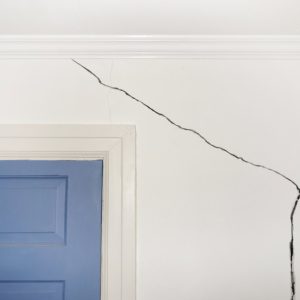
Crack in the wall of a home

Cracks in Interior Walls

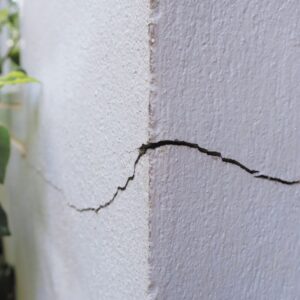
Cracks in exterior wall

Cracks in Exterior Walls

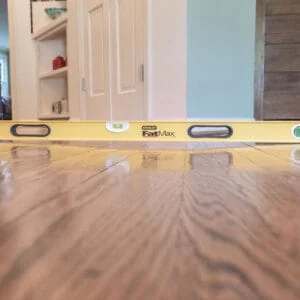
Sloping Floors

Sloping Floor

Foundation Repair Services

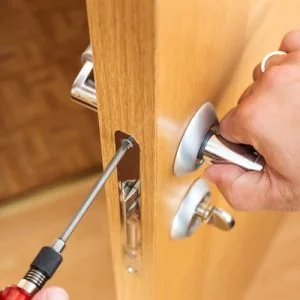
Sticking Door

Foundation Construction Services

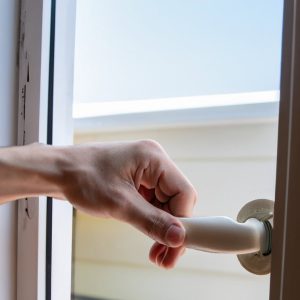
Sticking Window

leaning-chimney

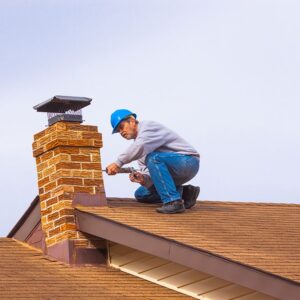
Chimney Leaning

Contact Us

East Bay Area

Communities We Serve.

We are happy to service communities throughout the East Bay Area and beyond. 

OUR SERVICES

Bay Area Foundation Contractor | Golden Bay Foundation Repair

img

Foundation Repair

Restore stability, fix cracks, and reinforce your foundation for lasting structural integrity

Read More
img

Foundation Inspection

Thoroughly assess foundation health, identify issues, and provide expert recommendations for maintenance.

Read More
img

Crawl Space Repair

Ensure a healthy crawl space environment by addressing moisture, insulation, and structural concerns.

Read More
img

Structural Replacement

Replace damaged or compromised structural elements with precision and quality craftsmanship.

Read More
img

Earthquake Retrofitting

Strengthen your property to withstand seismic activity, safeguarding against potential earthquake damage

Read More
img

Stem Wall Repair

Expertly repair and reinforce stem walls to maintain the overall stability of your property.

Read More
img

Drainage Services

Efficient drainage solutions to manage water runoff and prevent issues such as flooding and soil erosion. Our expert team designs and installs drainage systems tailored to your property's needs, ensuring effective water management.

Read More
img

Push Pier Foundation Repair Systems

Stabilize sinking foundations with push piers that reach load-bearing soil. Restore structure and prevent further settlement.

Read More
img

Foundation Replacement

Fully replace failing foundations with expert craftsmanship and durable materials for lasting structural strength.

Read More
img

Helical Pier & Push Pier Installation

Install helical and push piers to support foundations, lift settled areas, and ensure long-term stability.

Read More
img

Pier and Beam Foundation Repair

Repair damaged beams, replace supports, and level flooring to restore the integrity of pier and beam foundations.

Read More
img

Underpinning Services

Strengthen weak foundations by adding support beneath them, preventing movement and future damage.

Read More
img

Slab Foundation Repair

Fix cracks and unevenness in slab foundations to restore level surfaces and prevent structural issues.

Read More
img

Soil Stabilization

Improve ground support by treating unstable soil, reducing foundation movement and settlement risks.

Read More
img

Certified Soft Story Retrofit Experts

Trust our certified experts to retrofit soft-story buildings with precision, meeting all seismic safety standards.

Read More

Related Articles

People Also Ask

The cost of soil injections, also known as slab jacking or mudjacking, varies widely based on several key factors. On average, homeowners can expect to pay between $500 and $1,500, but complex projects can exceed $3,000. The primary cost determinants include the extent of the settlement, the type of soil and filler material used (e.g., polyurethane foam versus cement slurry), and the accessibility of the affected area. Polyurethane foam injections are typically more expensive per unit but require less material and cause less disruption. For a complete breakdown of all variables that influence repair pricing, including soil conditions, we recommend reading our detailed internal article, What Factors Affect Foundation Repair Cost?. Always obtain multiple quotes from licensed foundation repair specialists.

Ground improvement and soil stabilization are related geotechnical techniques but have distinct scopes and objectives. Ground improvement is a broad term encompassing a wide range of methods to enhance the engineering properties of soil in situ, such as increasing bearing capacity, reducing settlement, or accelerating consolidation. Techniques include deep dynamic compaction, vibro-compaction, and preloading. Soil stabilization is a specific subset of ground improvement focused on modifying the soil itself, typically by adding binding agents like cement, lime, or fly ash to chemically alter its properties, improving strength and durability while often reducing permeability. Essentially, all soil stabilization is ground improvement, but not all ground improvement involves chemically stabilizing the soil matrix.

The best soil stabilizer depends entirely on the specific project requirements, soil type, and environmental conditions. For cohesive soils like clay, traditional lime or cement are highly effective, providing strong binding and water resistance. For sandy or granular soils, polymeric stabilizers or enzymatic formulas can be excellent for creating a durable, flexible matrix. In environmentally sensitive areas, biodegradable polymers or chloride-based products are often preferred. Industry best practice involves conducting a thorough geotechnical analysis first. No single product is universally "best"; the optimal choice balances performance, cost, long-term durability, and compliance with local environmental regulations for a stable and sustainable result.

Soil modification and soil stabilization are both ground improvement techniques, but they serve different primary purposes and achieve distinct levels of property enhancement. Soil modification is a temporary or short-term process aimed at improving a soil's workability and handling characteristics, particularly under construction conditions. It often involves adding agents like lime or cement to reduce plasticity and moisture content, making wet, muddy soils easier to compact and grade. In contrast, soil stabilization is a permanent, engineered process designed to significantly and lastingly improve the soil's strength, durability, and load-bearing capacity. It involves a higher dosage of chemical binders or mechanical methods to create a strong, stable material layer that meets long-term structural design specifications for foundations or pavements.

Google Yelp

Overall Rating

5.0
★★★★★

98 reviews