


Most cracks in poured concrete walls can be permanently repaired from the interior using low-pressure epoxy or polyurethane injection without any exterior excavation. The method you choose depends on whether the crack is structural (epoxy) or leaking water (polyurethane). Small shrinkage cracks under 1/8 inch are usually cosmetic and safe to fill with a surface sealant, while horizontal or widening cracks indicate foundation movement and demand immediate professional evaluation. The following guide provides a systematic approach to diagnosing, preparing, and sealing cracks so you can select the right technique and know exactly when to call a specialist.
1. Why Concrete Walls Crack
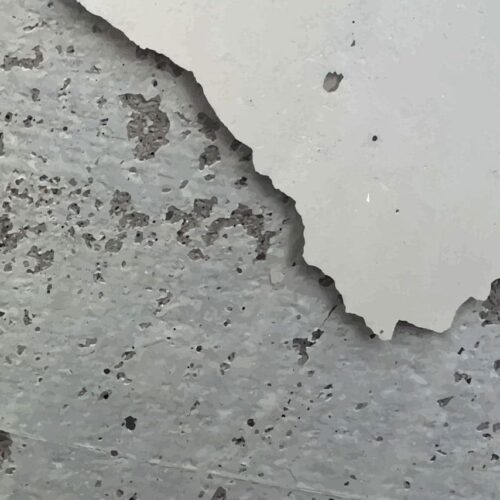
Understanding what caused the crack is the single most important step before any repair. Applying filler without addressing the source of the movement guarantees the crack will return.
Primary Causes
| Cause | Description | Typical Crack Pattern |
|---|---|---|
| Concrete Shrinkage | As concrete cures and loses moisture, it contracts. | Fine, vertical hairline cracks, often uniform width. |
| Foundation Settlement | Soil beneath the footing compresses or washes away, causing differential sinking. | Diagonal cracks, wider at one end; stairstep cracks in block walls. |
| Hydrostatic Pressure | Saturated soil exerts inward pressure on below-grade walls. | Horizontal cracks, often accompanied by bowing. |
| Freeze-Thaw Cycling | Water enters micro-pores, freezes, expands, and fractures the concrete over many seasons. | Surface spalling and progressive widening of existing cracks. |
| Structural Overload | Excessive loads from additions, heavy vehicles, or seismic events. | Large, irregular cracks, often near load points. |
| Thermal Expansion/Contraction | Daily and seasonal temperature swings cause the slab to move, stressing weak points. | Cracks radiating from corners of openings or along rigid joints. |
Bay Area Context: In the San Francisco Bay Area, expansive clay soils and seismic activity accelerate foundation movement. Seasonal rains saturate hillside soils, dramatically increasing hydrostatic pressure on retaining and basement walls. A crack that appears minor in summer can become a significant leak source by winter. For a detailed analysis of how winter rains affect your foundation, refer to our article on proactive foundation checks.
2. Crack Classification and Severity Assessment
Not every crack requires the same level of response. Use the table below to classify what you are seeing.
| Crack Type | Width | Typical Orientation | Structural Concern? | Recommended Action |
|---|---|---|---|---|
| Hairline Shrinkage | < 1/16 in (1.6 mm) | Vertical, random | Low | Surface seal with acrylic or epoxy sealer. Monitor. |
| Minor Settlement | 1/16 – 1/4 in (1.6 – 6 mm) | Vertical, diagonal | Moderate | Epoxy injection for structural bond. Evaluate drainage. |
| Moderate Structural | 1/4 – 1/2 in (6 – 13 mm) | Diagonal, horizontal | High | Professional evaluation. May require carbon fiber reinforcement or wall anchors. |
| Major Structural | > 1/2 in (13 mm) | Horizontal, stair-step | Critical | Immediate professional intervention. Wall stabilization required. |
Warning Signs That Require Immediate Professional Attention:
-
Horizontal cracks running more than 12 inches along a basement or retaining wall.
-
Cracks that extend from floor to ceiling or wall to ceiling.
-
Stairstep cracks in masonry or brick veneer.
-
Bowing or leaning walls.
-
Gaps forming between walls and floors or ceilings.
-
Trim or molding pulling away from surfaces.
-
Active cracks that change width seasonally or after rain.
If you observe any of these conditions, contact a foundation specialist immediately. Golden Bay Foundation Builders provides free consultations for Bay Area homeowners.

3. Repair Methods by Crack Type and Condition
The repair method must match both the crack type and the presence of water. The table below summarizes the three primary approaches used by professionals today.
| Method | Best For | Material | Structural Bond? | Stops Water? | Relative Cost |
|---|---|---|---|---|---|
| Epoxy Injection | Dormant structural cracks (dry), restoring load-bearing capacity | Two-part epoxy resin, > 12,000 PSI | Yes (stronger than concrete) | No | Moderate |
| Polyurethane Injection | Actively leaking cracks, moving cracks | Expanding, flexible polyurethane foam | No | Yes (fills to soil) | Moderate |
| Surface Sealing | Hairline cosmetic cracks, non-structural flatwork | Acrylic, silicone, or polyurethane caulk | No | Limited | Low |
3.1 Epoxy Injection (Structural Bond)
Epoxy injection is the gold standard for dormant structural cracks in poured concrete walls. When properly applied, the epoxy bond exceeds the tensile strength of the surrounding concrete, fully restoring the wall’s load-bearing capacity.
How it works: Low-viscosity epoxy resin is injected under pressure through surface-mounted ports, penetrating the full depth of the crack. The resin cures to a rigid solid with compressive strength around 12,000 PSI.
Limitations: Epoxy will not bond to wet surfaces. If the crack is actively leaking, the wall must be dried or a polyurethane injection used instead. Epoxy also cannot accommodate future movement; it is designed for dormant cracks only.
3.2 Polyurethane Injection (Water-Stop)
For actively seeping cracks, expanding polyurethane is the preferred choice. Unlike epoxy, polyurethane reacts with moisture to form a flexible, closed-cell foam that fills the crack all the way to the exterior soil.
How it works: The resin is injected similarly to epoxy, but upon contact with water, it expands up to 20 times its liquid volume, creating a waterproof gasket within the crack. The foam remains flexible, accommodating minor wall movement without re-cracking.
Limitations: Polyurethane provides no structural reinforcement. It stops water but does not restore load-bearing capacity. For structural cracks that are also leaking, a combination approach or professional waterproofing system may be needed.
3.3 Area Injection (Advanced Waterproofing)
When multiple cracks appear in the same wall section, traditional single-crack injection often results in water migrating to the next weak point. Area injection addresses this by creating a continuous waterproofing barrier behind the entire wall section.
-
Performed in a grid pattern both horizontally and vertically.
-
Resin forms a new waterproofing membrane on the exterior face of the foundation wall.
-
Recommended when localized repairs are no longer effective or when critical infrastructure (electrical rooms, storage) is adjacent to the wall.
-
Typically includes a 10-year manufacturer warranty.
4. Materials and Tools Selection Guide
Selecting the correct filler for the crack width and location is critical. The table below matches products to applications.
| Crack Width | Location | Recommended Filler Type | Application Method | Key Property |
|---|---|---|---|---|
| < 1/8 in (3 mm) | Wall, slab | Liquid acrylic or epoxy sealer | Caulking gun, brush | Deep penetration, self-leveling |
| 1/8 – 1/4 in (3 – 6 mm) | Wall, structural | Low-viscosity epoxy injection resin | Injection ports, pump | High-strength structural bond |
| 1/8 – 1/4 in (3 – 6 mm) | Wall, leaking | Expanding polyurethane injection resin | Injection ports, pump | Flexible, water-reactive foam |
| 1/4 – 1/2 in (6 – 13 mm) | Slab, driveway | Sand-loaded polyurea or epoxy patching compound | Trowel, putty knife | Non-shrink, durable |
| > 1/2 in (13 mm) | Any | Vinyl-patched concrete repair compound | Trowel, pack in layers | Requires keying for adhesion |
Essential Tools for All Repairs:
-
Wire brush and chisel for cleaning and widening
-
Hammer or small sledgehammer
-
Vacuum cleaner (HEPA-filtered for silica dust)
-
Caulking gun (manual or pneumatic)
-
Putty knife or margin trowel
-
Safety glasses, gloves, and N95 respirator
Additional for Injection Repairs:
-
Injection ports (plastic or metal)
-
Two-part epoxy paste for surface sealing
-
Low-pressure injection pump or manual cartridge system
-
Mineral spirits for cleanup

5. Step-by-Step Repair Procedures
5.1 Surface Sealing (Hairline Cracks)
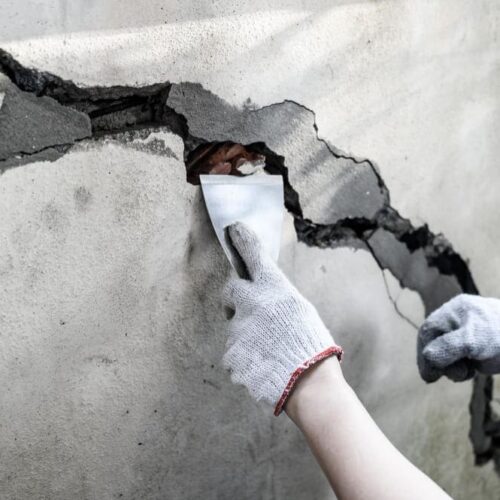
Step 1: Clean the crack. Use a wire brush to remove all loose concrete, paint, and old filler. Vacuum thoroughly to eliminate dust. A clean, dry surface is essential for adhesion.
Step 2: Widen slightly (if needed). For cracks that are extremely narrow, use a cold chisel and hammer to create a small V-shaped groove. This provides more surface area for the sealant to grip.
Step 3: Apply the filler. Load the sealant cartridge into a caulking gun and dispense evenly along the crack. Overfill slightly to account for shrinkage during curing.
Step 4: Smooth the surface. Use a putty knife or trowel to level the filler flush with the surrounding concrete. Feather the edges to blend.
Step 5: Cure and inspect. Allow the manufacturer-recommended cure time (typically 24–48 hours). Inspect for pinholes or shrinkage and apply a second coat if needed.
5.2 Epoxy Injection (Structural Cracks)
This method is outlined in ASTM C881 and is the standard for structural crack repair in poured concrete walls.
Step 1: Prepare the surface. Clean the crack thoroughly using a wire brush and vacuum. The crack must be dry and free of dust, oil, or efflorescence.
Step 2: Install injection ports. Place plastic injection ports along the crack at 8–12 inch intervals. For vertical cracks, start at the bottom. Secure each port with a small amount of epoxy paste.
Step 3: Seal the surface. Mix the two-part epoxy paste and spread it over the entire crack face, covering the flanges of all injection ports. Leave only the port necks exposed. Feather the edges with a paintbrush dampened with mineral spirits. Allow 6–10 hours to cure.
Step 4: Inject the epoxy. Starting at the lowest port, inject the low-viscosity epoxy resin using a caulking gun or manual pump. Continue until resin emerges from the next port above. Cap the lower port and move to the next one. Repeat until all ports have been injected.
Step 5: Cure and finish. Allow 24–48 hours for full cure. Remove the injection ports by cutting or breaking them off. Grind the surface seal smooth if desired.
5.3 Polyurethane Injection (Leaking Cracks)
Step 1: Clean and prepare. Clean the crack as described above. Note: unlike epoxy injection, the crack can be damp.
Step 2: Install ports and seal. Follow the same port installation and surface sealing steps as epoxy injection.
Step 3: Inject the polyurethane. Using a low-pressure pump, inject the expanding polyurethane resin starting at the lowest port. The resin will react with moisture and expand, filling the crack to the exterior soil.
Step 4: Monitor and cap. Continue injecting until resin appears at the next port. Cap and move upward. Because polyurethane expands, use less material per port than you would for epoxy.
Step 5: Cure and test. Allow 1–2 hours for initial cure. Test for leaks by spraying water on the exterior wall or waiting for the next rain event.
6. Cost Comparison: DIY vs. Professional Repair (2026 Estimates)
Costs vary by region, crack severity, and accessibility. The table below uses 2026 data from multiple sources to provide a realistic range.
| Repair Type | DIY Material Cost | Professional Cost (per crack) | Notes |
|---|---|---|---|
| Surface seal (hairline) | 15–50 USD | 150–400 USD | Includes cleaning, filling, and finishing. |
| Epoxy injection (single crack) | 100–480 USD (kit) | 600–1,500 USD | Professional cost includes port installation, injection, and warranty. |
| Polyurethane injection (leaking crack) | 120–500 USD (kit) | 600–1,500 USD | Similar to epoxy; expanding foam may require more material. |
| Carbon fiber reinforcement (bowing wall) | N/A (not DIY) | 800–3,500 USD per strip | Structural repair; requires engineering assessment. |
| Wall anchor system (severe bowing) | N/A | 500–900 USD per anchor | Permanent stabilization of foundation walls. |
| Area injection (multiple cracks) | N/A | 4,000–8,000 USD+ | Full wall waterproofing; includes 10-year warranty. |
Note: Ignoring a structural crack can lead to foundation failure requiring 11,000 USD or more in comprehensive repairs. Early intervention with a professional is always more cost-effective than waiting.
7. When to Call a Professional
Certain situations demand the expertise of a foundation repair specialist. Do not attempt DIY repairs if:
-
The crack is horizontal and extends more than 12 inches.
-
The wall is visibly bowing or leaning.
-
You observe stairstep cracking in block or brick walls.
-
Cracks are wider at one end, indicating differential settlement.
-
Water is entering through the crack under pressure.
-
Cracks reappear shortly after being filled.
-
Cracks are accompanied by sticking doors or windows, indicating frame racking.
-
The crack is in a retaining wall taller than 4 feet.
-
You are unsure whether the crack is dormant or active.
Golden Bay Foundation Builders specializes in foundation crack diagnosis and repair throughout the San Francisco Bay Area. Our team provides free consultations and uses industry-standard epoxy and polyurethane injection systems backed by manufacturer warranties. We understand Bay Area soil conditions, seismic risks, and seasonal water patterns, allowing us to recommend the right solution the first time.
8. Crack Prevention and Long-Term Maintenance
Preventing cracks is always preferable to repairing them. Implement these measures to extend the life of your concrete walls.
-
Maintain proper drainage: Ensure downspouts discharge at least 5–10 feet from the foundation. Grade soil away from walls at a slope of at least 6 inches per 10 feet.
-
Install a functioning sump pump: In basements and crawl spaces prone to water accumulation, a sump pump prevents hydrostatic pressure buildup.
-
Seal exterior concrete: Apply a breathable silane/siloxane water repellent to exterior concrete surfaces every 5–10 years.
-
Control interior humidity: Use dehumidifiers in basements to reduce condensation and freeze-thaw damage.
-
Inspect regularly: Walk around your foundation twice a year (spring and fall) and after major rain events. Document any cracks with photos and measurements to track progression.
-
Address plumbing leaks promptly: Leaking pipes saturate soil and accelerate settlement.
-
Avoid planting large trees near foundations: Root systems can extend 2–3 times the tree’s height and extract moisture from soil, causing shrinkage and settlement.
For Bay Area homeowners, our guide on proactive foundation checks during winter rains provides specific strategies for local conditions.
9. Common DIY Mistakes to Avoid
Many DIY repairs fail not because of material defects but because of improper technique. Avoid these frequent errors:
-
Skipping surface preparation: Dust, laitance, and moisture are the three leading causes of bond failure. Clean and dry the crack completely.
-
Using the wrong filler for the crack: Surface sealant cannot fix a structural crack. Epoxy cannot bond to wet surfaces. Identify the crack type before buying materials.
-
Injecting from the top down: Always inject from the lowest port upward to avoid trapping air bubbles.
-
Over-injecting polyurethane: Expanding foam can push the surface seal off if too much material is injected. Watch for resin at the next port and stop.
-
Ignoring the root cause: Filling a crack caused by ongoing settlement will not stop the settlement. If the underlying soil or drainage issue is not addressed, new cracks will form.
-
Relying on temporary products for permanent repairs: Products like Flex Seal are temporary, cosmetic patches. They can trap moisture and accelerate damage. Professional-grade epoxy or polyurethane is required for structural or waterproofing repairs.
10. Frequently Asked Questions
What is the best filler for concrete cracks?
For hairline cracks, a liquid acrylic or epoxy sealer penetrates deeply and bonds effectively. For wider cracks up to 1/4 inch, a sand-loaded polyurea or epoxy patching compound provides durable, non-shrink repair. For structural or moving cracks, flexible polyurethane sealant accommodates movement without re-cracking. Always clean the crack thoroughly before applying any filler.
Can I use Flex Seal on foundation cracks?
Flex Seal can provide a temporary, cosmetic patch for minor cracks but is not a permanent solution for structural foundation issues. In areas with expansive clay soils, it may trap moisture beneath the surface, leading to more significant damage over time. Professional-grade epoxy or polyurethane injections are the industry standard.
How much does it cost to repair a foundation crack?
As of 2026, professional epoxy or polyurethane injection typically ranges from 600 to 1,500 USD per crack, depending on severity and accessibility. Surface sealing of hairline cracks may cost as little as 150 to 400 USD. DIY kits range from 100 to 500 USD but carry the risk of improper application.
How do I know if a crack is structural?
Structural cracks are typically wider than 1/4 inch, run horizontally or diagonally, are wider at one end, or are accompanied by wall bowing, sticking doors/windows, or gaps between walls and floors. Hairline vertical cracks are usually cosmetic.
What is poor man’s concrete?
Poor man’s concrete is a simple mixture of sand, cement, and water used for temporary or low-cost repairs. It lacks gravel or aggregate, making it weaker and more prone to cracking. It is not suitable for structural or load-bearing projects.
11. Conclusion
Repairing cracks in concrete walls requires accurate diagnosis, proper material selection, and meticulous technique. Hairline shrinkage cracks can be sealed with surface fillers, while structural cracks demand epoxy injection to restore load-bearing capacity. Leaking cracks call for expanding polyurethane to create a flexible, waterproof seal. Horizontal or widening cracks signal foundation movement and must be evaluated by a professional without delay.
For Bay Area homeowners, the combination of expansive soils, seismic activity, and seasonal rainfall creates unique challenges that demand local expertise. Golden Bay Foundation Builders brings decades of experience in diagnosing and repairing foundation cracks throughout San Francisco and the surrounding communities. We use only industry-standard materials and methods, and we stand behind our work with manufacturer-backed warranties.
If you have discovered a crack in your concrete foundation or retaining wall, contact Golden Bay Foundation Builders today for a free, no-obligation consultation. Our team will assess the crack, identify the underlying cause, and recommend a permanent solution tailored to your home and budget.
Related Articles
What Are The Different Types Of Crack Filling?
What Are The Top-rated Foundation Repair Companies Near California
What Type Of Foundation Repair Is Best?
Is It Better To Fix Foundation Cracks From Inside Or Outside? The Answer Depends On What Is Causing The Crack
What Is The Difference Between Cosmetic And Structural Cracks?
People Also Ask
Poor man's concrete is a colloquial term for a simple mixture of sand, cement, and water, often used for temporary or low-cost repairs. It lacks the gravel or aggregate found in standard concrete, making it weaker and more prone to cracking. This mix is typically applied as a thin patch for small holes or leveling uneven surfaces, but it is not suitable for structural or load-bearing projects. For durable, long-lasting foundations or slabs, professional-grade concrete with proper aggregate is essential. At Golden Bay Foundation Builders, we always recommend using industry-standard materials for any permanent work. For more details on this topic, please refer to our internal article What Is Poor Man's Concrete?.
For homeowners in Walnut Creek and Contra Costa County, the best concrete crack filler depends entirely on the crack's cause and location. For non-structural, hairline cracks in a slab, a polyurea or epoxy injection is often ideal because it bonds tightly and resists moisture. However, for wider or active cracks caused by foundation settlement or soil movement, a simple surface filler is not a solution. You must first address the underlying structural issue. At Golden Bay Foundation Builders, we always recommend a professional assessment before choosing any filler. For a detailed breakdown of when to seal from inside versus outside, please review our internal article titled Is It Better To Fix Foundation Cracks From Inside Or Outside? The Answer Depends On What Is Causing The Crack. Using the wrong filler on a structural crack can trap water and worsen the damage.
While flex seal can provide a temporary, cosmetic patch for minor concrete cracks, it is not a permanent solution for structural foundation issues. For concrete slabs and foundations, especially in areas like Walnut Creek with expansive clay soils, flex seal may trap moisture beneath the surface, leading to more significant damage over time. Professional-grade epoxy or polyurethane injections are the industry standard for repairing active cracks, as they bond with the concrete and allow for slight movement. For a thorough evaluation of your foundation's health, we recommend consulting a specialist. For more insight, please see our internal article titled Why Winter Rains Demand Proactive Foundation Checks In Golden Bay which covers how seasonal weather affects your home's structural integrity.
Repairing cracks in a concrete slab requires careful assessment. For hairline cracks (under 1/8 inch), you can use a concrete crack filler or liquid epoxy. For larger cracks, you must widen the crack slightly with a chisel to create a key, clean out all debris, and then pack in a vinyl-patched concrete repair compound. However, it is crucial to determine if the crack is structural or just cosmetic. A structural crack, often wider at one end or accompanied by slab heaving, indicates a deeper foundation issue. In such cases, a simple patch will fail. For professional guidance on serious foundation cracks, we recommend reading our internal article titled What Are The Top-rated Foundation Repair Companies Near California. At Golden Bay Foundation Builders, we always advise homeowners in Walnut Creek to monitor cracks for changes in width, as this signals active foundation movement requiring expert evaluation.
For large cracks in concrete, a simple caulk or liquid filler is insufficient. You must use a rigid repair method to restore structural integrity. First, widen the crack's base using a chisel or angle grinder to create an inverted V-shape, which helps lock the patching material in place. Remove all debris and dust with a vacuum. For cracks wider than half an inch, pack the void with a gravel or sand base, leaving space for the top layer. Apply a concrete patching compound or a hydraulic cement mix, pressing it firmly into the crack. Finish the surface flush with a trowel. For more details on matching the right product to your specific damage, refer to our internal article What Are The Different Types Of Crack Filling?. Golden Bay Foundation Builders recommends sealing the cured patch to prevent moisture intrusion.
For repairing cracks in a concrete garage floor, the best approach depends on the crack's width and whether it is structural. For hairline cracks (less than 1/8 inch), a liquid concrete crack filler or epoxy injection is often sufficient. For wider cracks, you should first clean out all debris and use a concrete patching compound or a vinyl concrete patcher. If the crack is due to settlement or soil movement, a more permanent solution is needed. For professional guidance, Golden Bay Foundation Builders recommends reading our internal article titled What Type Of Foundation Repair Is Best?. This resource details the best methods for lasting repairs, including underpinning or slabjacking for significant structural issues common in Walnut Creek and Contra Costa County.