

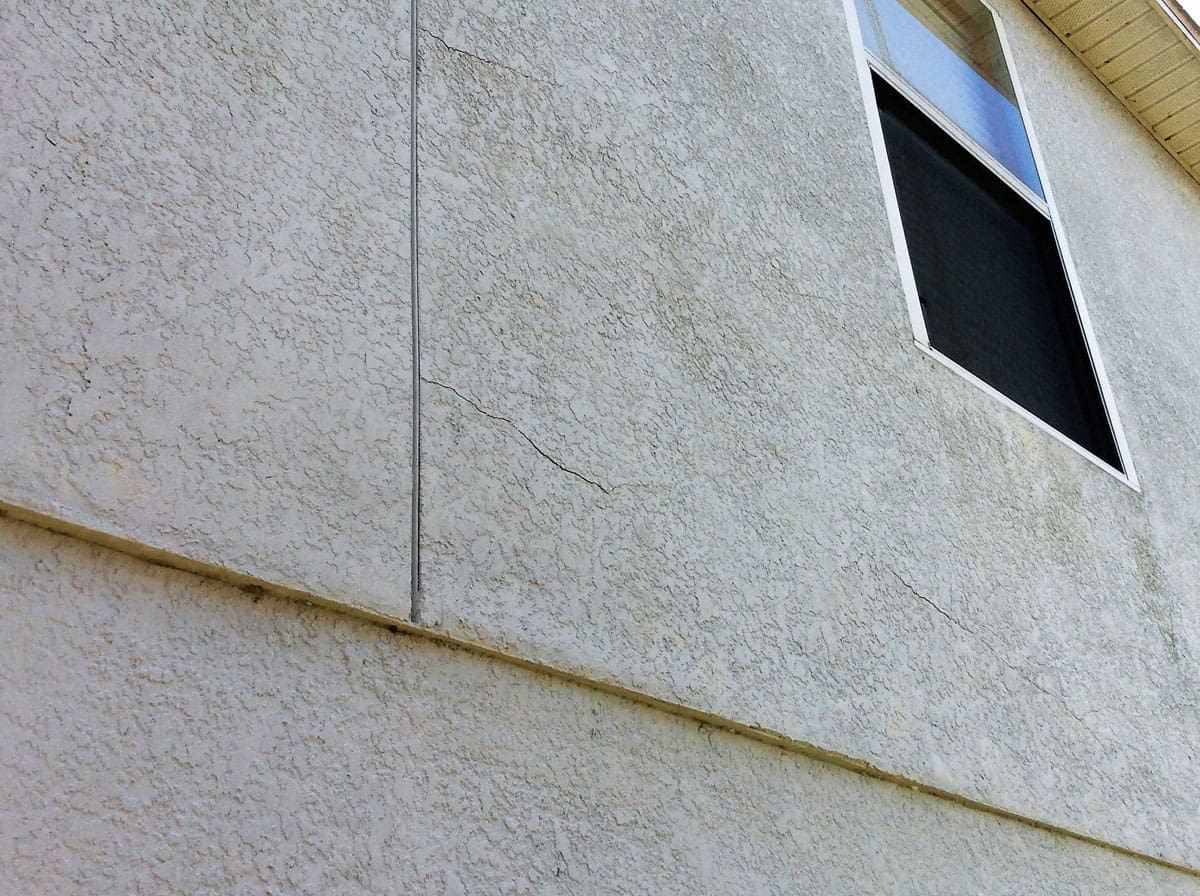
Understanding how to address structural and cosmetic fractures in San Francisco Bay Area properties requires looking far beyond surface appearances. In our structural engineering and foundation repair practice across the region, we consistently observe that failing to diagnose the underlying physical cause of a crack leads to rapid material failure. Filling an active crack with a rigid compound, or applying hydraulic cement against aggressive hydrostatic water pressure, wastes valuable time and capital.
Crack repair strategies diverge significantly depending on whether we are restoring concrete elements like foundations, retaining walls, and slabs, or repairing flexible asphalt surfaces like driveways and parking structures. Selecting the appropriate crack filling method requires determining whether the fracture is working or non-working, structural or non-structural, and dry or subject to active water seepage.
Understanding Crack Dynamics: Working vs. Non-Working Cracks in Bay Area Foundations
Crack filling success depends on classifying fractures as working or non-working based on dynamic soil and seismic movement across the San Francisco Bay Area. Working cracks experience ongoing movement from seasonal expansive clay shifting or thermal cycles, requiring elastomeric sealants. Non-working cracks remain structurally stable, allowing permanent rigid bonding with structural epoxies.
Before specifying any injection compound or elastomeric sealant, we evaluate the mechanical behavior of each fracture in accordance with guidelines from the American Concrete Institute. Bay Area microclimates and geologic fault zones create unique localized stressors that dictate how concrete elements move over time.
- Working (Active) Cracks: Fractures that undergo continuous displacement due to seasonal moisture changes in expansive clay soils, thermal expansion, or micro-seismic movement. These require flexible, highly extensible sealants capable of severe elongation without adhesive debonding.
- Non-Working (Dormant) Cracks: Fractures caused by initial drying shrinkage, historical foundation settling that has fully stabilized, or temporary thermal shock during curing. Because these fractures no longer experience structural movement, we can permanently weld them using rigid high-modulus adhesives.
- Micro-fractures and Hairline Cracks: Surface fissures under 0.007 inches wide that frequently result from superficial plastic shrinkage. These require ultra-low viscosity gravity-feed resins rather than high-pressure injection equipment.
- Structural vs. Non-Structural Cracks: Structural fractures compromise load-bearing capability, characterized by vertical displacement, diagonal shear lines, or continuous widening. Non-structural cracks act primarily as environmental pathways for moisture infiltration and subterranean gas ingress.
Structural Concrete Crack Filling vs. Flexible Pavement Crack Filling
Concrete crack filling restores tensile capacity and prevents moisture ingress, while asphalt pavement filling prevents water and incompressible debris from destroying flexible subgrade layers. Structural concrete repairs require rigid structural bonding or closed-cell elastomeric plugs to maintain wall integrity. Pavement treatments focus on preserving pavement flexibility under vehicle loading and weathering.
A major point of confusion for property owners in Alameda, Santa Clara, and San Mateo counties is the distinction between structural concrete restoration and asphalt pavement maintenance. While both address physical fissures, their engineering objectives and material formulations remain entirely distinct.
Concrete crack repair in residential foundations and commercial structures focuses on re-establishing monolithic structural action and blocking water intrusion through vertical walls or suspended slabs. Conversely, flexible pavement crack treatment guidelines from the Federal Highway Administration prioritize preventing surface runoff from washing away aggregate sub-bases and causing localized pavement collapse.
Primary Types of Concrete Crack Filling Materials and Methods
Selecting concrete crack repair methods requires matching material viscosity, elongation capacity, and cure chemistry to the mechanical state of the crack. Structural epoxies re-establish full tensile strength in dormant fractures, while polyurethanes expand to seal active water leaks. Elastomeric sealants, gravity-feed methacrylates, and repair mortars fill specialized operational roles.
Epoxy Injection for Structural Bonding
High-modulus epoxy injection serves as our primary method for restoring original tensile and compressive strength to non-working concrete structural elements. We inject two-part liquid epoxy resins under controlled pressures into dormant fractures ranging from 0.005 to 0.25 inches in width.
- Tensile Bond Strength: Standard structural epoxy formulations achieve cured tensile strengths exceeding 7,000 PSI, creating a bond line stronger than the adjacent concrete.
- Application Protocol: We bond surface entry ports along the fracture line using fast-setting surface paste, seal the outer face, and inject resin from the lowest port upward until full depth penetration occurs.
- Critical Engineering Constraint: Structural epoxies possess less than 2 percent elongation capacity. If injected into an active crack subject to soil expansion, the adjacent concrete matrix will simply fracture alongside the repair.
Polyurethane Foam for Hydrostatic Water Control and Flexibility
Polyurethane injection resins are water-activated liquid polymers that expand up to 30 times their original volume upon contacting moisture inside a concrete fracture. They transform into a tough, closed-cell elastomeric foam that stops flowing water while accommodating structural shifting.
- Hydrostatic Water Sealing: Polyurethane excels at stopping active water leaks in subterranean foundation walls, hillside retaining structures, and utility vaults during wet winter weather.
- Dynamic Elasticity: Formulated flexible polyurethanes provide elongation capabilities between 300 percent and 800 percent, expanding and contracting during foundation settlement.
- Load-Bearing Capacity: Polyurethane foam provides negligible tensile reinforcement and should never be relied upon to restore structural load transfer across a broken beam or shear wall.
Routing and Sealing with Elastomeric Sealants
Routing and sealing is a non-structural surface repair technique designed for horizontal concrete flatwork, podium decks, and accessible vertical walls. We cut a controlled V-groove or rectangular reservoir along the fracture to house a high-performance elastomeric joint sealant.
- Substrate Preparation: We rout the crack to a minimum width and depth of 0.25 inches, clean the concrete profile using compressed air, and install a non-absorbing backer rod.
- Material Selection: We apply advanced elastomeric polymers such as silyl-terminated polyether or polyurethane sealants directly into the prepared channel.
- Target Application: This method works best on exterior slabs, driveways, and suspended decks where surface movement requires extreme flexibility rather than high-pressure resin injection.
Gravity-Feed Low-Viscosity Resins and Methacrylates
When addressing widespread surface crazing or fine hairline cracking on horizontal concrete slabs, high-pressure injection becomes inefficient. Gravity-feed repair relies on ultra-low viscosity polymers poured directly over horizontal surfaces to penetrate fine fissures naturally.
- Deep Penetration Resins: High-molecular-weight methacrylates and low-viscosity epoxies possess fluid viscosities below 100 centipoise, allowing capillary action to draw resin deep into micro-cracks.
- Protective Sealing: Gravity-fed resins seal hundreds of surface micro-fissures simultaneously, blocking moisture infiltration and protecting embedded steel rebar from internal corrosion.
Hydraulic Cement and Polymer-Modified Mortars
Hydraulic cement is a rapid-setting patching compound containing calcium aluminate or sulfoaluminate cements that expand quickly upon hydration. It cures within minutes to form a stiff temporary plug against localized water flows.
- Application Method: Technicians manually pack the setting mortar into undercut or dovetailed crack grooves to choke off active, pressure-driven water streams.
- Long-Term Performance Limitations: Hydraulic cement forms a rigid, brittle plug with low adhesive bonding to old concrete. We treat hydraulic cement purely as an emergency stopgap rather than a permanent structural repair.
Asphalt and Pavement Crack Filling vs. Crack Sealing
Pavement crack treatment requires choosing between hot-pour rubberized sealants for dynamic, working cracks and cold-pour asphalt emulsions for minor, static surface cracks. Hot-pour compounds offer superior flexibility and weather resistance across wide temperature shifts. Cold-pour emulsions provide an economical, temporary fix for low-traffic driveways.
Hot-Pour Rubberized Asphalt Sealants
Hot-pour rubberized asphalt consists of refined asphalt cement blended with synthetic elastomeric polymers and granulated rubber particles. Heated in specialized kettles to 380 degrees Fahrenheit, this liquid sealant flows deep into routed pavement joints.
- Temperature Adaptability: Once cooled, rubberized asphalt retains exceptional flexibility, stretching during cold winter contraction and resisting bleed-through during intense summer heat.
- Service Life Expectations: Properly installed hot-pour rubberized sealants deliver an average functional lifespan of 5 to 8 years on working pavement cracks.
Cold-Pour Asphalt Fillers and Mastics
Cold-pour asphalt fillers combine emulsified liquid asphalt with clay, fine mineral aggregates, and latex polymers. Designed for non-working surface cracks on residential driveways, they are applied directly at ambient temperatures.
- Operational Scope: Cold-pour products cure purely via evaporation, making them suitable only for non-moving fractures narrower than 0.25 inches.
- Trade-offs and Degradation: Evaporative curing causes noticeable material shrinkage, resulting in a short operational life of 1 to 2 years before re-cracking occurs.
Technical Comparison of Crack Repair Materials
Selecting the correct material requires evaluating performance parameters, elasticity, moisture tolerance, expected durability, and installed professional costs. Structural epoxies offer superior strength, while flexible polyurethanes provide critical movement capabilities for dynamic water intrusion problems.
| Material Type | Primary Mechanical Function | Flexural / Tensile Strength | Elasticity & Elongation | Moisture Compatibility | Average Service Life | Average Cost (USD) |
|---|---|---|---|---|---|---|
| Structural Epoxy Resin | Structural bonding & load transfer | Very High (>7,000 PSI) | Rigid (<2% Elongation) | Dry surfaces required | 15 to 25+ Years | 350 to 800 USD per crack |
| Flexible Polyurethane Foam | Hydrostatic sealing & water stop | Low (<150 PSI) | High (300% to 800%) | Requires moisture to react | 10 to 15 Years | 400 to 1,200 USD per crack |
| Polyurethane / Polyurea Elastomer | Joint & routed surface sealing | Moderate (300 to 600 PSI) | Very High (400% to 900%) | Dry substrate required | 7 to 12 Years | 12 to 25 USD per foot |
| High-Molecular Methacrylate | Micro-crack gravity seal | High (>3,500 PSI) | Rigid (<3% Elongation) | Dry to damp surfaces | 10 to 15 Years | 5 to 12 USD per sq foot |
| Hot-Pour Rubberized Asphalt | Dynamic pavement sealing | Non-structural seal | High Flexibility | Dry pavement required | 5 to 8 Years | 2 to 5 USD per foot |
| Cold-Pour Asphalt Emulsion | Static surface filling | Negligible | Low Flexibility | Dry substrate only | 1 to 2 Years | 0.50 to 1.50 USD per foot |
| Hydraulic Cement Patch | Emergency water plugging | Low to Moderate | Brittle / Rigid | Active water flow compatible | 1 to 3 Years | 150 to 300 USD per spot |
Complex Field Engineering Case Studies: Bay Area Structural Challenges
Engineering repairs for Bay Area structures requires resolving competing physical forces like active groundwater pressure, heavy vehicular loads, and soil expansion. Our field experience demonstrates that hybrid engineering solutions combining flexible sealants, subgrade stabilization, and structural reinforcement yield long-term durability.
Case Study 1: Resolving Hydrostatic Seepage in a Berkeley Hills Basement
We were contracted to resolve severe water leakage along a 16-foot diagonal fracture in an 8-inch poured concrete foundation wall in the Berkeley Hills. During winter rainfall, water infiltrated the basement at rates exceeding 15 gallons per hour while clay soil expansion generated continuous lateral wall movement.
- The Underlying Failure: A previous contractor injected rigid structural epoxy into the crack. Because the expansive clay soil continued to swell, the foundation wall fractured right along the rigid epoxy line, doubling the water infiltration rate.
- Our Engineering Resolution: We executed a dual-stage structural repair. First, we performed high-pressure injection of hydro-active flexible polyurethane resin, sealing the wall across its entire 8-inch thickness and stopping the water flow. Second, to handle structural tension, we installed low-profile carbon fiber staples spaced 12 inches apart across the fracture, anchoring them with structural epoxy paste.
- Long-Term Outcome: The flexible polyurethane absorbed ongoing soil movement without debonding, while the carbon fiber grid provided 200,000 PSI of tensile capacity to prevent further wall spreading. The basement has remained completely dry for over six years.
Case Study 2: Mitigating High-Load Industrial Slab Deflection in Expansive San Jose Clay
At a commercial logistics facility in San Jose, heavy forklift traffic caused dynamic vertical slab deflection across a wide shrinkage crack in a 6-inch concrete floor slab. The underlying expansive clay soil had softened due to localized moisture changes, creating subterranean voids beneath the joint.
- The Underlying Failure: Facility staff repeatedly patched the joint using rigid hydraulic mortars and cold-pour fillers. Heavy forklift wheels crumbled the rigid mortar, while the cold filler squished out, causing severe joint spalling and equipment wheel damage.
- Our Engineering Resolution: We stabilized the subgrade by injecting high-density, closed-cell polyurethane geopolymer foam beneath the concrete slab to fill subbase voids and restore soil contact. Once vertical deflection ceased, we routed the surface fracture into a 0.5-inch rectangular channel and filled it flush with a semi-rigid polyurea joint filler designed for industrial wheel loads.
- Long-Term Outcome: Subgrade void filling eliminated dynamic slab deflection under heavy wheel loads, while the semi-rigid polyurea joint filler protected the concrete joint edges from spalling.
Step-by-Step Method Selection Framework for Bay Area Property Owners
Selecting the correct crack repair methodology requires evaluating site moisture conditions, structural load requirements, crack dimensions, and material properties. By following guidelines established by the International Concrete Repair Institute, property managers can avoid costly repair failures.
- Assess Moisture and Water Flow: Inspect the fracture for active water movement; if wet or leaking, select hydro-active polyurethane resins rather than epoxies or surface sealants that fail on damp concrete.
- Determine Structural Load Requirements: Evaluate whether the crack threatens overall building stability; if non-working and structural, specify high-modulus epoxy injection, but if active and structural, combine elastomeric sealing with carbon fiber reinforcement.
- Measure Crack Width and Profile: For hairline cracks under 0.01 inches, apply ultra-low viscosity gravity-feed methacrylates; for cracks between 0.01 and 0.25 inches, use pressure injection; for wider gaps, specify routed elastomeric joint sealants backed by foam rods.
- Verify Substrate Material Compatibility: Ensure repair materials match the host substrate by avoiding rigid epoxies on flexible asphalt pavements or hot-pour bitumens on structural concrete foundations.
Frequently Asked Questions
Frequently Asked Questions
What is the fundamental difference between crack filling and crack sealing?
Crack filling places rigid or non-extensible materials into non-working cracks to restore compressive strength or surface smoothness. Crack sealing applies flexible elastomeric compounds into active cracks that expand and contract due to soil movement and thermal shifts.
Can epoxy injection be used on an actively leaking foundation crack?
No, standard epoxy resins require completely dry concrete surfaces to achieve an effective structural bond. Attempting to inject epoxy into an actively leaking crack causes immediate bond failure, meaning water flow must first be stopped using water-activated polyurethane foam.
How do Bay Area clay soils and seismic activity impact crack repair longevity?
Expansive clay soils shrink and swell with seasonal rainfall, while micro-seismic activity generates continuous ground vibration throughout the Bay Area. These dynamic forces break rigid crack fillers like hydraulic cement, requiring flexible polyurethanes or carbon fiber reinforced systems.
When is routing and sealing preferred over pressure injection?
Routing and sealing is preferred on horizontal flatwork and decks where restoring monolithic structural strength is unnecessary, or where cracks are too wide for standard injection ports. It creates a defined reservoir that allows elastomeric sealants to flex without tearing.
Why does hydraulic cement fail as a long-term foundation repair?
Hydraulic cement forms a rigid, brittle plug with low long-term adhesion to old, cured concrete substrates. Although effective at stopping emergency water gushers, subsequent foundation expansion causes the stiff plug to loosen and leak again.
Sources
- American Concrete Institute (ACI Committee 224): Causes, Evaluation, and Repair of Cracks in Concrete Structures: https://www.concrete.org
- Federal Highway Administration (FHWA-RD-99-147): Materials and Procedures for Sealing and Filling Cracks in Asphalt-Surfaced Pavements: https://www.fhwa.dot.gov
- International Concrete Repair Institute (ICRI Guideline No. 310.2R): Selecting and Specifying Concrete Surface Preparation for Sealers, Coatings, Polymer Overlays, and Concrete Repair: https://www.icri.org
Related Articles
Bay Area Structural Repairs: The Ultimate Guide To Protecting Your Home From Seismic Shifts, Expansive Soils, And Moisture Damage
Is Foam Jacking Better Than Mudjacking
Comprehensive Guide To Polyurethane Foam For Crack Sealing: Pros And Cons
DIY Vs. Professional Foundation Crack Repair: Which Is Safer And More Effective?
What Type Of Foundation Repair Is Best?
How Can You Tell If A Crack Is Structural?
People Also Ask
For addressing foundation cracks in Walnut Creek and Contra Costa County, the type of filler you need depends on the crack's cause and width. Hairline cracks (less than 1/8 inch) from concrete shrinkage are often managed with liquid acrylic or polyurea sealers, which are flexible and bond well to the surface. For wider, non-structural cracks, epoxy injections are a common choice; they are strong and can restore some structural integrity. However, for active cracks caused by soil movement or hydrostatic pressure, a simple filler is insufficient. These require a professional assessment to determine if a polyurethane injection or a more comprehensive repair is needed. For a deeper understanding of which products are best for basement cracks, you can review our internal article Which Foundation Repair Products Are Best For Basement Cracks. Golden Bay Foundation Builders always recommends matching the repair material to the specific diagnosis of the crack.
For the best crack filler, the choice depends on the crack's location and size. For small, non-structural cracks in concrete driveways or patios, a high-quality acrylic or latex filler is often sufficient and easy to apply. For larger or structural cracks, especially in foundations, a more robust solution is needed. Polyurethane foam is widely considered the industry standard for sealing foundation cracks because it expands to fill the void completely and creates a watertight, flexible bond. For a detailed breakdown of this material, please refer to our internal article Comprehensive Guide to Polyurethane Foam for Crack Sealing: Pros and Cons. Golden Bay Foundation Builders recommends consulting a professional for any crack that is wider than a quarter-inch or shows signs of water intrusion.
Type 3 crack treatment refers to a specific method used to repair shrinkage cracks in concrete foundations. These cracks are typically hairline and non-structural, caused by the natural curing and drying process of concrete. The treatment involves cleaning the crack, applying a low-viscosity epoxy or polyurethane resin, and allowing it to penetrate deeply to seal the fissure. This restores the concrete's integrity and prevents moisture intrusion. For homeowners in Walnut Creek CA and Contra Costa County, addressing Type 3 cracks promptly is vital to avoid future water damage. Golden Bay Foundation Builders recommends professional assessment to ensure proper diagnosis and application, as incorrect sealing can lead to more significant issues over time.
For concrete cracks in Walnut Creek and Contra Costa County, the strongest crack filler is typically a two-part polyurethane or epoxy injection system. These materials are designed to restore structural integrity by bonding deeply into the crack, often exceeding the strength of the surrounding concrete. While standard caulk or patching compounds work for surface-level cosmetic repairs, they lack the tensile strength needed for load-bearing or foundation cracks. For homeowners seeking a durable, high-strength solution, polyurethane foam offers excellent flexibility and adhesion. Golden Bay Foundation Builders recommends reviewing our internal article Comprehensive Guide to Polyurethane Foam for Crack Sealing: Pros and Cons for a detailed comparison of polyurethane foam versus epoxy, as it covers specific pros and cons for our local soil conditions. Always ensure the filler matches the crack's width, depth, and whether the crack is active or dormant.
For cracks wider than 1/8 inch, epoxy crack filler is a strong, structural solution that can restore a wall's integrity. However, its application requires careful surface preparation and precise mixing. If the crack is actively leaking or shows signs of movement, a polyurethane injection is often a better choice because it remains flexible. For homeowners in Walnut Creek, deciding between a DIY kit and a professional service depends on the crack's severity. A minor, non-structural hairline crack may be manageable, but deeper issues demand expert assessment. Our internal article titled DIY vs. Professional Foundation Crack Repair: Which is Safer and More Effective? provides a clear breakdown of the risks and benefits for each approach. Golden Bay Foundation Builders recommends a professional evaluation for any crack that raises concern.


Comments are closed