Helical Pier & Push Pier Installation Services in Alamo, CA

The topography of Alamo has been a source of difficulty in building foundations and this difficulty is experienced by most of the homeowners in Alamo at one point or another beginning with the hillside property of Stone Valley Road and the higher property of the Roundhill Country Club, Livorna Estates, and the neighborhoods that lead to Diablo. The soil in the area is very rich with clay and therefore the region swells up during wet seasons and shrinks during hot and dry seasons which causes settlement, uneven floors, cracks on the walls and also the foundations shift as well. The most common areas where these soil movements occur are homes near Hemme Avenue, Alamo Oaks and Miranda Avenue.

Having houses located on hilly slopes and clayy soils, the helical and push pier system suits Alamo especially well. These pier systems provide deep stable support by fixing your foundation on stable soil layers that are not affected by seasons. Regardless of whether your property is an older custom home or one of the modern hillside houses, our services of installation of piers provide the stability, avoid further settlement, and the preservation of long-term structural integrity.

Why Helical Piers Are Ideal for Clay Soil

The large clay of Alamo needs a system of foundation which would not sink through to the shifting layers of tops. Helical piers are superior in such environment in the sense that they penetrate to deeper and denser soil which is stable throughout the year. Helical piers anchor the home way below the clay, as opposed to shallow repairs which only solve problems on the surface, and as such, movement due to shrinking and swelling is removed.

This is very advantageous in homes where settlement is observed around chimneys, porches or perimeter walls. Helical piers have long-term stability that is consistent even when the clay is subjected to expansion and contractions, and this makes them one of the most suitable materials to use on the terrain of Alamo.

The Step-by-Step Process of Installing Helical Piers

All the installations of stable piers are made out of a good plan which makes sure that the home is provided with the support exactly where it is required.

Assessment of Soil Conditions and Load requirements

Our crew conducts an inspection of your property to identify levels of torque, soil density and depth required to access solid and load bearing strata.

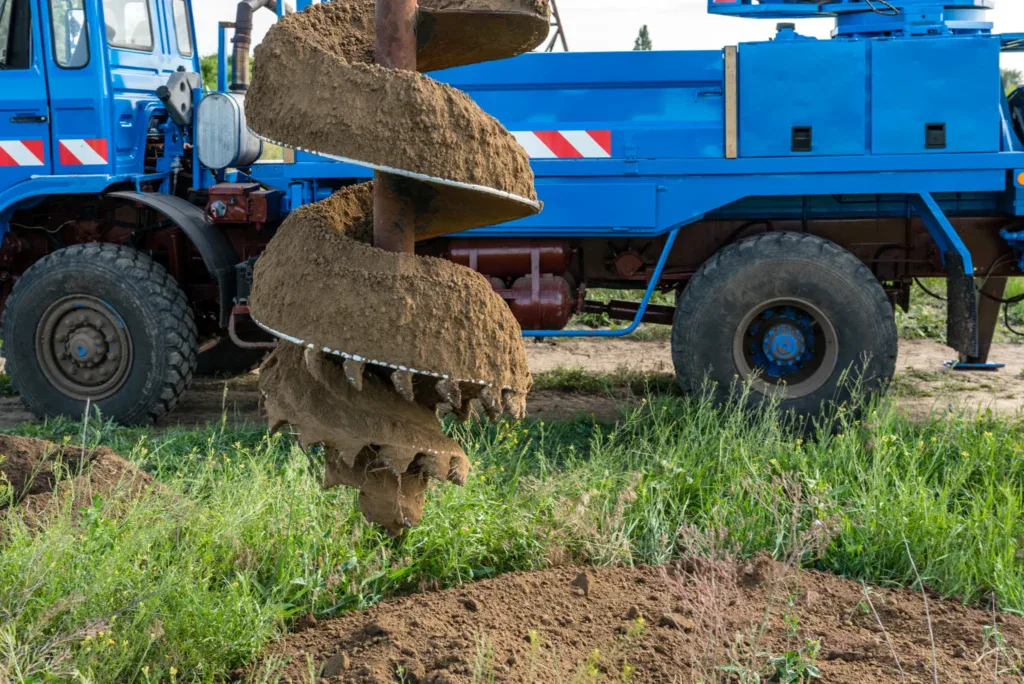
Installation of Piers with Torque-based equipment

Helical plates will be pushed into the ground, which will approach a stable layer that is able to sustain the foundation.

Fixing the Foundation to the Piers Installed

After the piers have attained the correct depth and resistance, brackets are installed to the foundation to provide either instant stabilization or lifting.

With a properly installed process, your home gets full service boring, solid support that does not change with the seasonal movement of the soil of Alamo.

What to Know When Installing a Pier

Pier installation is a well-organized, controlled operation aimed at the reduction of disturbances and the high stability level.

The process is likely to involve the following steps to the homeowner:

  • Complete scanning in order to identify settlement points.
  • Precision measurements were done to be able to determine where the piers should  be placed.
  • Soil testing and recommendations of the engineers.
  • Less excavation in the foundation.
  • Helical or push piers to be installed to the appropriate depth.
  • Elevating, even, or stabilizing where required.
  • Bracket attachment to long term support.
  • Clean up and quality verification of site.

This simplified process restores the order, as well as your home serves during the installation process.

Is it Possible to Install Helical Piers in Wet Conditions?

The biggest concern among many homeowners is whether the installation of piers can still be done in wetder seasons and most importantly in the clay soil of Alamo. The helical piers are very fortunately good in wet or rainy soils since they cut through the soil using torque and can thus be controlled accurately even in sub-optimal situations. They are not prone to slipping because they are designed in a way that makes them much reliable compared to the conventional ways of repairing during wet seasons.

Helical piers can be successfully installed in wet weather as long as the soil is considered safe to use the equipment and the work environment does not become unstable. This enables home owners of affected houses to fix the foundation problems as soon as they occur instead of having to wait until the rainy seasons come and the structure may settle further.

Testimonial

Verified Client Reviews

Make Your Home Strong with Confidence

The problems of the foundation can never improve over time, but the correct pier system fixes the property permanently. Whether you have an uneven floor, sinking corners, or other cracks in the structure, we are prepared to install the deep support needed by your home.
Call now to schedule your on-site foundation inspection and find the best pier option to use on your Alamo house.

Noticing any of these problems at home?

We’re here to help! Swiftly addressing these concerns is key. Our experts will promptly inspect and repair your foundation, ensuring the lasting strength and safety of your home. Reach out without hesitation for reliable assistance.

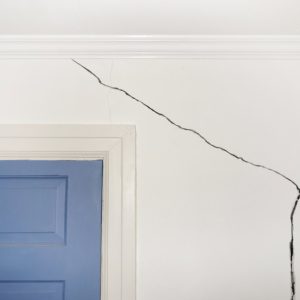
Crack in the wall of a home

Cracks in Interior Walls

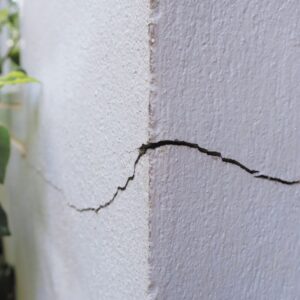
Cracks in exterior wall

Cracks in Exterior Walls

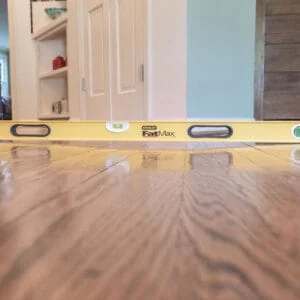
Sloping Floors

Sloping Floor

Foundation Repair Services

Sticking Door

Foundation Construction Services

Sticking Window

leaning-chimney

Chimney Leaning

Contact Us

East Bay Area

Communities We Serve.

We are happy to service communities throughout the East Bay Area and beyond. 

OUR SERVICES

Bay Area Foundation Contractor | Golden Bay Foundation Repair

img

Foundation Repair

Restore stability, fix cracks, and reinforce your foundation for lasting structural integrity

Read More
img

Foundation Inspection

Thoroughly assess foundation health, identify issues, and provide expert recommendations for maintenance.

Read More
img

Crawl Space Repair

Ensure a healthy crawl space environment by addressing moisture, insulation, and structural concerns.

Read More
img

Structural Replacement

Replace damaged or compromised structural elements with precision and quality craftsmanship.

Read More
img

Earthquake Retrofitting

Strengthen your property to withstand seismic activity, safeguarding against potential earthquake damage

Read More
img

Stem Wall Repair

Expertly repair and reinforce stem walls to maintain the overall stability of your property.

Read More
img

Drainage Services

Efficient drainage solutions to manage water runoff and prevent issues such as flooding and soil erosion. Our expert team designs and installs drainage systems tailored to your property's needs, ensuring effective water management.

Read More
img

Push Pier Foundation Repair Systems

Stabilize sinking foundations with push piers that reach load-bearing soil. Restore structure and prevent further settlement.

Read More
img

Foundation Replacement

Fully replace failing foundations with expert craftsmanship and durable materials for lasting structural strength.

Read More
img

Helical Pier & Push Pier Installation

Install helical and push piers to support foundations, lift settled areas, and ensure long-term stability.

Read More
img

Pier and Beam Foundation Repair

Repair damaged beams, replace supports, and level flooring to restore the integrity of pier and beam foundations.

Read More
img

Underpinning Services

Strengthen weak foundations by adding support beneath them, preventing movement and future damage.

Read More
img

Slab Foundation Repair

Fix cracks and unevenness in slab foundations to restore level surfaces and prevent structural issues.

Read More
img

Soil Stabilization

Improve ground support by treating unstable soil, reducing foundation movement and settlement risks.

Read More
img

Certified Soft Story Retrofit Experts

Trust our certified experts to retrofit soft-story buildings with precision, meeting all seismic safety standards.

Read More

People Also Ask

The cost to install a helical pier varies significantly based on project scope, soil conditions, accessibility, and required depth. For a standard residential application, such as stabilizing a foundation or supporting a deck, you might expect a range of $1,500 to $3,000 per pier installed. Larger commercial projects or complex soil remediation can increase costs substantially. It is crucial to obtain a detailed site-specific inspection and quote from a qualified engineer or contractor, as proper installation is critical for long-term performance and warranty. For a detailed look at the process and factors affecting price for homeowners in the Bay Area, refer to our internal resource, Helical Pier & Push Pier Installation Services in Richmond, CA.

The cost of helical chimney piers varies significantly based on several factors. On average, you can expect a price range of $1,500 to $3,500 per pier, with total project costs often falling between $4,500 and $15,000. Key variables include the chimney's size and weight, soil conditions, accessibility for equipment, geographic location, and the number of piers required. Helical piers are a premium foundation repair method, favored for their minimal site disturbance and immediate load-bearing capacity. It is crucial to obtain multiple detailed, in-person inspections and quotes from licensed, experienced foundation repair specialists, as a proper engineering assessment is necessary to determine the exact solution and cost for your specific situation.

The cost comparison between push piers and helical piers is not straightforward, as pricing depends heavily on site-specific conditions. Generally, push piers can be less expensive for straightforward, accessible jobs where existing structures provide the necessary reaction load for installation. Helical piers often have higher material and installation costs due to specialized equipment and are favored for new construction or where headroom is limited. However, helical systems can be installed with less disturbance and in a wider range of soil types. The most cost-effective solution is determined by a professional geotechnical evaluation, which assesses soil composition, load requirements, and access to avoid future, more expensive repairs.

Helical piers, while highly effective for many foundation repair and new construction applications, do have some potential disadvantages. The primary drawback is their cost, which can be significantly higher than other methods like concrete piers or slabjacking, especially for very deep installations requiring specialized equipment and labor. Their effectiveness is also highly dependent on soil conditions; they perform poorly in loose, sandy soils or areas with large obstructions like boulders. Improper installation by an unqualified contractor can lead to failure, as precise torque monitoring is critical for load capacity. Furthermore, they are generally not suitable for repairing foundations with severe, complex cracks or significant horizontal movement, where other structural solutions might be required.

Google Yelp

Overall Rating

5.0
★★★★★

99 reviews