

Technical Summary for Commercial Property Managers
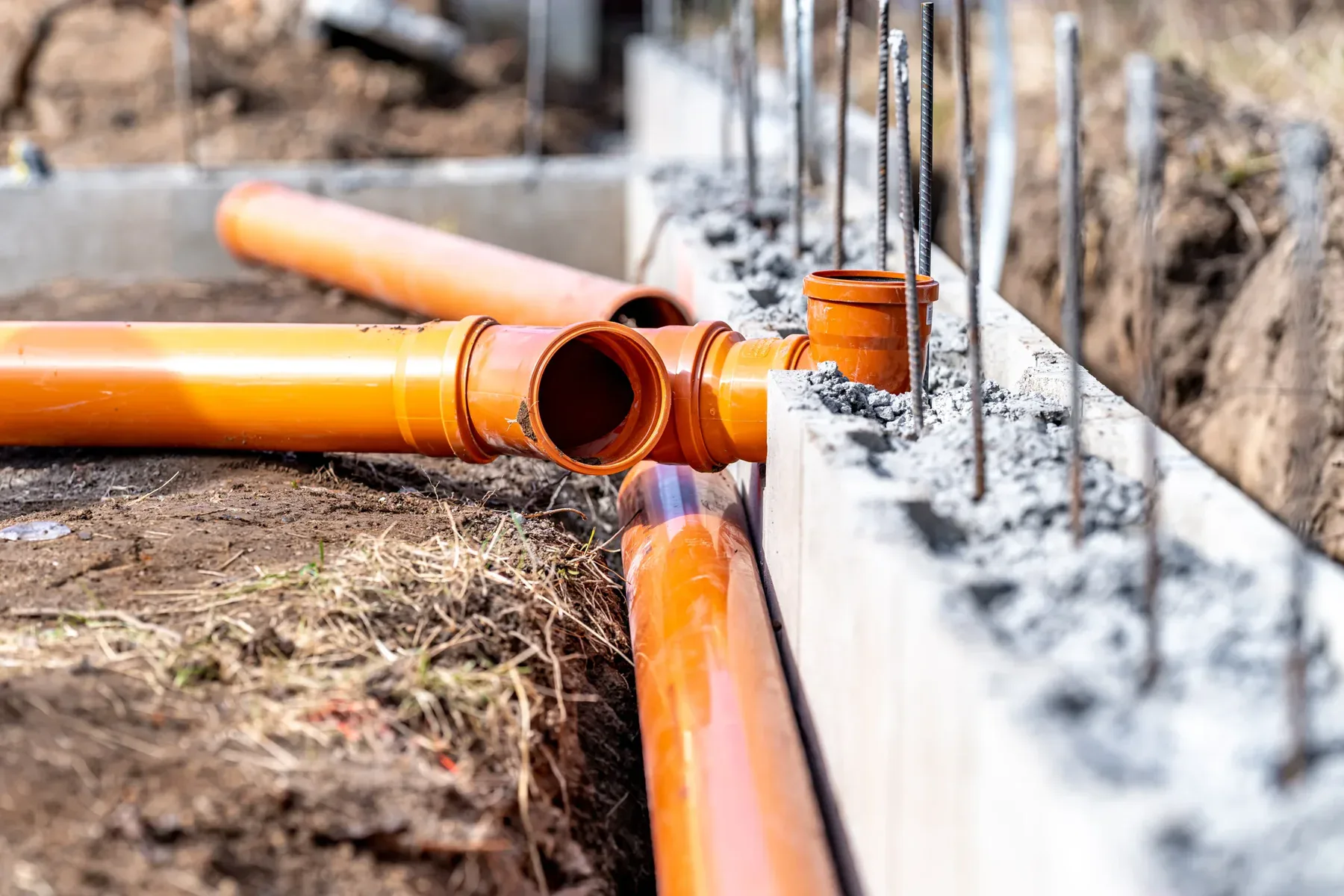
Replacing a broken commercial drainage pipe corner in Danville requires excavating damaged directional junctions, mitigating clay soil lateral pressure, cutting failed fittings, and installing high-impact Schedule 80 PVC, SDR 35, or ductile iron assemblies secured with stainless steel shear-ring couplings. Directional pipe fittings experience elevated hydraulic friction and localized soil stress, making precise alignment, aggregate compaction, and foundation protection essential.
- Primary Failure Cause in Danville: Expansive clay soil expansion during wet winter months causes lateral pressure and soil heave, concentrating structural torque directly on rigid 90-degree elbow joints.
- Recommended Replacement Materials: Heavy-wall Schedule 80 PVC manufactured by Charlotte Pipe or Spears Manufacturing, joined with Fernco stainless steel shielded shear couplings or heavy-duty solvent welds.
- Installation Standard: All underground plastic drainage fitting replacements must adhere strictly to ASTM D2321 Standard Practice for Underground Installation of Thermoplastic Pipe guidelines for aggregate bedding, side-fill compaction, and trench stabilization.
- Stormwater Compliance: Commercial site drainage alterations in Danville must comply with the Contra Costa Clean Water Program C.3 Stormwater Guidebook standards to prevent illicit discharges and manage peak flow rates.
- Hydraulic Efficiency: Replacing sharp 90-degree hard turns with long-sweep bends or dual 45-degree elbow assemblies reduces dynamic fluid friction, limits momentum shock, and mitigates long-term clogging risks.
Why Commercial Drainage Pipe Corners Fail in Danville, CA
Commercial drainage pipe corners fail prematurely in Danville because directional fittings endure concentrated hydraulic force and localized soil shear from surrounding expansive clay deposits. When high-volume stormwater turns inside rigid elbows, fluid momentum impacts pipe walls while shifting soils exert lateral thrust across joint sockets. This combined stress leads to sudden hub cracking, separation, and sub-grade washout.
Expansive Clay Soil Expansion and Contraction
Expansive clay soils across the San Ramon Valley swell during winter rains and contract sharply during summer droughts, creating differential ground movement around rigid pipe fittings. When surrounding soils shift laterally, fixed 90-degree elbow hubs act as unyielding stress points, shearing the pipe at the solvent weld. Subsequent soil shrinkage leaves unsupported subterranean voids that exacerbate joint displacement.
Water Hammer and Momentum Shock
High-velocity runoff from expansive commercial roof lines and paved aprons generates substantial kinetic energy as liquid traverses large-diameter storm collection mains. When rapid surges collide with rigid 90-degree changes in direction, the sudden reduction in forward fluid momentum transfers severe shock loading directly against fitting walls. Over operational lifespans, repeated hydraulic impact causes micro-fracturing and fitting detachment.
Traffic and Dynamic Surface Loading
Commercial drainage corners situated beneath parking aprons, delivery corridors, and trash enclosure pads routinely withstand heavy surface vehicular weight. When delivery vehicles or waste haulers roll across shallow or poorly bedded pipe runs, point loads transfer directly onto the fitting crown. Without structural aggregate bedding, vertical soil compaction crushes upper elbow walls and snaps brittle plastic sockets.
Root Intrusion at Joint Hubs
Landscaping vegetation adjacent to commercial walkways aggressively searches for moisture sources during dry Bay Area summer months. Fine root systems detect sub-surface condensation and micro-cracks along glued pipe hubs, penetrating joint interfaces to access continuous moisture. As roots expand within the elbow interior, they apply extreme radial pressure, cracking the fitting hub and causing massive drainage blockages.
Material Selection Matrix for Commercial Corner Fittings
Selecting replacement materials for commercial drainage corners requires matching site depth, vehicle load, liquid velocity, and soil chemistry against structural pipe ratings. If heavy surface traffic exists, we install ductile iron or Schedule 80 PVC; if flexibility and smooth flow are paramount, we prioritize SDR 35 or high-density polyethylene. Material performance dictates long-term subterranean structural longevity.
| Material Type | Primary Manufacturers | Compressive Load Capacity | Shear Stress Resistance | Recommended Danville Commercial Application |
|---|---|---|---|---|
| Schedule 80 Heavy-Wall PVC | Charlotte Pipe, Spears Manufacturing | High (SDR rating engineered for deep burial) | Superior (Rigid wall resists flex failure) | High-impact commercial downspout hubs, heavy traffic aprons, deep main collection corners. |
| SDR 35 Heavy-Duty Sewer PVC | Charlotte Pipe, IPEX | Moderate-High (Flexible pipe stiffness per ASTM D2412) | Moderate (Requires engineered aggregate side-fill) | Underground gravity-flow storm mains and municipal tie-ins. |
| High-Density Polyethylene (HDPE) | Advanced Drainage Systems (ADS) | High (Flexible ring deflection capacity) | High (Smooth interior sweeps reduce shock) | Paved parking lot drainage lines where sub-grade deflection is anticipated. |
| Ductile Iron Pipe (DIP) | Zurn Water Systems, McWane | Extreme (Maximum structural crush resistance) | Maximum (Resists severe lateral soil shear) | Exposed commercial corners, shallow slab penetrations, and structural foundation tie-ins. |
Diagnostic Step-by-Step Evaluation Process
Diagnostic evaluation of damaged commercial pipe corners requires non-destructive video inspection, electromagnetic line tracing, elevation surveying, and hydraulic flow calculation prior to excavation. We map internal pipe fracturing, precisely locate depth, and evaluate nearby building footings to ensure excavation safety. This methodical approach prevents unexpected utility strikes and limits unnecessary surface asphalt pavement destruction during repair operations.
- High-Definition CCTV Sewer and Storm Camera Inspection: We launch a self-leveling video transmitter into the drainage line to visually map structural cracks, root intrusion, offset hubs, or collapsed elbow throats.
- Sonde Location and Precision Depth Mapping: Using multi-frequency electromagnetic line locators, we identify the exact surface coordinates and invert depth of the failed corner fitting to minimize surface excavation dimensions.
- Foundation Elevation and Soil Stability Testing: When a broken drainage corner is located within 5 feet of a commercial building perimeter or retaining wall, we assess adjacent foundation footings for signs of water undermining or settlement caused by leaking drainage water.
- Hydraulic Load and Slope Calculations: We verify that existing line slopes (minimum 1/8-inch to 1/4-inch fall per foot) and elbow radii match current commercial discharge requirements and city engineering codes.
Step-by-Step Commercial Corner Replacement Methodology
Commercial drainage corner replacement demands precise execution spanning underground utility location, bypass pumping, trench stabilization, damaged fitting removal, aggregate bedding placement, and double 45-degree fitting installation. We follow strict engineering protocols to ensure the newly installed corner junction maintains optimal hydraulic velocity while resisting regional expansive clay movement for decades. Systematic installation protects surrounding foundation structures during excavation.
Step 1: Precision Excavation and Flow Bypass
We initiate site repair by marking underground utilities via Underground Service Alert (USA North 811) and saw-cutting surrounding asphalt or concrete surfacing cleanly. To prevent operational shutdowns for active commercial facilities, we deploy upstream bypass pumping systems that continuously redirect stormwater or effluent away from the working trench, keeping downstream lines dry during repair work.
Step 2: Soil Mitigation and Trench Safety
Excavations deeper than 5 feet require hydraulic trench shoring or protective shields engineered in accordance with OSHA standards to safeguard field personnel. In Danville expansive clay zones, we excavate saturated, uncompacted mud surrounding the shattered fitting until reaching stable native sub-grade. Removing compromised soil prevents future settlement and provides a solid foundation for backfilling.
Step 3: Removing the Broken Corner Assembly
Using diamond-edge mechanical pipe saws, we execute clean, square cuts through the damaged drainage line 12 to 18 inches beyond the failed corner assembly in both directions. This removal margin eliminates micro-fractured or stress-fatigued pipe sections, ensuring new mechanical couplings attach exclusively to sound, structurally uncompromised pipe walls.
Step 4: Installing ASTM D2321 Granular Bedding
We place a minimum 4-inch layer of Class I angular crushed rock along the excavated trench bottom to establish a stable structural foundation for the replacement junction. This washed aggregate bed distributes soil loads evenly, prevents localized point-loading on the fitting belly, and allows subsurface moisture to migrate without undermining pipe alignment.
Step 5: Fitting Assembly and Joint Connections
Rather than reinstalling restrictive short-radius 90-degree elbows, we configure two 45-degree fittings separated by an intermediate pipe spool or install long-sweep commercial bends. This structural modification reduces fluid dynamic drag and prevents solid waste accumulation. We secure the joint assembly using industrial primer and solvent cement or full-shield stainless steel shear couplings.
- PVC Connections: We utilize heavy-duty primer and industrial-grade solvent cement or stainless steel shear-ring couplings manufactured by Fernco to join new pipe ends to existing lines.
- Shear Ring Protection: Full-shield stainless steel couplings enclose the rubber gasket, preventing lateral soil shear forces from misaligning the joint over time.
Step 6: Backfilling, Compaction, and Flow Verification
We place Class I crushed aggregate backfill in controlled 6-inch lifts up to 12 inches above the pipe crown, compacting each layer to 95% Standard Proctor Density. After mechanical compaction, we conduct water flow testing and high-definition video camera verifications to confirm zero leakage and optimal flow slope before restoring surface concrete or asphalt pavement.
Real-World Case Studies: Resolving Complex Drainage Corner Failures in Danville
Commercial drainage corner failures in Danville frequently present complex structural challenges involving surrounding building footings, heavy vehicle loads, and saturated clay soils. Through specialized engineering and multi-disciplinary repair techniques, we resolve these severe failure modes without causing business interruptions. Below are detailed field summaries illustrating how we solved high-severity corner disruptions on local commercial properties.
Case Example 1: Sheared 8-Inch Storm Drain Corner Beneath a Commercial Loading Dock
A multi-tenant retail building on San Ramon Valley Boulevard experienced severe standing water across its rear loading dock every winter. Video camera inspection revealed that an 8-inch corrugated metal pipe corner connecting a catch basin had completely collapsed 6 feet underground. Semi-truck traffic directly above caused pavement sinking, creating structural liability valued at tens of thousands of dollars in potential surface repairs.
- The Problem: A multi-tenant retail building on San Ramon Valley Boulevard experienced standing water across its rear loading dock every winter. CCTV camera inspection revealed that an 8-inch corrugated metal pipe corner connecting the parking lot catch basin to the main discharge line had completely rusted out and collapsed 6 feet underground. Heavy semi-truck delivery traffic directly above the corner was causing pavement sinking, creating structural liability valued at tens of thousands of dollars in potential surface repairs.
- Our Engineering Solution: Golden Bay Foundation Builders excavated the collapsed corner under full trench-shoring containment. We replaced the failed CMP fitting with heavy-wall Schedule 80 PVC long-sweep elbows. To handle future truck loading, we engineered a reinforced concrete relief pad over the aggregate backfill layer, transferring vehicle axle weights directly to stable surrounding native soil rather than the buried pipe.
- The Result: The loading dock drainage was fully restored to 100% discharge capacity, and pavement sinking was permanently eliminated.
Case Example 2: Expansive Clay Foundation Shift Buckling a Downspout Cleanout Assembly
A commercial office complex near Diablo Road suffered recurring subterranean wall moisture intrusion during winter rainstorms. A 6-inch Schedule 40 PVC downspout drain corner running adjacent to the foundation wall had sheared at a 90-degree elbow due to severe clay soil heave. This break discharged thousands of gallons of stormwater directly against structural building footings, inducing differential settlement.
- The Problem: A commercial office complex near Diablo Road suffered recurring basement wall moisture intrusion. A 6-inch Schedule 40 PVC downspout drain corner running along the foundation wall had sheared off at a 90-degree bend due to severe clay soil heave, discharging thousands of gallons of roof rainwater directly against the structural building footings.
- Our Engineering Solution: Our team excavated the damaged foundation junction, removed saturated expansive clay, and underpinned two adjacent footing pads using helical steel piers to arrest building settlement. We reconstructed the drainage corner using high-impact SDR 35 piping with flexible shear-ring couplings and installed an external drainage membrane along the foundation wall.
- The Result: Structural foundation stability was re-established, and roof runoff was safely directed away from the building footings into the city stormwater main.
Trenchless CIPP vs. Open-Cut Corner Replacement
Evaluating trenchless cured-in-place pipe (CIPP) lining against open-cut replacement depends on fitting geometry, degree of collapse, and sub-grade soil stability. If a pipe corner is severely shattered, collapsed, or offset, open-cut structural replacement is mandatory; if the line is straight and structurally intact, CIPP lining offers a viable non-invasive alternative. Engineering constraints dictate the appropriate repair method.
| Technical Evaluation Criteria | Open-Cut Structural Replacement | Trenchless CIPP Lining |
|---|---|---|
| Applicability at Severely Shattered 90-Degree Corners | Excellent: Completely removes broken plastic, clay, or metal fragments and rebuilds the elbow. | Poor to Unsuitable: CIPP liners can wrinkle, bunch up, or fail to bridge completely collapsed or offset 90-degree corner joints. |
| Ability to Change Corner Geometry | High: Allows conversion from a sharp 90-degree bend to a smooth, long-sweep double 45-degree configuration. | None: The liner must strictly conform to the existing, restrictive pipe geometry. |
| Sub-Grade Soil Stabilization | High: Removes saturated, expansive clay mud and replaces it with compacted structural rock. | None: Leaves underlying soil voids and uncompacted ground beneath the fitting untouched. |
| Impact on Surface Pavement | Requires saw-cutting and surface restoration of asphalt/concrete. | Minimal surface impact; accessed through existing cleanouts. |
| Expected Structural Service Life | 50 to 100+ Years (When using Schedule 80 PVC or Ductile Iron with Class I aggregate bedding). | 30 to 50 Years (Dependent on structural integrity of remaining outer host pipe). |
Structural Foundation and Drainage Integration
At Golden Bay Foundation Builders, we analyze commercial drainage systems through a unified structural foundation engineering framework. Underground water leaks originating from broken pipe elbows quickly saturate surrounding sub-grade soils, eroding bearing capacity beneath building footings and parking structures. Integrating foundation repair, helical pier underpinning, earth retaining systems, and heavy underground drainage construction resolves both immediate plumbing leaks and long-term structural soil instability.
- Loss of soil bearing capacity beneath building foundations.
- Sinking, cracking, and trip-hazard formation in surrounding concrete slabs.
- Hydrostatic pressure buildup against subterranean basement and retaining walls.
Our engineering team integrates structural foundation underpinning, retaining wall reinforcement, and civil drainage reconstruction into a seamless single-source solution. Resolving sub-grade water leaks while stabilizing compromised soil profiles ensures long-term facility safety and code compliance.
Frequently Asked Questions
Commercial property managers and facility engineers frequently encounter complex questions regarding underground drainage pipe corner replacements in Danville. Below, we provide clear, definitive answers based on engineering standards, local municipal building codes, and extensive field experience in Contra Costa County.
What causes drainage pipe corners to break more frequently than straight pipe runs in Danville?
Drainage pipe corners break more frequently than straight runs because directional elbows absorb concentrated dynamic fluid impact, elevated frictional resistance, and severe lateral shear forces from seasonal clay expansion. In Danville, expansive clay soils expand during wet winters and shrink during summer droughts, exerting localized torque directly on rigid elbow joint sockets.
Can a broken 90-degree commercial drain corner be repaired with trenchless CIPP lining?
Trenchless CIPP lining is generally unsuitable for shattered, collapsed, or offset 90-degree commercial drain corners because flexible liners tend to wrinkle, fold, or fail across sharp directional transitions. Open-cut replacement remains the superior strategy, allowing complete removal of broken pipe fragments, installation of smooth double 45-degree sweeps, and structural sub-grade soil compaction.
How long does it take to replace a commercial drainage pipe corner in Danville?
Replacing a commercial drainage pipe corner in Danville typically requires between 1 and 3 working days depending on trench burial depth, surface pavement thickness, site utility density, and shoring requirements. Simple downspout junction repairs are completed quickly, while deep main collection lines beneath reinforced concrete aprons require additional excavation, shoring, and surface restoration.
What building codes and stormwater regulations apply to commercial drainage repairs in Danville?
Commercial drainage repairs in Danville must adhere to the California Plumbing Code, Town of Danville municipal engineering standards, and Contra Costa Clean Water Program C.3 Stormwater Guidebook provisions. These regulations enforce strict standards for backfill compaction, trench stabilization, peak stormwater discharge control, and prevention of illicit non-stormwater discharges into municipal drainage systems.
How do we protect commercial foundations during deep drainage excavations in Danville?
We protect nearby commercial foundations during deep drainage excavations by calculating soil load distribution angles, installing engineered hydraulic trench shoring systems, and continuously monitoring footing elevations. If an excavation encroaches on a building footprint or weak clay soil, we install helical steel piers under adjacent footings to stabilize the foundation prior to trenching.
Sources
- ASTM D2321: Standard Practice for Underground Installation of Thermoplastic Pipe for Sewers and Other Gravity-Flow Applications – https://aspe.org/pipeline/out-of-sight-out-of-mind-not-so-fast/
- Contra Costa Clean Water Program C.3 Stormwater Guidebook – https://www.cccleanwater.org/development-infrastructure/c-3-requirements


Comments are closed