

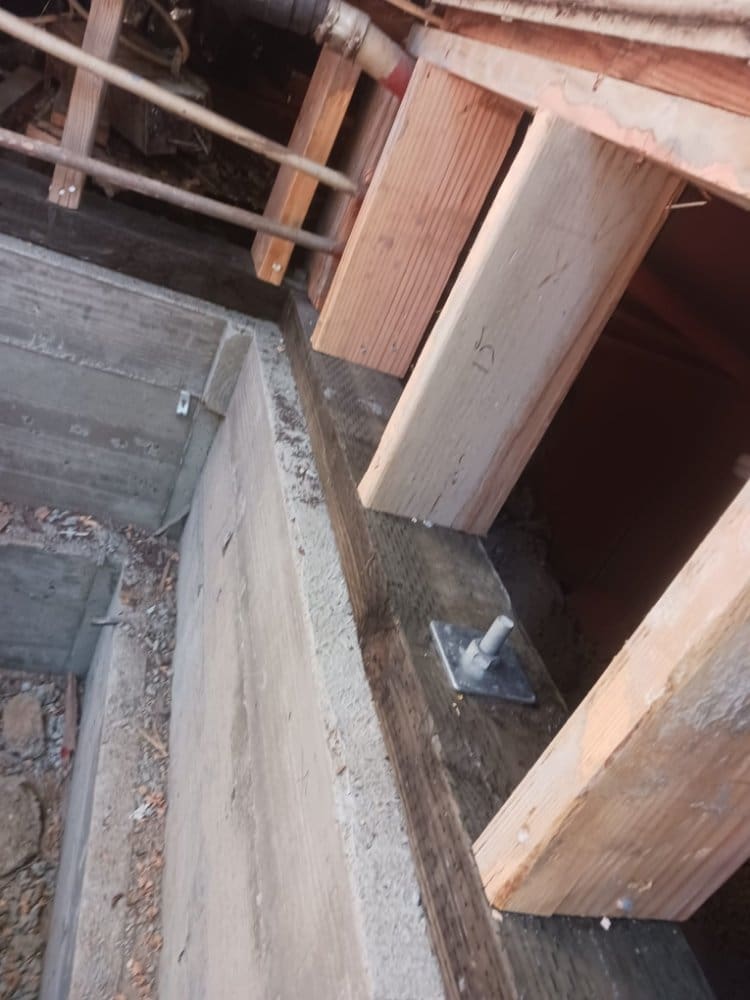
Let’s be honest: the moment you see a crack in your foundation, your stomach drops. It’s not just the repair that worries you—it’s the fight you imagine with your insurance company. In California, where our soil has more mood swings than the stock market, this is a common, stressful scenario. We’ve seen it hundreds of times. The key takeaway? Most standard policies won’t cover gradual foundation settlement, but they will cover sudden, catastrophic damage from a covered peril. Navigating that distinction is everything.
Key Takeaways
- Standard homeowner insurance typically excludes “earth movement” and gradual settlement, but may cover sudden, accidental damage from a covered event like a plumbing leak.
- A successful claim hinges on proving the damage was “sudden and accidental,” not a long-term maintenance issue. Your evidence is your strongest asset.
- The process is heavily procedural; missing steps, like failing to mitigate further damage, can jeopardize your claim.
- In Walnut Creek and the wider East Bay, local factors like expansive clay soils and drought-related subsidence create common, yet often uncovered, scenarios.
So, Will My Insurance Actually Pay For This?
It’s the first question everyone asks, and the answer is almost always, “It depends, but probably not for the reason you think.”
Most people assume their foundation cracked because the house is settling. And they’re usually right. But here’s the brutal truth: gradual settlement is considered a maintenance issue, not an insurance event. Your policy is designed for sudden, unexpected disasters—the “oh crap” moments. If that crack has been slowly widening over the last five years as our clay soils shrink and swell, that’s a geological and maintenance reality, not a covered claim.
Where you do have a shot is if the damage is sudden and accidental, and caused by a peril your policy actually covers. The most common example we see that leads to a successful claim? A catastrophic plumbing leak under the slab. If a pressurized water line bursts and washes away supporting soil, causing a section of your foundation to sink abruptly, that is often covered. The cause isn’t the soil; it’s the sudden water discharge, which is a covered peril.
The California Department of Insurance provides clear guidance on standard policy exclusions, and “earth movement,” including settlement, is right at the top. Understanding this fundamental point saves you hours of frustration.
The “Sudden & Accidental” Test: Your Claim’s Make-or-Break
This is the lens through which every adjuster will view your damage. You need to build a case for immediacy.
What This Looks Like in Practice
We were called to a home near Heather Farm Park after the owners discovered a suddenly uneven floor. They’d been on vacation, and during that time, an old cast-iron sewer line under their home completely failed. It wasn’t a slow leak; it was a gully washer. The evidence was clear: the timing aligned with their absence, the soil under the bathroom was saturated and eroded, and the damage was localized to that specific area. That claim was approved because the narrative was airtight: a sudden, covered event (the pipe burst) led directly to the foundation damage.
What It Doesn’t Look Like
Conversely, a homeowner in the Larkey Park area called us about cracks around multiple door frames and a sticking front door. When we asked when it started, they said, “Well, it gets a little worse every summer.” That’s a textbook description of gradual movement from expansive clay. No single event caused it. We advised them to get an inspection and engineer’s report for their records, but to not expect insurance to cover a decades-long soil cycle.
The Step-by-Step Reality, Not the Theory
Forget the generic checklists online. Here’s how this process actually unfolds when you’re dealing with a potential claim.
### First 48 Hours: Document, Don’t Dismantle
Your immediate reaction is critical. Do not start tearing out drywall or jackhammering concrete. The adjuster needs to see the cause as well as the effect.
- Safety First: If the damage is severe (e.g., a major slope, gas line concerns), get everyone out and call 911 if needed.
- Mitigate the Peril: If the cause is an active leak, you have a duty to stop it. Shut off the main water valve. This shows you’re acting responsibly.
- Forensic-Level Photos & Video: Get on your hands and knees. Take wide shots for context, then ultra-close shots of the crack itself. Put a coin or tape measure next to it for scale. Film a slow, steady walk from the suspected cause (like the water heater) to the foundation damage. Date-stamp everything.
### The Professional Assessment You Absolutely Need
Before you even call your insurer, get a foundation contractor and a structural engineer on site. IMO, this is the most important investment you’ll make, whether you file a claim or not.
- Our Role (The Contractor): We identify the symptoms, scope the repair, and provide a detailed estimate. We can often give a professional opinion on the likely cause based on patterns we’ve seen a thousand times.
- The Engineer’s Role: They are the unbiased, licensed authority who determines the cause and the required remediation. Their report is your single most powerful piece of evidence. An adjuster can dispute a contractor’s opinion; they have a much harder time dismissing a stamped engineering report.
### The Claim Dance: Patience and Paperwork
When you call your insurer, be factual, not emotional. “On 2026, we discovered a significant slope in our hallway following a burst washing machine supply line. We’ve stopped the water and have a foundation contractor and engineer inspecting tomorrow. We’d like to file a claim.”
The adjuster will be assigned. Their job is to protect the insurance company’s assets. Your job is to present an undeniable case. Provide the engineer’s report, your timeline, your photos, and our repair quote. Then, wait. There will be delays, requests for more info, and possibly a “denial of coverage” letter as an initial tactic. Don’t panic. This is often the start of the negotiation.
When Insurance Says No: The California Context
In our area, denial is common. The post-drought periods, where our clay soils go from bone-dry to saturated, cause massive movement. Insurers call this “earth movement” or “subsidence” and point to the exclusion. It’s frustrating, but it’s the reality of living here.
Your Options After a Denial:
- Request a Re-inspection: Ask for a second adjuster or a manager to review, submitting your engineer’s report again.
- Hire a Public Adjuster: These are licensed professionals who work for you to maximize the claim. They typically take a percentage (often 10-15%) of the final settlement. They can be worth their weight in gold for complex, high-value claims.
- Legal Counsel: As a last resort for a clearly wrongful denial, consult an attorney specializing in insurance bad faith. This is a costly, time-consuming path.
The Cost Reality: With and Without Coverage
Let’s talk numbers, because this is where the rubber meets the road. Foundation repair in the Bay Area is not cheap, and insurance involvement changes the calculus entirely.
| Scenario | Typical Cost Range (Bay Area) | Who Pays? | Key Considerations |
|---|---|---|---|
| Covered Claim (e.g., sudden pipe burst) | $20,000 – $80,000+ | Insurance, minus your deductible. | Scope is limited to damage from the covered event. Pre-existing settlement won’t be included. You have little control over contractor choice if using insurer’s network. |
| Non-Covered Repair (gradual settlement) | $15,000 – $50,000+ | You, out-of-pocket. | You have full control. Can address the entire problem, not just the “covered” part. Can choose a local specialist like us who knows Walnut Creek soils. Financing is often available. |
| Emergency Stabilization | $5,000 – $15,000 | Usually you, unless tied to a covered peril. | Critical to prevent immediate danger or further damage. May be partially reimbursed if a later claim is approved. |
Why Going It Alone Can Cost You More
We get the DIY spirit, truly. But filing a foundation claim is not like filing a fender-bender claim. The biggest mistake we see? Homeowners filing a claim based on a fear of cracks, without knowing the cause. This triggers a claim on your CLUE report, potentially raising your premiums, even if it’s denied. You’ve taken a hit for no gain.
That’s why our first consultation often involves helping someone understand if they should file, not just how. Sometimes, the most valuable service we provide is saving a homeowner from a futile, time-consuming process that leaves them worse off. If the evidence points to long-term settlement common in neighborhoods off Ygnacio Valley Road, we’ll tell you straight. It’s better to plan a strategic repair on your own terms than to waste six months fighting a denial.
Wrapping This Up
Dealing with foundation damage is stressful enough without a bureaucratic battle. Arm yourself with knowledge: your policy likely excludes the slow shift of California soil, but it is your ally against sudden disasters. Your evidence—photos, timelines, and especially that engineer’s report—is your leverage. And sometimes, the professional help you need most is an honest assessment of whether this is a fight you can win, or a repair you need to own.
In the end, a stable foundation is about peace of mind. Getting there requires a clear-eyed view of the rules, the local realities, and the path that actually gets your home—and your life—back on solid ground.
Related Articles
Does Homeowners Insurance Cover Water Leaks Under Foundation?
Does Homeowners Insurance Cover Sinking Foundation?
People Also Ask
Generally, standard homeowners insurance policies do not cover foundation damage caused by gradual issues like soil settlement, poor construction, or long-term water seepage. Most policies specifically exclude earth movement and wear and tear. However, your claim may be approved if the damage results from a covered peril, such as a sudden plumbing burst or a fire. For homeowners in Walnut Creek and Contra Costa County, it is critical to review your policy's fine print. If you are unsure about your coverage, Golden Bay Foundation Builders recommends consulting your insurance agent directly. For a deeper understanding of protecting your property, please refer to our internal article titled Hillside Foundation Stabilization: Homeowner's Guide to Permanent Safety (Without Guesswork), which provides essential guidance on permanent safety measures.
When filing a home insurance claim, avoid saying "I think" or "maybe," as this introduces uncertainty. Do not admit fault or say "it was my fault," even if you suspect negligence, as adjusters may interpret this as liability. Never say "I don't know" to every question; instead, state you will check your records. Avoid giving a recorded statement without reviewing your policy first. Do not mention pre-existing damage or minor issues, as this can lead to claim denial. Finally, never say you will handle repairs yourself without professional assessment, as this may void coverage. Golden Bay Foundation Builders recommends consulting your agent before speaking to an adjuster.
The 3 D's of insurance claims refer to Damage, Deductible, and Depreciation. Damage is the physical harm to your property, such as cracks in a foundation from soil movement. The Deductible is the amount you pay out of pocket before coverage begins, typically a fixed dollar amount. Depreciation accounts for the decrease in value due to age or wear, meaning you may not receive the full replacement cost for older items. For homeowners in Walnut Creek and Contra Costa County, understanding these terms is crucial when filing a claim for foundation repairs. Golden Bay Foundation Builders recommends reviewing your policy carefully to see how these factors apply to your specific situation, as they directly impact your final settlement.
The 80% rule in homeowners insurance is a common industry guideline, not a legal requirement. It states that to receive full replacement cost coverage for a partial loss to your home, you must insure your dwelling for at least 80% of its total replacement cost value. If you insure for less than 80%, your insurance company may only pay a portion of a claim, reducing your payout by the percentage you are underinsured. For example, if your home's replacement cost is $500,000 but you only insure it for $300,000 (60%), a $50,000 claim might only be partially covered. At Golden Bay Foundation Builders, we often advise homeowners in Walnut Creek and Contra Costa County to review their policy limits annually with their agent to avoid this gap, especially after renovations that increase home value.
Whether you should file a home insurance claim for water damage depends on the source and extent of the issue. Most standard policies cover sudden and accidental water damage, such as from a burst pipe. However, they typically exclude damage from long-term leaks, poor maintenance, or groundwater seepage through the foundation. Filing a claim for a minor issue can lead to increased premiums or even policy non-renewal. Before deciding, carefully review your policy and consider the deductible versus repair costs. For guidance on coverage specifics, our internal article titled Does Homeowners Insurance Cover Water Leaks Under Foundation? provides valuable insight. At Golden Bay Foundation Builders, we always recommend consulting your insurance agent first to understand the implications before filing a claim.
Filing a homeowners insurance claim for foundation issues has significant pros and cons. A major pro is that it can cover costly repairs, such as fixing a slab leak or structural damage, which could otherwise be financially devastating. However, a key con is that your insurer may deny the claim if the damage is due to gradual settling, poor construction, or lack of maintenance, as these are typically excluded. Another major con is that filing a claim often leads to higher premiums or even policy non-renewal. Before filing, it is crucial to understand your policy. For more details, our internal article Does Homeowners Insurance Cover Water Leaks Under Foundation? provides excellent guidance on coverage specifics. Golden Bay Foundation Builders always recommends consulting with a professional to assess the cause of the damage before contacting your insurance company.
For a general estimate, the average insurance payout for water damage in Walnut Creek and Contra Costa County typically ranges from $3,000 to $10,000 for minor claims, though severe cases involving foundation issues can reach $25,000 or more. The exact amount depends heavily on your policy's coverage limits and the cause of the damage. Sudden and accidental leaks (like a burst pipe) are usually covered, while gradual seepage or neglect is often excluded. If water has compromised your foundation, understanding your policy is critical. For detailed guidance on this specific scenario, we recommend reviewing our internal article titled Does Homeowners Insurance Cover Water Leaks Under Foundation?, which explains coverage nuances and claim steps for foundation-related water damage. Golden Bay Foundation Builders always advises homeowners to document damage thoroughly and consult their insurer promptly.
For homeowners insurance claims related to foundation damage, proof of repairs is critical. You must provide documentation showing the damage was professionally assessed and fixed. This typically includes a detailed invoice from a licensed contractor, a scope of work, and photos of the repair process. Your insurance adjuster will compare this against the initial damage estimate. Without proper proof, your claim may be denied or underpaid. For specific guidance on what your policy covers regarding water-related foundation issues, we recommend you read Does Homeowners Insurance Cover Water Leaks Under Foundation?. Golden Bay Foundation Builders always advises keeping a complete file of all repair receipts and correspondence with your insurer to ensure a smooth claims process.
Yes, you can typically keep your homeowners insurance claim check and make the repairs yourself, but there are important conditions to follow. Most policies allow you to act as your own contractor, provided you complete the work to a professional standard. You must ensure all repairs meet local building codes in Walnut Creek and Contra Costa County. If your home has a mortgage, your lender may require an inspection before releasing funds. Also, if the check is made out to both you and your lender, both signatures are needed. For complex foundation or structural repairs, working with a qualified contractor like Golden Bay Foundation Builders can help avoid costly mistakes and ensure your claim is fully satisfied. Always document your work thoroughly to protect your coverage.


Comments are closed