

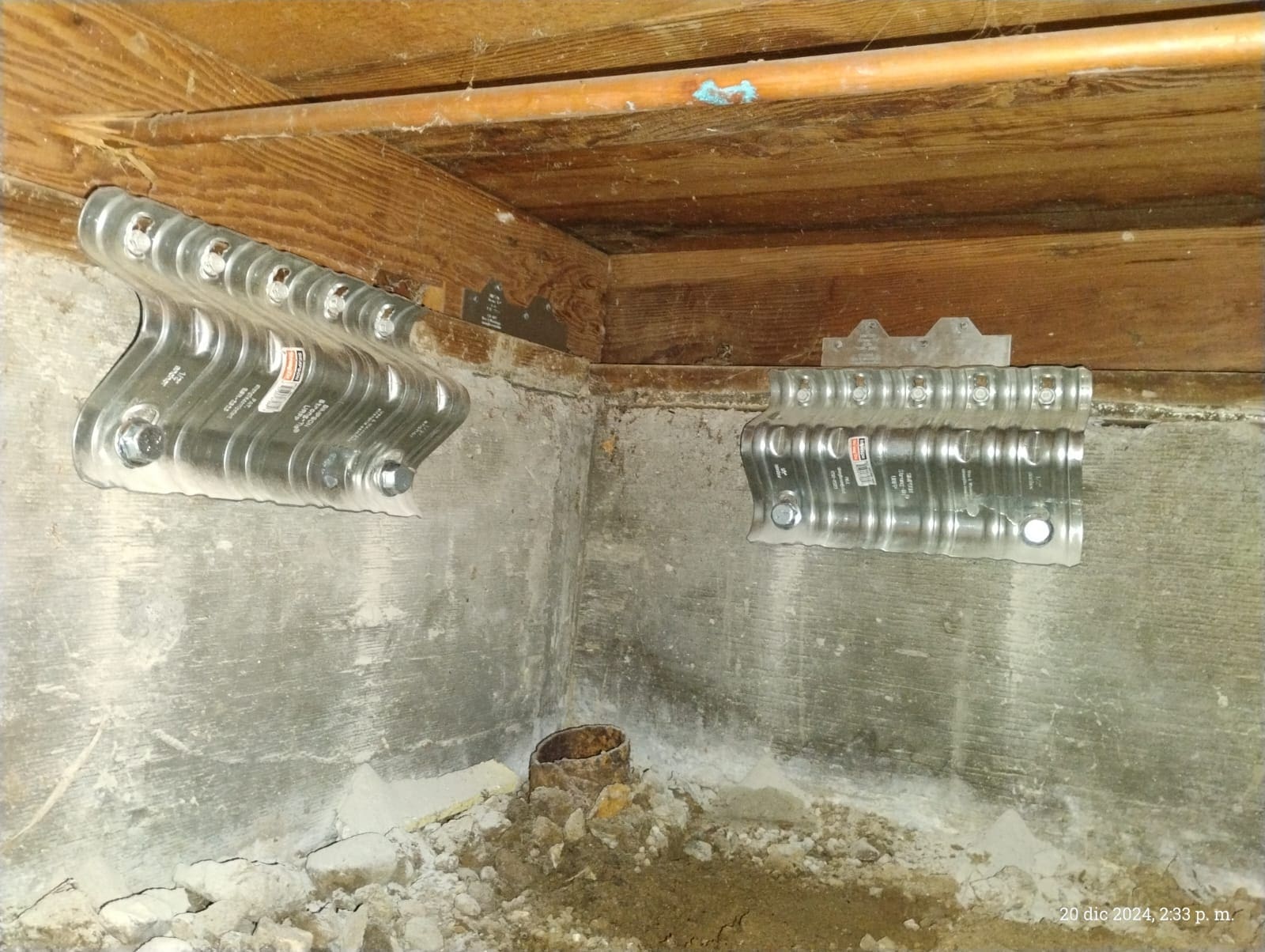
Hydrogeological Impact of Subsurface Plumbing Leaks on Bay Area Foundations
Subsurface plumbing leaks compromise foundation stability by introducing persistent moisture into expansive clay soils, triggering differential soil swelling, loss of bearing capacity, and structural cracking. In the San Francisco Bay Area, saturated clay expands rapidly against concrete footings, exerting lateral pressure and causing uneven foundation movement that demands immediate engineering intervention.
Throughout our years inspecting homes across Oakland, Berkeley, and Concord, we have observed that underground plumbing leaks represent one of the most destructive hidden threats to residential structures. When pressurized water supply lines or sewer main lines break beneath a concrete slab foundation, water saturates the surrounding soil matrix. According to United States Environmental Protection Agency WaterSense leak data, minor household leaks can release tens of thousands of gallons annually, which quickly accumulates beneath load-bearing footings.
The structural impact varies significantly depending on the local soil mechanics. In regions dominated by Franciscan Complex formations and heavy adobe clay, water saturation causes soil expansion that lifts specific sections of the slab, a phenomenon known as differential heave. Conversely, in sandy soils or uncompacted artificial fill along coastal zones, continuous leaking washes away fine particles, creating subsurface voids that lead to localized foundation settlement.
If you encounter persistent dampness along interior floor joints, prioritize hydrostatic pressure testing before attempting structural cosmetic repairs. Ignoring subsurface water movement allows lateral soil pressure to bow stem walls and fracture load-bearing concrete, eventually requiring deep foundation stabilization.
Field Case Studies: Complex Plumbing-Induced Structural Failures in the Bay Area
Field remediation of plumbing-induced foundation failure requires isolated subterranean leak detection, soil moisture stabilization, and targeted structural lifting through deep push piers or helical anchors. Across complex projects in Berkeley and Walnut Creek, our engineering team successfully halted severe differential settlement by pairing line isolation techniques with customized underpinning protocols.
In one notable Berkeley case, a mid-century home sitting on expansive clay experienced a severe two-inch differential floor slanting over six months. Our site investigation revealed a hairline fracture in the main sewer drain line beneath the central hallway slab, which had continuously hydrated the clay soil beneath two supporting interior footings. The localized clay expansion forced the central slab upward while the exterior perimeter remained anchored, creating widespread drywall fracturing and jamming sliding door frames.
To resolve this complex structural failure, we executed a four-step remediation protocol:
- We isolated and replaced the leaking subsurface cast-iron pipe with high-density polyethylene piping to eliminate further moisture influx.
- We excavated strategic access portals around the affected interior footings to install subterranean moisture extraction equipment and monitor soil tension.
- We driven structural steel push piers down to stable bedrock at a depth of twenty-two feet, bypassing the unstable, saturated clay strata completely.
- We hydraulically releveled the settled structural framing and stabilized the concrete slab using low-pressure polyurethane void-filling resin.
In another instance in Walnut Creek, a leaking main water supply line beneath a concrete stem wall foundation eroded supporting fill soil, causing a four-foot section of footing to sink. Data from California Geological Survey soil hazard maps confirms that localized soil erosion combined with expansive clay cycles drastically increases settlement risk. We stabilized the stem wall by installing helical piers and injecting high-density structural foam to consolidate the loose backfill.
Diagnostic Protocol and Structural Decision Framework
A systematic diagnostic protocol identifies leak-induced foundation distress through manometer elevation mapping, hydrostatic pressure testing, and subsurface soil core sampling. By correlating soil moisture distribution with relative floor movement, we establish whether structural deformation stems from localized plumbing leaks, broad seasonal clay swelling, or regional slope instability.
| Diagnostic Indicator | Primary Plumbing Culprit | Soil Response Profile | Recommended Engineering Fix |
|---|---|---|---|
| Localized Center Slab Heave | Pressurized Fresh Water Leak | Clay Soil Swelling & Volume Expansion | Line Repair & Deep Push Pier Underpinning |
| Perimeter Footing Settlement | Main Sewer Line Failure | Soil Washout & Subsurface Voiding | Helical Piering & Polyurethane Void Fill |
| Crawl Space Moisture & Mold | Leaking Waste Stack or Drain | Fungal Decay & Saturated Soil Sinking | Pipe Replacement & Drainage System Installation |
| Stem Wall Cracking | Water Service Entry Rupture | Hydrostatic Pressure & Concrete Spalling | Stem Wall Reconstruction & Seismic Retrofit |
If structural inspection reveals localized movement directly above a plumbing trench, prioritize soil moisture testing before selecting an underpinning system. If soil testing shows moisture content exceeds thirty percent above natural plastic limits, installation of mechanical deep piers is mandatory to bypass saturated upper strata.
Choosing between temporary leveling and permanent structural stabilization depends on soil composition and load distribution. Chemical grouting alone provides short-term void filling, but steel piers anchored into competent bedrock provide permanent load transfer that resists future soil moisture fluctuations.
Preventive Measures and Moisture Stabilization Protocol
Preventing foundation damage from plumbing leaks depends on continuous moisture monitoring, regular pressure inspections, and aggressive perimeter water redirection around structural footings. Implementing automated flow-shutoff systems alongside engineered grading controls ensures that unseen pipe ruptures cannot saturate load-bearing soil strata or trigger catastrophic foundation heave.
To protect your home against subterranean moisture threats, we recommend implementing specific plumbing and drainage controls:
- Install smart water meter monitoring devices that detect continuous low-flow leaks and automatically shut off the main water valve.
- Schedule bi-annual hydrostatic plumbing pressure checks, especially for homes built before 1980 with original galvanized or cast-iron lines.
- Maintain a minimum six-inch separation between foundation soil line and wood framing while ensuring slope grades drain water away at five percent pitch.
- Extend roof downspouts at least six feet away from concrete footings to prevent localized soil oversaturation near plumbing entry points.
If you suspect an active plumbing leak under your foundation, immediate isolation prevents exponentially higher structural repair expenses. Coordinating plumbing repairs directly with structural foundation engineering ensures that soil stability is restored before permanent structural piers are installed.
Frequently Asked Questions
How quickly can a subterranean plumbing leak cause foundation settlement?
A subterranean plumbing leak can cause measurable foundation settlement or heave within two to four weeks depending on soil composition. High-volume pressurized water leaks wash away sandy backfill quickly, creating immediate voids, while slow leaks in expansive clay cause gradual swelling over several months. Immediate plumbing line isolation is required to prevent progressive structural deflection.
What is the financial trade-off between slab leak repair and underpinning?
Repairing a slab leak directly costs between one thousand and three thousand US dollars, whereas structural foundation underpinning ranges from eight thousand to over twenty-five thousand US dollars. Resolving the plumbing leak immediately prevents the soil degradation that causes severe differential movement, saving homeowners tens of thousands of US dollars in structural pile installation.
How do we differentiate between seasonal soil expansion and a plumbing leak?
Seasonal soil expansion affects the entire foundation perimeter uniformly during rainy winter months, whereas a plumbing leak causes localized floor lifting or settling concentrated near wet utility corridors. We utilize electronic manometer surveys and soil moisture probes to map differential movement patterns, isolating localized water saturation caused by broken pipes from natural weather cycles.
Can polyurethane foam injection fix foundation settling caused by a plumbing leak?
Polyurethane foam injection effectively fills subsurface voids and raises settled concrete, but it must only be applied after the underlying plumbing leak is fully repaired and soil moisture levels stabilize. Injecting foam into active water-saturated clay without fixing the pipe leak results in premature material failure and continued foundation movement.
When is a seismic retrofit necessary after repairing plumbing-induced foundation damage?
A seismic retrofit is necessary if plumbing leaks have compromised the structural bond between the foundation sill plate and concrete stem wall, or if the home sits in an active Bay Area fault zone. Restoring structural continuity through anchor bolts and plywood shear walls ensures the foundation withstands earthquake forces after water damage repairs are completed.
Sources
- US EPA WaterSense Leak Statistics: https://www.epa.gov/watersense/fix-leak-week
- California Geological Survey Soil Hazards: https://www.conservation.ca.gov/cgs
- United States Geological Survey Bay Area Geology: https://www.usgs.gov
People Also Ask
For homeowners in Walnut Creek and Contra Costa County, standard homeowners insurance policies typically do not cover foundation leaks caused by gradual wear and tear, earth movement, or poor maintenance. Insurance usually covers sudden and accidental damage, such as a burst pipe that causes a leak. If the leak results from a covered peril like a plumbing failure, the resulting water damage to your property may be covered, but the repair of the foundation itself often is not. To understand your specific policy, review your coverage details. For expert guidance on assessing foundation issues, our internal article FAQ: Foundation Repairs – Golden Bay Foundation Builders provides valuable information. Golden Bay Foundation Builders recommends consulting with your insurance provider to clarify your exact terms.
The best time of year for foundation repair in Walnut Creek and Contra Costa County is typically during the dry summer and early fall months. This period offers stable soil conditions, which are crucial for a successful repair. Dry ground allows for proper excavation and concrete curing without the interference of rain or excessive moisture. Winter rains can saturate the soil, causing delays and complicating the installation of piers or underpinning systems. For a more detailed breakdown of seasonal considerations, please refer to our internal article What Is The Best Time Of Year For Foundation Repair?. At Golden Bay Foundation Builders, we always recommend planning your project during these drier months to ensure the most efficient and durable outcome for your home's foundation.
To prevent water from seeping into your foundation, start by ensuring proper grading around your home. The soil should slope away from the foundation at a rate of at least 6 inches over 10 feet to direct rainwater away. Clean and maintain your gutters and downspouts regularly, extending downspouts at least 5 feet from the house. Installing a quality drainage system, such as a French drain or a sump pump, can also be highly effective. For comprehensive strategies, including soil management and waterproofing techniques, we recommend reading our internal article titled Comprehensive Guide to Preventing Mold Growth from Foundation Water Intrusion. At Golden Bay Foundation Builders, we emphasize that proactive maintenance is key to avoiding costly structural damage and mold growth.
A leaky basement can indeed compromise your foundation over time if left unaddressed. Persistent moisture can lead to soil erosion around the footings, hydrostatic pressure against the walls, and even concrete degradation. This may cause cracks, bowing, or settlement issues. At Golden Bay Foundation Builders, we recommend immediate inspection and waterproofing to prevent long-term structural damage. For a deeper understanding of how different foundation types handle moisture, refer to our internal article Comprehensive Guide to Building Foundations: Types, Benefits, and Selection Tips.