

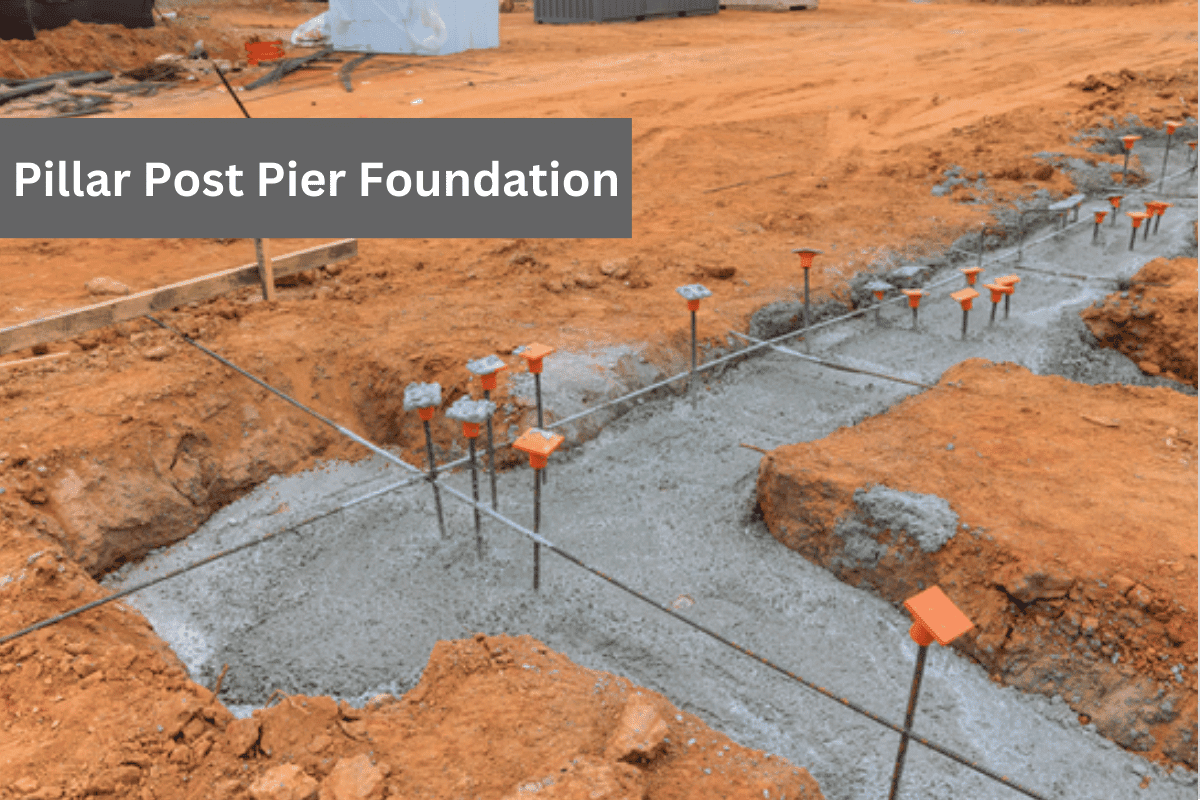
Understanding Post and Pier Foundations in Bay Area Geology
Post and pier foundations utilize concrete footings and vertical wood or steel posts to lift structures above ground level, allowing for crawlspace utility access and moisture isolation. In the San Francisco Bay Area, these systems are common in historic homes but face severe challenges from expansive clay soil, hill slope creeping, and high seismic shaking risks.
When we inspect vintage housing stock across Oakland, Berkeley, San Jose, and San Francisco, post and pier foundations dominate structures built before the 1950s. These systems rely on isolated concrete pads or masonry piers set into surface soils, supporting vertical timber posts, horizontal girders, and floor joists. While this layout provides excellent subfloor ventilation and easy pipe access, it lacks a continuous concrete perimeter wall to resist horizontal earthquake forces.
Geological conditions across Northern California significantly influence how these isolated pier points perform over time. Data published by the U.S. Geological Survey indicates that approximately 25 percent of the nine-county Bay Area sits within moderate to very high liquefaction hazard zones. During heavy atmospheric river winter storms, clay soils absorb large volumes of moisture and swell, whereas prolonged summer dry spells cause severe shrinkage and soil retreat.
This cyclic movement causes individual posts to shift independently, leading to differential settlement across the subfloor grid. Furthermore, coastal fog and high ground moisture accelerate dry rot fungal decay in untreated redwood or Douglas fir posts. Understanding these environmental drivers allows us to diagnose structural instability before catastrophic framing failure occurs.
Common Failure Modes and Warning Signs in Bay Area Homes
Foundation failures in post and pier homes present clear visual indicators like unlevel floors, sticking doors, diagonal wall cracking, and tilted support posts under crawlspaces. These structural deficiencies stem from soil seasonal volume changes, seismic lateral load shifts, and timber decay caused by unvented soil dampness.
Recognizing early warning signs prevents isolated pier shifts from damaging superstructure framing, plumbing lines, and exterior finishes. When we perform visual and laser-level evaluations, we categorize red flag symptoms into structural superstructure indicators and crawlspace defects.
Key visual indicators observed from interior living areas and exterior walls include:
- Diagonal plaster and drywall cracking emanating from window and door corners.
- Interior door frames sticking, binding, or showing visible gaps at the head jamb.
- Floor sloped or bouncing, with localized depressions exceeding 0.5 inches over six feet.
- Gaps separating baseboards, floorboards, or exterior chimney brickwork from exterior siding.
Inside the crawlspace beneath the house, physical failure mechanisms are often immediately visible upon close physical inspection. According to engineering publications from the California Geological Survey, expansive clay soils in regions like the Santa Clara Valley exert lateral and vertical swelling pressures that dislodge shallow pier blocks.
Common crawlspace failure modes we identify during field assessments include:
- Posts leaning out of plumb due to soil lateral creep or earthquake racking forces.
- Timber posts exhibiting advanced dry rot, termite damage, or crushing at girder bearing plates.
- Concrete pier blocks cracking, spalling, or settling unevenly into softened topsoil.
- Absence of steel post-to-beam connectors, leaving girders resting unattached on wooden posts.
Real-World Field Case Studies: Resolving Complex Foundation Failures
Resolving complex foundation issues requires localized engineering interventions tailored to soil characteristics and structural loads across diverse Bay Area micro-climates. Our team routinely corrects compromised timber piers, differential slope slipping, and unanchored framing through engineered steel helical piers, concrete perimeter stem walls, and seismic bracing.
Field Case 1: Sloping Hillside Pier Settlement in the Oakland Hills.
In an 1890s two-story Craftsman home located on a 22-degree sloped hillside, downhill ground movement caused six original unreinforced concrete piers to lean 4 inches out of plumb. The home had suffered 3.2 inches of downhill floor sagging, causing interior structural walls to separate from the ceiling joists. We resolved this stability crisis by excavating beneath the downhill side and driving six steel helical piers down 18 feet to solid bedrock anchor depths. We then installed a heavy-duty structural steel beam framework, jacked the superstructure back to level tolerances, and secured all posts with engineered Simpson Strong-Tie post-to-beam connectors.
Field Case 2: Severe Expansive Clay Heave in South San Jose.
A 1920s Spanish Revival home built over dense Montmorillonite clay soil experienced 2.8 inches of differential heave between interior piers and exterior footing walls following a wet winter season. The swelling soil forced interior post supports upward, racking door frames and cracking original floor tiles throughout the ground floor. We rectified the issue by installing a dual-phase foundation remediation plan featuring sub-surface perimeter french drains and deep root-barrier moisture shields. We excavated compromised interior shallow pier pads, poured deep reinforced concrete footings anchored below the active clay zone, and installed adjustable steel screw jack posts to permit precise level recalibration during future drought cycles.
Technical Decision Framework: Post and Pier Repair vs. Retrofit vs. Replacement
Choosing between foundation leveling, seismic reinforcement, or complete replacement depends on structural load demands, soil expansivity, and seismic hazard classifications under state guidelines. Homes with sound timber posts need simple lateral bracing, while severely displaced or decaying structures require deep underpinning or conversion to perimeter stem walls.
Determining the appropriate remediation strategy requires balancing current structural integrity, site soil geology, long-term stability goals, and capital investment requirements. When assessing properties, we apply conditional logic: if soil bearing capacity is stable and posts are structurally sound, we prioritize seismic retrofit hardware; if soil is highly expansive or shifting, we recommend deep underpinning or stem wall conversion.
| Repair or Upgrade Method | Ideal Structural Application | Primary Engineering Trade-offs | Estimated Bay Area Cost Range |
|---|---|---|---|
| Localized Post & Shim Replacement | Isolated post rot or minor elevation adjustment in stable soil | Low cost; does not address underlying soil movement or seismic lateral drift | 3,000 to 8,000 US Dollars |
| Helical Pier Underpinning | Deep soil settlement, hillside creep, or weak surface bearing strata | High weight capacity; requires heavy machinery access in tight crawlspaces | 15,000 to 35,000 US Dollars |
| Seismic Cripple Wall & Sheathing Retrofit | Unbraced post and pier homes requiring lateral load reinforcement | Highly effective against shaking; requires minimum crawlspace height clearances | 8,000 to 18,000 US Dollars |
| Continuous Concrete Perimeter Stem Wall Conversion | Severe overall settlement, unreinforced masonry failure, or high seismic risk | Permanent structural solution; higher upfront investment and excavation work | 35,000 to 75,000 US Dollars |
According to retrofitting standards outlined by the Federal Emergency Management Agency in the FEMA P-1100 framework, unbraced post and pier systems represent one of the highest structural vulnerability classes during earthquakes. Replacing isolated posts with continuous reinforced concrete footings tied directly to engineered shear walls provides maximum lateral load transfer and long-term settlement control.
Step-by-Step Maintenance Protocol for Long-Term Pier Stability
Maintaining a post and pier foundation requires systematic monitoring of crawlspace moisture, drainage pathways, timber condition, and floor level alignment across dry and wet seasons. Executing routine preventative care mitigates destructive differential settlement and extends the structural lifespan of historic Bay Area residential property framing.
Homeowners can significantly reduce foundation failure risks by executing a structured annual preventative maintenance sequence. We advise property owners to follow this five-step engineering care protocol to protect their subfloor structural framing:
- Conduct Seasonal Crawlspace Inspections: Inspect crawlspaces twice yearly, once at the end of dry summer and once during peak winter rains, checking for standing water, damp soil, or active leaks.
- Maintain Perimeter Soil Moisture Uniformity & Drainage: Clean perimeter gutters, extend downspout discharge lines at least 6 feet away from footings, and ensure ground surface grading slopes away from the foundation at a 5 percent grade.
- Inspect Timber Posts for Moisture Content and Dry Rot: Probe wooden posts, girders, and mudsills with an awl to detect soft, decayed wood fibers, ensuring moisture readings remain under 19 percent.
- Verify Seismic Lateral Connectors and Anchor Hardware: Check that metal T-straps, post caps, and mudsill anchor bolts remain tight, free of severe rust, and properly fastened to wooden framing elements.
- Recalibrate Floor Levels and Shims: Measure subfloor level variations using a digital water level annually, replacing loose or dry-rotted wooden shims with rot-resistant hardwood or steel shims when gaps appear.
Executing these sequential steps mitigates sudden structural movement and provides clear historical baseline measurements for professional structural evaluations.
Frequently Asked Questions
How much does post and pier foundation repair cost in the Bay Area?
Post and pier foundation repairs in the Bay Area typically cost between 3,000 US Dollars for localized timber post replacements and 45,000 US Dollars or more for complete seismic retrofitting or continuous stem wall conversions. Final pricing depends on site soil conditions, crawlspace clearance, structural load requirements, and engineering permit fees across local jurisdictions.
Can a post and pier foundation withstand a major Bay Area earthquake?
Unbraced post and pier foundations are highly vulnerable during seismic events because isolated vertical posts lack continuous lateral shear strength. Without engineered Simpson Strong-Tie metal connectors, plywood cripple wall shear bracing, or continuous concrete footings, shaking can knock posts off pier pads, resulting in partial or total floor collapse.
How do expansive clay soils affect pillar post and pier foundations?
Expansive clay soils absorb water and swell during wet winter months, then shrink during hot summer droughts, causing shallow foundation piers to lift and settle unevenly. This continuous cyclical movement creates differential floor sagging, drywall cracks, binding doors, and structural stress throughout subfloor framing.
Should I convert my post and pier foundation to a concrete stem wall?
Converting to a continuous concrete perimeter stem wall is highly recommended if your property sits on sloped terrain, soft fill, expansive soil, or near active Bay Area fault zones. A continuous stem wall provides uniform perimeter support, superior seismic shear resistance, and effective barrier protection against crawlspace moisture intrusion.
How frequently should Bay Area homeowners schedule a professional foundation inspection?
Homeowners in the Bay Area should schedule a comprehensive crawlspace and foundation inspection every two to three years, as well as immediately following major atmospheric river storm seasons or seismic events exceeding magnitude 5.0. Regular professional evaluations identify timber decay, pier rotation, and soil shifting before secondary structural framing damage develops.
Sources
- U.S. Geological Survey (USGS) – San Francisco Bay Area Liquefaction Hazard Maps and Quaternary Soil Studies: https://www.usgs.gov
- California Geological Survey (CGS) – Seismic Hazard Zone Maps and Expansive Soil Assessments: https://www.conservation.ca.gov/cgs
- Federal Emergency Management Agency (FEMA) – FEMA P-1100 Guidelines for Vulnerability-Based Seismic Assessment and Retrofit of One- and Two-Family Dwellings: https://www.fema.gov
Related Articles
Basement Foundation Repair
Comprehensive Guide To Insurance Claims For Foundation Repairs In Golden Bay
House Foundation Repair
Pier And Beam Foundation
What Type Of Foundation Repair Is Best?
Pier and Beam Foundation Repair Services in East Bay, CA
People Also Ask
For many homes in Walnut Creek and Contra Costa County, a pillar, post, or pier foundation can be a viable solution, particularly for additions or structures on sloped lots. These systems elevate the structure, which can help with drainage and reduce soil moisture contact. However, they are not always the ideal choice for a full primary residence due to potential issues with lateral stability and floor insulation. A critical concern with this foundation type is the gap left between the ground and the structure. This space can become an entry point for pests. For professional guidance on protecting your investment, we recommend reviewing our internal article titled Preventing Pest Infestations Through Foundation Gap Sealing. Golden Bay Foundation Builders can assess your specific soil conditions to determine the best support system for your project.
A pillar, post, or pier foundation is designed to be a long-lasting solution, but no foundation system is truly permanent in the sense of lasting forever. The lifespan of a pier foundation depends heavily on soil conditions, the quality of materials, and proper installation. In areas like Walnut Creek and Contra Costa County, where expansive clay soils are common, a well-engineered pier system can provide stability for decades. However, environmental factors like moisture changes and seismic activity can affect its longevity. For detailed insights on durability and maintenance, please refer to our internal article titled FAQ: Foundation Repairs – Golden Bay Foundation Builders. Golden Bay Foundation Builders recommends annual inspections to ensure your pier foundation remains in optimal condition.
Pier foundations, while effective in certain soil conditions, come with several notable drawbacks. One primary disadvantage is their susceptibility to lateral movement or shifting, especially in areas with expansive clay soils or seismic activity, which is a key concern for homeowners in Walnut Creek and Contra Costa County. Additionally, pier foundations often leave a crawlspace that can be prone to moisture accumulation, pest intrusion, and poor insulation, leading to higher energy costs. The installation process can also be complex and costly, particularly if deep piers are required. For a thorough exploration of these issues, we recommend reviewing our internal article What Are The Disadvantages Of Pier Foundations?, which details the specific challenges and considerations. Golden Bay Foundation Builders always advises a professional soil analysis before choosing this foundation type.
For a pier foundation, the proper footing is a reinforced concrete pad designed to distribute the load from the pier to the soil beneath. The footing must be sized based on the soil's bearing capacity and the total weight the pier will support. Typically, the footing is wider than the pier itself, often square or rectangular, and is placed on undisturbed soil or compacted fill below the frost line to prevent movement. Steel reinforcement bars, or rebar, are embedded in the concrete to resist tensile forces and prevent cracking. For lasting stability, especially in areas with soil erosion concerns, it is critical to ensure the footing is properly drained and protected. For more detailed guidance, you can review our internal article Repairing Eroded Footings: Techniques For Lasting Stability. At Golden Bay Foundation Builders, we emphasize that proper compaction and curing are non-negotiable for a durable pier footing.
For homes in Walnut Creek and Contra Costa County with post and pier foundations, common issues include settling, rot, or termite damage to the wooden posts. A professional repair typically involves replacing damaged wooden posts with durable concrete piers or adjustable steel jacks. The process requires carefully lifting the structure to transfer the load, then installing new supports on stable, compacted soil. This method is effective for leveling floors and preventing future movement. For a comprehensive overview of different repair strategies, our internal article What Type Of Foundation Repair Is Best? provides detailed guidance. Golden Bay Foundation Builders recommends a thorough inspection to determine if post and pier repair or a more permanent foundation solution is appropriate for your specific property.
When comparing a post and pier foundation to a crawl space, the primary difference lies in the structural support system. A post and pier foundation uses concrete columns driven deep into the ground to support the home, creating an open void underneath. A crawl space, however, typically involves a continuous concrete perimeter foundation with a dirt or concrete floor, offering enclosed access beneath the house. Both methods elevate the structure, but crawl spaces provide better insulation and moisture protection. For homeowners in Walnut Creek and Contra Costa County, choosing the right system depends on soil conditions and budget. For more detailed guidance, Golden Bay Foundation Builders recommends reading our internal article What Type Of Foundation Repair Is Best? to determine the best solution for your property.