

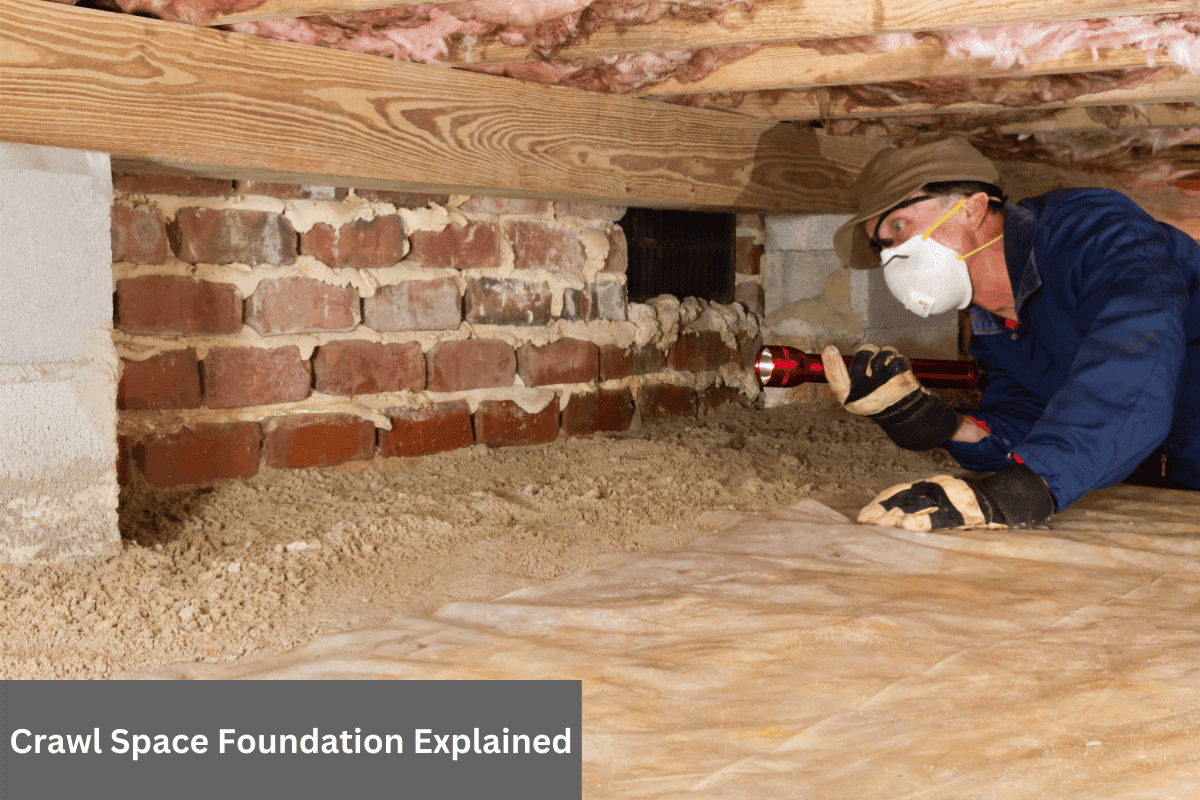
Understanding Crawl Space Foundations in the Bay Area
A crawl space foundation is an elevated structural system that raises a residential building eighteen to thirty-six inches off the ground using perimeter concrete stem walls and interior support posts. This design creates an under-floor cavity that isolates living spaces from moist soil while providing accessible routing for plumbing, gas, and electrical infrastructure across Northern California homes.
In our field experience across the San Francisco Bay Area, we routinely evaluate crawl space systems supporting homes built from the late nineteenth century to modern developments. Unlike full basements or concrete slab-on-grade foundations, a crawl space provides an ideal balance of utility access, elevation against surface runoff, and structural adaptability on sloped terrain.
The system relies on continuous concrete perimeter footings topped with stem walls, alongside interior concrete piers that support heavy timber girders and joists. Across Alameda, Santa Clara, San Mateo, and Contra Costa counties, these structures must withstand localized environmental hazards, including fluctuating water tables and ground movement.
Seismic and Geotechnical Challenges Across Northern California
San Francisco Bay Area crawl space foundations face acute structural stresses due to active fault systems, high seismic acceleration, and expansive clay soils that swell during wet winters and shrink during dry summers. Unreinforced stem walls, unbolted sill plates, and unbraced cripple walls frequently suffer severe lateral rotation or localized differential settlement under these dynamic environmental forces.
Geotechnical data documented by the U.S. Geological Survey (USGS) highlights the significant liquefaction and ground-shaking risks present in coastal and bayland alluvial deposits. When expansive clay deposits—such as Franciscan complex clays common in East Bay hills—absorb winter rainfall, they exert upward pressure that lifts foundation footings unevenly.
During summer drought months, these same soils desiccate and shrink, causing foundation footings to settle and framing to bow. Compounding this soil movement is the reality of regional seismic activity from the San Andreas and Hayward fault systems. Homes constructed prior to modern seismic building code updates often lack basic sill plate anchor bolts and plywood shear bracing on cripple walls, leaving them highly vulnerable to collapse during an earthquake event.
Engineering and Constructing Resilient Crawl Spaces
Constructing a resilient crawl space foundation requires continuous concrete perimeter footings poured below seasonal moisture variance depths, combined with reinforced interior piers and engineered floor framing. The assembly must integrate seismic anchor bolts, hold-down hardware, and dedicated shear bracing to transfer earthquake forces safely into the underlying earth without compromising structural alignment.
Our engineered construction sequence begins with site excavation down to stable bearing soil, followed by pouring continuous footings reinforced with grade-sixty steel rebar. Stem walls are constructed using poured concrete or reinforced concrete masonry units, extending at least eight inches above finished grade to protect wood framing from soil contact.
Interior loads are distributed onto isolated concrete pad footings supporting adjustable steel columns or masonry piers beneath primary floor girders. We install galvanized foundation anchor bolts spaced no more than four feet apart, along with proprietary hold-down brackets at all structural corners and shear wall terminations.
Subfloor framing utilizes pressure-treated mudsills separated from concrete by rubberized sill seal gaskets to block capillary moisture rise. Dimensional framing timber or engineered wood I-joists are then spanned across girders, establishing a flat, rigid deck ready for subfloor sheathing.
Structural Variants of Crawl Space Systems
Crawl space foundation variants differ primarily in their ventilation configurations, wall materials, and load distribution methods, ranging from open pier-and-beam designs to modern sealed conditioned assemblies. Selecting the correct system depends on local microclimates, soil bearing capacity, slope geometry, and local building code provisions governing ground moisture management.
In Northern California, historical building practices produced several distinct crawl space structural configurations. Understanding these architectural variants helps homeowners and builders determine appropriate inspection protocols and structural upgrade strategies.
| Foundation Variant | Structural Description | Primary Bay Area Application | Moisture and Seismic Risk Profile |
|---|---|---|---|
| Vented Stem Wall | Concrete perimeter walls with open exterior foundation vents | Flat residential lots built between 1950 and 1990 | High moisture condensation risk; moderate seismic risk if unbolted |
| Encapsulated Conditioned | Sealed perimeter walls with ground vapor retarder and HVAC supply | Modern energy-efficient residential construction | Lowest moisture risk; high structural durability and energy efficiency |
| Pier and Beam | Open post supports resting on isolated concrete pads without continuous stem walls | Historic homes in San Jose, Berkeley, and Oakland | Extreme seismic shear risk; high soil movement vulnerability |
| Reinforced Block and Stem Wall | Concrete masonry units with grouted cells and rebar footings | Infill construction and steep hillside slopes | Low structural movement risk; moderate moisture risk if unsealed |
Financial Investment for Bay Area Foundation Construction and Repair
Installing a new crawl space foundation in Northern California typically costs between 14 and 28 US dollars per square foot, while comprehensive repairs average between 4,000 and 22,000 US dollars depending on complexity. Regional labor rates, engineering requirements, earthquake retrofitting, and soil stabilization drive total project expenses significantly higher than national baseline averages.
Financial planning for foundation construction or restoration requires understanding regional material costs, specialized engineering fees, and municipal permitting expenses across Bay Area jurisdictions. Below, we break down baseline investments for both new construction and remediation projects.
| Construction Component | Estimated Cost Range (US Dollars) | Major Cost Drivers in Northern California |
|---|---|---|
| Excavation and Site Grading | 2,500 to 7,500 US dollars | Slope steepness, heavy clay excavation, soil disposal fees |
| Footings and Concrete Stem Walls | 6,000 to 18,000 US dollars | Rebar density, concrete pump access, engineered wall height |
| Seismic Anchoring and Shear Bracing | 1,800 to 5,500 US dollars | Hardware requirements, cripple wall height, engineer design |
| Full System Encapsulation | 4,500 to 14,000 US dollars | Membrane thickness, crawl space square footage, sump system |
| Total New Foundation (1,200 sq ft) | 16,800 to 33,600 US dollars | Engineering detail, permit fees, site access constraints |
Existing structures requiring remediation present unique cost factors based on the severity of settlement, framing rot, or water intrusion. The table below details expected expenditures for primary repair interventions.
| Repair Intervention | Typical Cost Range (US Dollars) | Technical Scope of Work |
|---|---|---|
| Helical Pier Underpinning | 1,800 to 3,200 US dollars per pier | Deep mechanical anchoring to competent bedrock |
| Continuous Perimeter French Drain | 4,000 to 11,000 US dollars | Perforated pipe, discharge plumbing, sump pump basin |
| Structural Floor Joist Sistering | 1,200 to 4,800 US dollars | Reinforcing damaged or rotted floor joists with new lumber |
| Earthquake Retrofit (EBB Standard) | 3,000 to 7,500 US dollars | Sill plate bolting, cripple wall shear plywood, hold-downs |
| Epoxy Stem Wall Crack Injection | 450 to 950 US dollars per crack | High-pressure structural polyurethane or epoxy sealing |
Vented Versus Sealed Crawl Space Systems
Sealed encapsulated crawl spaces outperform traditional vented configurations across coastal and bayland microclimates by blocking humid exterior air and stabilizing under-floor relative humidity below sixty percent. Vented designs in high-humidity zones invite wood-destroying fungi, subfloor rot, and energy loss, whereas encapsulated spaces reduce atmospheric moisture and protect structural framing timber.
Building performance evaluations conducted by the U.S. Department of Energy (DOE) demonstrate that closed, conditioned crawl spaces reduce home heating and cooling energy usage by fifteen to eighteen percent while dramatically decreasing internal moisture levels. In coastal microclimates like San Francisco and San Mateo, outdoor air entering through foundation vents carries fog and damp air directly into cool crawl spaces, causing surface condensation on floor joists.
| Operating Parameter | Traditional Vented Crawl Space | Sealed Encapsulated Crawl Space |
|---|---|---|
| Relative Humidity Control | Fluctuates with weather, often exceeding 80% | Maintained below 60% with mechanical dehumidification |
| Wood Rot and Mold Risk | Severe risk on joists and subflooring | Negligible risk under controlled environment |
| HVAC Energy Consumption | Higher due to thermal losses through floor | Lower by 15% to 18% due to thermal boundary containment |
| Indoor Air Quality | Poor; stack effect pulls crawl air into home | Excellent; sealed soil prevents soil gas and spore infiltration |
| Pest Vulnerability | High through unsealed foundation vent screens | Minimal due to airtight perimeter seals |
Field Solutions for Complex Bay Area Foundation Failures
Resolving real-world crawl space failures in Northern California demands custom engineering interventions tailored to hillside slope movement, expansive soils, and historic construction deficiencies. Our field engineering crews stabilize unstable structures through deep helical pier underpinning, foundation replacement, structural sistering, and integrated perimeter drainage installations that permanently control hydraulic pressure.
To illustrate how we address severe foundation failures, we examine two complex engineering projects completed by our field teams in recent years. These case studies highlight our diagnostic approach and repair execution.
Berkeley Hills Slope Stabilization and Jacking
In the Berkeley Hills, an 1890s home suffered three inches of differential settlement due to expansive clay soil expansion and unbraced post-and-pier supports shifting on a fifteen-degree slope. We stabilized the structure by driving continuous helical piers to bedrock, replacing rotted sill plates, and installing engineered shear walls linked to continuous perimeter footings.
The home had developed major interior floor slopes, binding doors, and cracked diagonal framing above the crawl space access point. Upon entering the crawl space, we found temporary wood posts resting on loose bricks that had shifted off-plumb during recent wet seasons.
To resolve this unstable condition, we executed a multi-stage structural lifting and underpinning plan using the following sequential steps:
- Installed heavy-duty hydraulic lifting stations beneath primary timber floor girders to temporarily support structural loads.
- Advanced high-capacity steel helical piers through twelve feet of expansive clay down to solid sandstone bedrock.
- Excavated and poured a continuous reinforced concrete perimeter stem wall anchored to the helical pier caps.
- Slowly jacked the timber floor grid back to level elevation over a three-day controlled hydraulic process.
- Installed structural steel posts, bolted mudsills, and braced all cripple walls with grade-A structural plywood.
San Jose Moisture Mitigation and Retrofit
A 1950s San Jose ranch home experienced severe subfloor sag, dry rot, and standing ground water caused by high water tables and unsealed perimeter vents. Our team excavated internal drainage channels, installed commercial sump pumps with dual backup batteries, encapsulated the entire earthen floor with twenty-mil vapor retarders, and installed adjustable steel jacks.
Winter ground water intrusion had caused standing water up to four inches deep across the earthen crawl space floor. This continuous elevated humidity caused heavy mold growth, rotted floor joists, and allowed framing to sag nearly two inches near the center hallway.
We executed a complete restoration and moisture isolation plan through the following sequential steps:
- Executed temporary structural shoring to relieve load from rotted floor joists and subflooring framing.
- Excavated a continuous interior perimeter trench lined with filter fabric, perforated pipe, and washed drain rock.
- Installed a dual-pump sump basin equipped with primary commercial pumps and battery-backed auxiliary units.
- Sistered pressure-treated framing lumber alongside rotted floor joists and installed adjustable steel jack posts on new concrete pads.
- Sealed all exterior stem wall vents with rigid foam covers and installed a continuous twenty-mil fiber-reinforced ground vapor barrier sealed up stem walls.
- Installed a dedicated digital commercial dehumidifier to maintain relative humidity permanently below fifty-five percent.
Comprehensive Crawl Space Encapsulation Protocol
Crawl space encapsulation transforms an uncontrolled earthen void into a clean, sealed building component through the systematic application of heavy-duty vapor retarders, wall insulation, and continuous mechanical dehumidification. This process stops ground water vapor migration, eliminates musty odors, protects structural wood joists from fungal rot, and lowers seasonal home energy consumption.
When implementing encapsulation in Northern California homes, we follow a strict sequential protocol to guarantee long-term moisture isolation and structural durability:
- Clean out all organic debris, trash, rotted wood materials, and old failing insulation batts from the crawl space floor.
- Grade soil to ensure positive slope toward interior drainage collection points or sump pump basins.
- Install perimeter drainage pipe and heavy-duty sump pump systems if active ground water intrusion is detected.
- Seal all exterior stem wall vents, pipe penetrations, and rim joist air gaps using expanding polyurethane foam and rigid foam boards.
- Lay a continuous twenty-mil reinforced vapor retarder over all earthen surfaces, overlapping seams by twelve inches and taping with waterproof butyl tape.
- Run the vapor retarder eighteen inches up concrete stem walls and secure it with masonry drive pins and polyurethane sealant.
- Install rigid closed-cell foam board insulation along interior stem walls, maintaining a three-inch termite inspection gap at the top.
- Install a commercial-grade, self-draining dehumidifier calibrated to maintain under-floor relative humidity between fifty and fifty-five percent.
Maintenance Protocol for Northern California Homeowners
Maintaining a crawl space foundation requires biannual visual assessments, moisture monitoring, structural support checks, and drainage evaluations to prevent unseen decay from compromising home stability. Proactive maintenance catches minor soil movement, plumbing leaks, and pest access points before they escalate into structural failures requiring intensive foundation underpinning.
We advise homeowners across the Bay Area to perform structured maintenance checks twice each year, preferably during late spring and late fall.
| Maintenance Check Item | Frequency | Critical Inspection Parameters | Recommended Action |
|---|---|---|---|
| Sump Pump and Discharge Line | Semi-annually | Check float switch action, clear basin debris, test backup battery power | Test pump operation by filling basin with water |
| Ground Vapor Retarder Seams | Annually | Check for membrane tears, unsealed tape seams, or ground displacement | Re-tape loose seams using heavy-duty membrane tape |
| Floor Joists and Timber Girders | Annually | Test timber framing with wood moisture meter; inspect for soft spots | Address plumbing leaks or moisture sources immediately |
| Exterior Perimeter Drainage | Semi-annually | Inspect roof downspout extensions and soil slope away from foundation | Ensure ground slopes six inches away over ten feet |
| Foundation Stem Wall Visual | Annually | Check for new diagonal or horizontal concrete cracks and efflorescence | Schedule engineering inspection if cracks exceed 1/8 inch |
Trade-Off Analysis of Structural Repair Technologies
Selecting the optimal foundation repair technology requires balancing structural load demands, soil bearing capacity, site access constraints, and long-term financial expenditure. While localized post jacking offers immediate temporary leveling, permanent stabilization against expansive clays or seismic lateral loads demands deep structural underpinning, carbon fiber reinforcement, or concrete foundation reconstruction.
If soil expansive clay index values are high, prioritize deep steel helical piers over shallow concrete pad replacement. If seismic lateral resistance is missing, prioritize plywood cripple wall shear retrofitting over cosmetic stem wall crack filling.
| Repair Technology | Structural Load Capacity | Primary Advantage | Major Limitation | Financial Consideration |
|---|---|---|---|---|
| Steel Helical Underpinning Piers | Exceptional high capacity | Anchors deeply into stable bedrock below active expansive clay layer | High specialized machinery cost; restricted overhead access | 1,800 to 3,200 US dollars per pier location |
| Plywood Cripple Wall Shear Retrofit | High lateral shear capacity | Prevents catastrophic collapse during major earthquake events | Requires clear access to entire inner stem wall perimeter | 3,000 to 7,500 US dollars complete system |
| Adjustable Steel Pier Jacks | Moderate vertical capacity | Fast, low-disruption vertical leveling on existing footings | Does not solve underlying deep soil subsidence issues | 500 to 1,200 US dollars per installed post |
| Structural Carbon Fiber Strapping | High tensile strength | Prevents inward bowing of stem walls without excavation | Adds no vertical load uplift protection | 450 to 900 US dollars per vertical strip |
Building Codes and Seismic Safety Guidelines
Northern California building codes mandate strict under-floor clearances, continuous soil vapor retarders, seismic shear bracing, and certified structural anchoring under current California Residential Code provisions. Adhering to these standards ensures residential structures withstand regional ground shaking, prevent moisture damage, and maintain full compliance during home sales or structural modifications.
The California Residential Code (CRC) Section R408 governs under-floor spaces, requiring a minimum of eighteen inches clearance between the bottom of floor joists and exposed soil, and twelve inches beneath girders. In unvented or encapsulated crawl space systems, code provisions require continuous Class I vapor retarders with sealed six-inch overlaps, alongside continuous mechanical exhaust or conditioned air pathways.
For seismic safety, Chapter 3 of the California Existing Building Code specifies mandatory foundation anchorage using half-inch diameter anchor bolts embedded at least seven inches into concrete, spaced within twelve inches of plate ends and no more than six feet on center. Cripple walls exceeding fourteen inches in height must be sheathed with structural plywood and fitted with approved ventilation plugs to prevent earthquake shear failure.
Frequently Asked Questions
How long do crawl space foundation systems last in the Bay Area?
When constructed with reinforced concrete footings and maintained in a dry state, crawl space foundation systems last over one hundred years in the Bay Area. Structural timber framing lasts indefinitely if kept below nineteen percent wood moisture content, though unbolted historic foundations require seismic anchor retrofits to survive major regional earthquake events.
Can an existing Bay Area crawl space be encapsulated without altering the HVAC system?
Yes, existing crawl spaces can be fully encapsulated without modifying central HVAC units provided independent commercial dehumidifiers maintain controlled under-floor relative humidity. Our technicians seal exterior stem wall vents, lay continuous heavy-duty ground membranes, and install dedicated dehumidification units to control atmospheric moisture without altering existing heating and cooling ductwork.
How do expansive clay soils affect crawl space support posts?
Expansive clay soils expand when wet and shrink when dry, causing vertical post-and-pier supports to shift, tilt, and drop out of level over seasonal moisture cycles. This continuous soil movement creates sagging subfloors, sticking doors, and interior drywall cracking, requiring deep helical pier underpinning or adjustable structural jacks.
What is the difference between seismic retrofitting and foundation repair?
Foundation repair restores structural alignment and bearing capacity to damaged structural components, whereas seismic retrofitting adds anchor bolts, hold-downs, and shear bracing to withstand lateral earthquake forces. Seismic retrofitting anchors the wood floor framing securely to concrete stem walls, preventing the structure from sliding or collapsing off its footing during seismic shaking.
How do homeowners identify active moisture damage beneath their subflooring?
Homeowners identify active crawl space moisture damage through cupping hardwood floorboards, persistent musty indoor odors, visible efflorescence salt deposits on concrete walls, and elevated room humidity. A physical crawl space inspection showing damp soil, rusted metal hangers, sagging subfloor insulation batts, or soft framing wood confirms immediate repair intervention is needed.
Sources
- U.S. Geological Survey (USGS). San Francisco Bay Area Liquefaction and Fault Hazard Maps. https://www.usgs.gov
- U.S. Department of Energy (DOE). Unvented, Conditioned Crawlspaces Research & Building America Program Guidelines. https://www.energy.gov
- International Code Council (ICC). California Residential Code (CRC) & International Residential Code (IRC) Section R408. https://codes.iccsafe.org
Related Articles
What Type Of Foundation Repair Is Best?
How To Read A Foundation Report?
How To Find A Good Foundation Repair Company?
Bay Area Foundation Maintenance: A Seasonal Guide For Homeowners
Understanding Waterproof Membranes For Foundations: Essential For A Dry Basement
People Also Ask
A crawl space foundation can present several challenges for homeowners. One significant disadvantage is its vulnerability to moisture problems, such as high humidity, mold growth, and wood rot, which can compromise the structure's integrity if not properly ventilated or sealed. These spaces are also prone to pest infestations, including rodents and insects, which can damage insulation and wiring. Additionally, crawl spaces often require more maintenance than a slab foundation, as they need regular inspections for plumbing leaks and insulation issues. For a deeper look into related concerns, you can read our internal article titled What Are The Disadvantages Of Pier Foundations?. At Golden Bay Foundation Builders, we always recommend evaluating these factors carefully before deciding on a foundation type for your Walnut Creek home.
For homeowners in Walnut Creek and Contra Costa County, the choice between a crawl space and a slab foundation depends on your specific needs. A crawl space is often better for areas with expansive clay soils, which are common in our region, as it elevates the home and allows for easier access to plumbing and electrical systems. It also provides better insulation against moisture. In contrast, a slab foundation is more cost-effective and durable for stable soil conditions. For a detailed comparison of these options, please refer to our internal article Comprehensive Guide to Building Foundations: Types, Benefits, and Selection Tips. At Golden Bay Foundation Builders, we recommend a professional soil test to determine the best choice for your property.
For a 2000 square foot home, a crawl space foundation typically costs between $8,000 and $24,000. This wide range depends on factors like soil conditions, site accessibility, and local permit fees in Walnut Creek and Contra Costa County. The price includes excavation, concrete footings, foundation walls, and a vapor barrier. For a more precise estimate tailored to your property, we recommend reading our detailed guide: How Much Does A 2000 Square Foot Foundation Cost?. Golden Bay Foundation Builders always advises getting a professional site evaluation, as unseen issues like poor drainage or seismic requirements can significantly affect the final cost.
Yes, a crawlspace is a type of foundation. In construction, a crawlspace foundation typically consists of concrete or masonry perimeter walls that support the home, with a dirt or concrete floor inside. This design elevates the structure slightly off the ground, providing access to plumbing and wiring. While it differs from a full basement or concrete slab, it is still a valid foundation system. For homeowners in Walnut Creek and Contra Costa County, understanding the condition of your crawlspace is essential for long-term stability. For more details on maintaining this type of support, our article House Foundation Repair offers comprehensive guidance on common issues and repair solutions.
Building a crawl space foundation involves several precise steps. First, excavate the site to the required depth, ensuring a level base. Next, pour concrete footings below the frost line to support the structure. After the footings cure, construct concrete or masonry stem walls, which form the crawl space walls. Install proper drainage and a vapor barrier on the interior floor to control moisture. Finally, place anchor bolts in the top of the walls to secure the sill plate. For a detailed breakdown of evaluating existing conditions, we recommend reading our internal article How To Read A Foundation Report?. Golden Bay Foundation Builders emphasizes that proper ventilation and insulation are critical for long-term performance in Walnut Creek and Contra Costa County.
When considering crawl space foundation types, homeowners typically encounter three main options: a raised perimeter foundation, a stem wall foundation, and a pier and beam foundation. The raised perimeter uses continuous concrete footings with a short wall, offering good ventilation. Stem wall foundations are similar but incorporate a taller concrete wall for more structural stability. Pier and beam foundations use concrete piers to support the structure, allowing for easier access to plumbing and wiring beneath the home. Each type requires proper moisture management and insulation to prevent issues like wood rot or mold. For comprehensive advice on maintaining these systems throughout the year, we recommend reading our internal article titled Bay Area Foundation Maintenance: A Seasonal Guide For Homeowners. At Golden Bay Foundation Builders, we emphasize that regular inspections are key to long-term durability.
For homeowners in Walnut Creek and Contra Costa County, understanding the difference between a crawl space foundation and a pier and beam system is key to making an informed decision. A crawl space foundation typically involves a continuous concrete perimeter footing with short wood or concrete walls, creating a low void beneath the home. A pier and beam system, in contrast, uses concrete piers or treated wood posts set deep into the ground, supporting a framework of beams and joists. Both allow access to plumbing and wiring, but pier and beam offers superior adaptability on uneven or sloped lots common in our region. For a deeper comparison on which repair method suits your specific situation, we recommend reading our internal article titled What Type Of Foundation Repair Is Best?. Golden Bay Foundation Builders advises that the best choice depends on soil conditions and the existing structure’s age.