
Restore and stabilize your home's foundation with expert solutions for long-lasting safety and structural integrity.

Get detailed foundation inspections and assessments to identify and resolve structural issues before they escalate.

Replace aging or damaged foundations with professional solutions for a safe and secure home.

Reinforce multi-story buildings with soft-story retrofitting to prevent collapse and improve earthquake resilience.

Protect your home from moisture and damage with professional crawl space repair and encapsulation services.

Replace damaged or compromised structural elements with precision and quality craftsmanship.
Enhance your home's safety with advanced seismic retrofitting to withstand earthquakes and ensure peace of mind.

Strengthen and beautify your property with durable retaining wall construction and expert repair services.

Enhance living with versatile ADUs and home additions—transforming spaces, enriching lifestyles, and optimizing functionality

Repair and stabilize pier and beam foundations to ensure a strong, safe, and level home.

Strengthen and stabilize weak foundations with precision underpinning services tailored to your home’s needs.
Repair and restore cracked or damaged slab foundations to protect your home’s structural integrity.
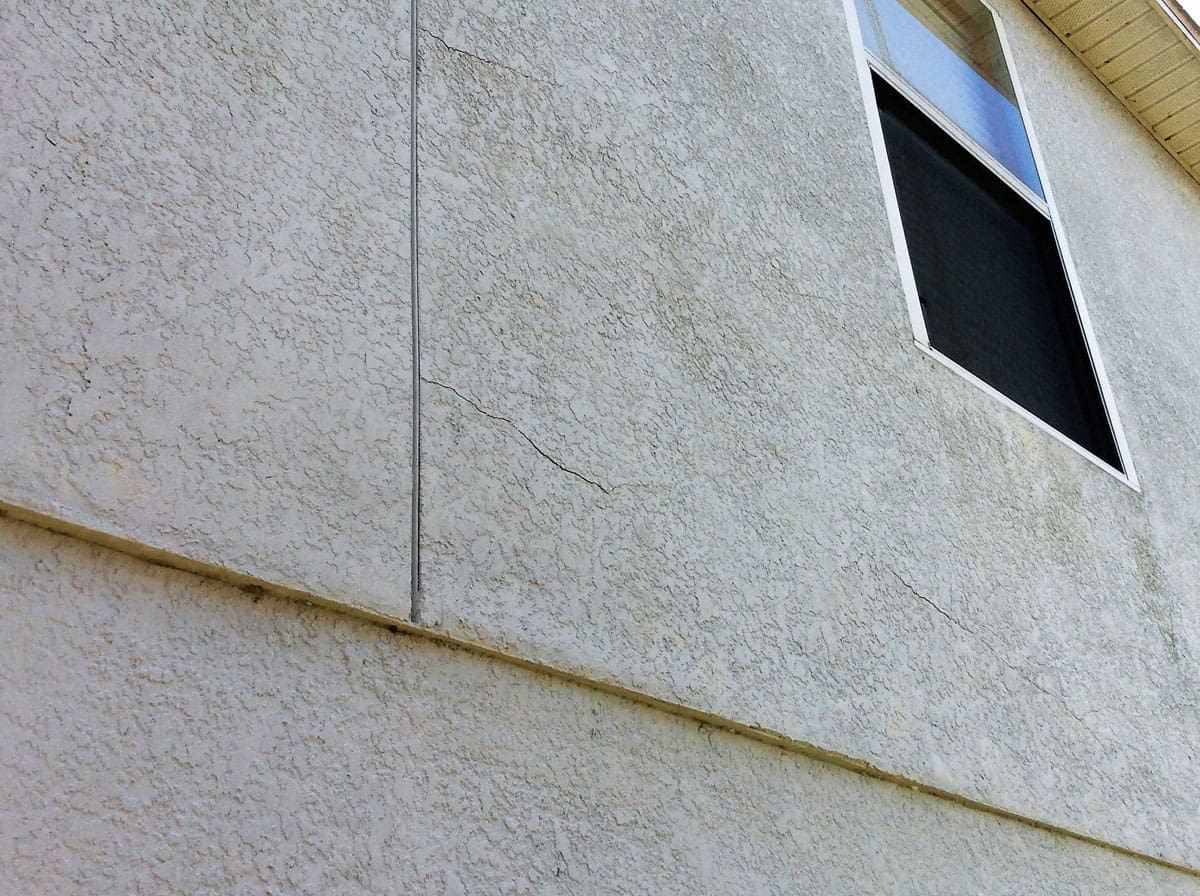
For homeowners in Walnut Creek and Contra Costa County, not every crack in an exterior wall is a reason for alarm. Hairline cracks, often less than 1/16 inch wide, are typically cosmetic and result from normal settling or temperature changes. You should start to worry about cracks that are wider than a quarter-inch, those that are horizontal or stair-stepped in brickwork, or cracks that cause the wall to bow outward. These can indicate serious foundation or structural issues. If you notice water intrusion or doors that stick due to wall movement, it is time for a professional assessment. For a deeper understanding of specific repair options, you can read our internal article titled Can A Crumbling Concrete Wall Be Repaired?. Golden Bay Foundation Builders recommends an immediate inspection for any crack that changes in width over time.
For exterior wall cracks, the repair method depends on the crack type and severity. Small hairline cracks in stucco or plaster are often cosmetic and can be filled with a flexible exterior-grade caulk or patching compound after cleaning the area. For wider or structural cracks, you must first determine if the crack is active or static. If the crack is structural, it may indicate foundation movement. For a detailed understanding of crack types, refer to our internal article What Is The Difference Between Structural Cracks And Plaster Cracks?. Professional contractors typically use epoxy injections or carbon fiber straps for structural repairs. At Golden Bay Foundation Builders, we emphasize that any crack wider than 1/4 inch or showing signs of water intrusion should be inspected by a specialist to prevent further damage to your home's envelope.
Settlement cracks typically appear as vertical or diagonal fissures in walls, often wider at the top than the bottom. They commonly form around door frames, windows, and where additions meet the main structure. These cracks can be hairline thin or several millimeters wide, and they may run through drywall, brick, or concrete. Exterior cracks often follow mortar joints in a stair-step pattern. If you notice doors sticking or floors sloping alongside these cracks, it indicates foundation movement. For homeowners in Walnut Creek and Contra Costa County, understanding the difference between cosmetic cracks and structural issues is critical. Our internal article titled House Sinking Covered By Insurance provides essential guidance on when insurance may cover such damage. Golden Bay Foundation Builders recommends professional evaluation if cracks exceed 1/8 inch or appear suddenly.
Yes, significant cracks in the outside walls of your home can be a serious indicator of foundation movement. Hairline cracks are often cosmetic, but cracks wider than 1/4 inch, those that are horizontal, or stair-step cracks in brick or block walls typically signal structural stress. These issues are common in Walnut Creek and Contra Costa County due to expansive clay soils and seasonal drought. For a thorough assessment, we recommend reading our internal article titled The Hillside Homeowner’s Guide To Foundation Repair In The Bay Area. Golden Bay Foundation Builders advises that you monitor these cracks for changes in width and seek a professional evaluation to prevent further damage to your home's structure.
For exterior wall cracks, the repair method depends on the crack type. Hairline cracks in stucco or plaster are often cosmetic and can be filled with a quality elastomeric caulk or patching compound, then painted. However, larger cracks, especially those wider than 1/8 inch or showing signs of displacement, may indicate a structural issue. Before any repair, you must determine the cause. We recommend reviewing our internal article What Is The Difference Between Structural Cracks And Plaster Cracks? to help you identify the difference between surface cracks and more serious structural damage. For non-structural cracks, clean the area, apply a flexible filler, and seal with exterior paint. If you suspect a foundation issue, Golden Bay Foundation Builders advises consulting a structural engineer to ensure the repair addresses the underlying problem, not just the symptom.
Vertical cracks in exterior walls are a common concern for homeowners in Walnut Creek and Contra Costa County. While some cracks are merely cosmetic, others can indicate a more serious structural issue. The key is to assess the crack's characteristics. A thin, hairline crack in the stucco or plaster is often due to normal settling or temperature changes and is not a structural threat. However, a vertical crack that is wider than 1/8 inch, runs in a straight line through the brick or siding, or causes the wall to bow inward or outward, could be a sign of foundation settlement or soil pressure. For a detailed guide on distinguishing between these types of damage, we recommend reading our internal article titled What Is The Difference Between Structural Cracks And Plaster Cracks?. Golden Bay Foundation Builders recommends having any crack wider than a credit card inspected by a professional to rule out foundation movement.
When assessing cracks in walls, it is important to distinguish between structural and non-structural types. Structural cracks, often wider than 1/8 inch, may indicate foundation settlement or serious load-bearing issues and typically require professional evaluation. Non-structural cracks, such as hairline plaster cracks, are usually caused by temperature changes, shrinkage, or minor settling and are often cosmetic. For a detailed breakdown, our internal article What Is The Difference Between Structural Cracks And Plaster Cracks? provides expert guidance on identifying these differences. At Golden Bay Foundation Builders, we recommend monitoring any crack for changes in width or direction, as this can signal underlying problems that need prompt attention.
Horizontal cracks in exterior walls are a serious concern. Unlike hairline plaster cracks, horizontal fissures often indicate significant lateral pressure against the foundation wall, typically from expansive soil or waterlogged backfill. This type of damage can compromise the structural integrity of your home. For professional assessment, we recommend reading our internal article titled What Is The Difference Between Structural Cracks And Plaster Cracks? to understand the difference between cosmetic and structural issues. If you are in Walnut Creek or Contra Costa County, Golden Bay Foundation Builders advises that horizontal cracks should be inspected immediately. Ignoring them can lead to bowing walls and costly waterproofing repairs.


128 reviews