

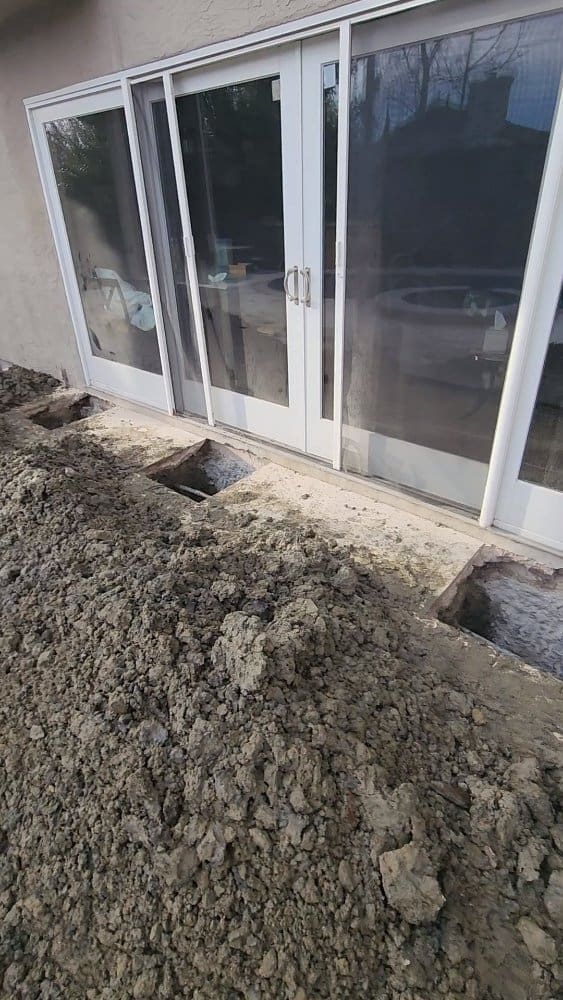
Ever notice how we obsess over the paint color, the kitchen backsplash, or the perfect hardwood floors, but we barely give a second thought to the one thing holding the whole show together? Yep, we’re talking about the foundation. It’s the silent, stoic hero of our homes, and it usually only gets our attention when something goes spectacularly wrong—like that new, stylish crack in the living room wall that seems to grow longer every time we look at it. If you’re in the East Bay, staring at a suspicious gap or a slanted floor and typing “foundation repair near me” into your phone with a sense of dread, take a deep breath. You’re not alone, and frankly, this stuff is fascinating once you pull back the curtain.
Let’s have a real chat about what’s going on under our feet, why it matters, and how to tackle it without losing your sanity (or your life savings).
First Things First: Why Is My Foundation Throwing a Tantrum?
We get it. It feels personal. You’ve cared for your home, and now it seems to be rebelling. But foundations usually have very good, if inconvenient, reasons for acting up. Here in the Bay Area, our soil is practically a celebrity with its own dramatic storyline.
- Our “Expansive” Clay Soil: IMO, this is the main culprit. This soil acts like a sponge—it swells when it’s wet (hello, rainy season) and shrinks when it’s dry (summer, anyone). This constant push and pull puts tremendous stress on your foundation. It’s less of a solid base and more of a slow-motion wrestling match happening beneath your house.
- The Seismic Reality: We live in earthquake country. A seismic retrofit isn’t just a fancy upgrade; it’s often a critical reinforcement for older homes. Programs like Earthquake Brace and Bolt are fantastic, but they’re just one part of the puzzle if your foundation itself is compromised.
- Water, Water Everywhere: Poor drainage is a foundation’s worst enemy. When water pools around your home, it soaks the soil, leading to erosion or that expansive clay we just talked about. Gutters, downspouts, and proper grading are your first line of defense.
So, you see a sign—a sticky door, a cracked wall, a sloping floor. What now? You skip the panic and start with a professional foundation inspection.
The Diagnosis: What Are We Actually Dealing With?
This is where we separate the scary internet stories from your actual reality. A proper inspection will identify the specific problem and its cause. Is it settling? Is it heaving? Is it related to the post and pier foundation common in many older Oakland and Berkeley homes? The fix for a sinking corner is different from the fix for a crumbling concrete stem wall.
Common Issues We See in East Bay Homes:
- Settling or Sinking Foundations: Often requires foundation underpinning services. This involves installing sturdy piers (steel or concrete) deep into stable soil or bedrock to lift and support the foundation.
- Cracked or Failing Concrete: This is where concrete stem wall repair comes in. We’re not just slapping mortar on it; it’s about structurally restoring the integrity.
- Damp, Sagging, or Pest-Ridden Crawl Spaces: Neglecting your crawl space repair can lead to big problems upstairs—think moisture, mold, and energy loss. It’s the underbelly of your home, and it needs love too.
- General Instability in Older Homes: Many classic homes here were built on post and pier foundations. While charming, they often lack the lateral strength needed today. This is where soil stabilization services and bracing come into play.
Breaking Down the Big Scary Question: What’s This Going to Cost?
Alright, let’s talk numbers. We know the cost is the elephant in the room. The price for foundation repair isn’t a one-size-fits-all tag. It depends wildly on:
- The extent of the damage.
- The type of repair (underpinning vs. crack sealing vs. full retrofit).
- The accessibility under your home.
- Your specific location (soil conditions in Clayton can differ from those in Walnut Creek).
To give you a framework, here’s a simplified table breaking down common scopes:
| Repair Type | Typical Scope of Work | What It Addresses |
|---|---|---|
| Foundation Underpinning | Installing steel push piers or helical piers to stable depth. | Severe settling, sinking corners, significant differential movement. |
| Concrete Stem Wall Repair | Epoxy injections, carbon fiber strapping, or partial rebuild. | Horizontal or stair-step cracking in concrete foundation walls. |
| Seismic Retrofit | Adding bolting, plywood shear walls, and foundation bolting. | Earthquake safety, lateral movement, older home compliance. |
| Crawl Space Encapsulation | Installing vapor barrier, dehumidifier, sealing vents. | Moisture, mold, insulation issues, pest attraction. |
| Drainage Correction | Re-grading, installing French drains, gutter systems. | Water intrusion, soil saturation, preventative stability. |
The golden rule? Get multiple quotes. But more importantly, get detailed explanations. A reputable foundation contractor will show you the why behind the what. At Golden Bay Foundation Builders, we walk every client through the inspection findings with photos and clear options, because an educated homeowner is our favorite kind of customer. You should never feel in the dark about the biggest repair your house might ever need 🙂
A Quick Detour: The “Floating Foundation” Mystery
Ever heard this term and pictured your house on a giant pool float? 🙂 A floating foundation (or slab-on-grade) is essentially a thick concrete slab poured directly on the ground. It’s common in many areas. Its main vulnerability here? Our expansive soil. When the soil moves, the monolithic slab can crack and shift. Repair often involves strategic underpinning or slab jacking. It’s a different beast than a perimeter foundation with a crawl space, but just as fixable.
Why Choosing the Right Team is Everything
Let’s be blunt for a second. This isn’t the time for your cousin’s friend who “knows concrete.” Foundation work is permanent, structural, and critical to your home’s safety and value. You need a specialist.
Here’s what we, at Golden Bay Foundation Builders, believe you should look for:
- Local, Local, Local: Soil in Concord behaves differently than soil in the Berkeley hills. A team that knows our specific micro-regions is priceless.
- Licensed, Insured, and Experienced: Don’t just take their word for it. Ask for proof.
- Transparent Communication: They should explain the problem, the solution, and the cost in plain English, no jargon-bombs.
- Warranty: A strong, transferable warranty on the work is non-negotiable. It’s a sign they stand behind what they do.
We’ve built our reputation across Oakland, Walnut Creek, Berkeley, and beyond by sticking to these principles. There’s a personal pride in seeing a worried homeowner’s relief when we explain the plan and execute it correctly. This is your home, and fixing its foundation is a partnership.
Your Top Foundation Questions, Answered
Let’s tackle a few of the most common questions we hear daily.
1. “Can I just patch the crack myself?”
For tiny, hairline cosmetic cracks? Maybe. But for any crack that’s widening, is horizontal, or allows water in, patching is just putting makeup on a structural issue. It will come back, and often worse. The goal is to fix the cause, not just hide the symptom.
2. “Will my homeowner’s insurance cover this?”
Usually, no. Most standard policies exclude foundation damage from “earth movement” or settling—which covers our common soil issues. They typically only cover it if it’s a direct result of a sudden, named peril (like a burst pipe flooding under the house). Always check your policy, but budget assuming it’s an out-of-pocket expense.
3. “How disruptive is the repair process? Do I have to move out?”
Most foundation repairs, even underpinning, don’t require you to vacate your home. It’s messy and noisy work, often concentrated on the exterior or in the crawl space. A good crew will minimize disruption, protect your property, and communicate the timeline clearly. For massive, whole-house lifts, temporary relocation might be discussed, but it’s rare.
So, where does this leave us? If your spidey-senses are tingling about your foundation, listen to them. Start with that professional inspection. Understand what you’re dealing with. Get clear, detailed proposals. It’s an investment, but it’s an investment in the safety, stability, and longevity of your biggest asset.
Think of it this way: fixing the foundation isn’t a glamorous renovation. You won’t get to show it off at a dinner party. But you will sleep better knowing the stage is solid, so you can get back to enjoying the show—backsplash and all. And if you’re in the East Bay and want a second opinion from a team that geeks out on this stuff, you know where to find us. Golden Bay Foundation Builders is always here to help you build from the ground up, the right way.
Related Articles
Bay Area Foundation Repair Experts | Golden Bay Foundation Builders | Inspection & repair
What Are The Different Types Of Crack Filling?
What Is The Best Foundation Repair Method?
What Are The Top-rated Foundation Repair Companies Near California
People Also Ask
For sealing foundation cracks in Walnut Creek and Contra Costa County, the best product is a high-quality, flexible polyurethane or epoxy injection. Epoxy is ideal for structural cracks as it bonds the concrete and restores strength. Polyurethane is better for non-structural, active water leaks because it expands to fill the void and stops water infiltration. However, the effectiveness of any product depends on proper diagnosis of the crack type. For professional guidance tailored to your specific situation, please refer to our internal article FAQ: Foundation Repairs – Golden Bay Foundation Builders. Golden Bay Foundation Builders always recommends a thorough inspection before applying any sealant to ensure long-term stability.
Yes, basement foundation cracks can be repaired, but the method depends on the crack type and cause. Hairline cracks from concrete curing are often sealed with epoxy or polyurethane injections to prevent moisture intrusion. Wider or structural cracks, especially those that are horizontal or growing, may require more extensive repair like carbon fiber straps or underpinning. It is critical to first assess if the crack indicates ongoing settlement or hydrostatic pressure. For professional evaluation, Golden Bay Foundation Builders recommends reading our internal article Can A Crumbling Concrete Wall Be Repaired? for detailed guidance. Always address drainage issues around the foundation to prevent recurrence.
For foundation cracks in Walnut Creek and Contra Costa County, the choice between epoxy and polyurethane depends on the crack type. Epoxy is ideal for structural cracks that need to be restored to their original strength, as it bonds tightly and creates a rigid seal. Polyurethane is better for non-structural, active water leaks because it remains flexible and expands to fill gaps, stopping moisture intrusion. A professional evaluation is essential to determine the correct material. For more detailed guidance on crack repair methods, please refer to our internal article FAQ: Foundation Repairs – Golden Bay Foundation Builders. At Golden Bay Foundation Builders, we always prioritize a thorough inspection to match the right solution to your specific foundation condition.
For homeowners in Walnut Creek and Contra Costa County, the best product to fix cracks in concrete depends on the crack's size and cause. For small, non-structural hairline cracks, a high-quality polyurethane or latex-based concrete crack filler is often sufficient. However, for larger or settling cracks, a more robust solution is required. At Golden Bay Foundation Builders, we recommend professional-grade polyurethane injection for active cracks or a cementitious patching compound for stable ones. For significant foundation or slab settlement issues, the most effective approach is often slab lifting. We discuss this in our internal article titled Is Polyjacking Better Than Mudjacking?, which explains why polyjacking is frequently a superior, more durable option compared to traditional mudjacking for repairing sunken concrete. Always address the underlying soil issue to prevent recurrence.
For repairing a foundation crack with a polyurethane kit, the process involves injecting a flexible, expanding foam that seals the crack from moisture and soil pressure. This method is ideal for non-structural, active water leaks. The kit typically includes injection ports, polyurethane resin, and a caulking gun. You drill holes along the crack, insert ports, and inject the resin from bottom to top. The foam expands and cures into a waterproof seal. For professional guidance on different crack types, our internal article What Are The Different Types Of Crack Filling? provides detailed comparisons. Golden Bay Foundation Builders recommends this approach for homeowners in Walnut Creek CA and Contra Costa County seeking a durable, low-viscosity solution for basement or slab cracks.
For addressing hairline to moderate cracks in concrete foundations, an epoxy foundation crack repair kit is a common and effective solution for homeowners in Walnut Creek and Contra Costa County. These kits typically include a two-part epoxy resin and a syringe or injection port system. The process involves cleaning the crack, installing injection ports along its length, and then injecting the epoxy under low pressure. The epoxy bonds the concrete back together, creating a waterproof seal that is often stronger than the surrounding material. For a comprehensive breakdown of when to use epoxy versus other materials like polyurethane, we recommend reading our internal article What Are The Different Types Of Crack Filling?. At Golden Bay Foundation Builders, we stress that proper surface preparation is critical for the epoxy to adhere and perform as intended.
For addressing foundation cracks, epoxy injection is a common and effective method for structural repairs. This process involves injecting a two-part epoxy resin into the crack, which bonds the concrete back together and restores its original strength. It is best suited for non-moving, static cracks, typically those that are wider than a hairline. The epoxy not only seals the crack from moisture but also provides a strong, load-bearing repair. At Golden Bay Foundation Builders, we often recommend this for walls in Walnut Creek and Contra Costa County. For a full breakdown of techniques, please refer to our internal article What Are The Different Types Of Crack Filling? to understand which method suits your specific situation.