

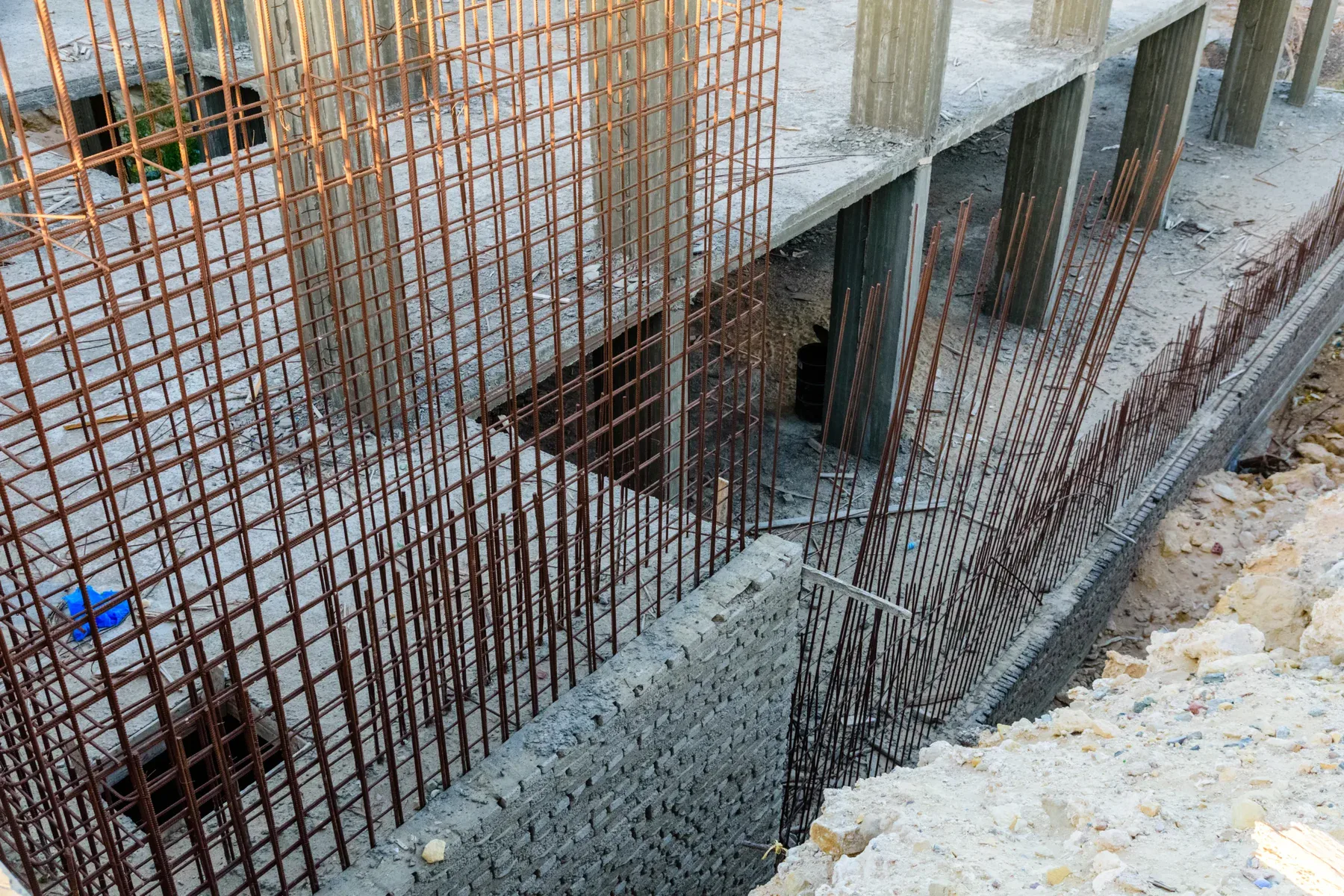
Key Takeaways: Soil stabilization isn’t just about adding lime or cement. It’s a diagnostic process. The right fix depends on accurately identifying your soil type, the specific failure mode, and your long-term property goals. In the Bay Area, ignoring our unique geology is the single most expensive mistake you can make.
We see it all the time. A homeowner in Walnut Creek notices a new crack snaking up their living room wall, or a door that suddenly won’t latch. The immediate panic is about the foundation itself—and rightly so. But if we’ve learned anything from decades of foundation repair in Contra Costa County, it’s that you’re not really fixing a foundation. You’re fixing the ground it sits on. The concrete slab or perimeter footing is just the messenger; the soil is the story.
That’s what soil stabilization is really about: rewriting that story from the ground up. It’s the difference between slapping a band-aid on a symptom and addressing the chronic condition. And around here, that condition is almost always linked to our expansive clay soils. These soils act like a sponge, swelling dramatically when wet (think winter rains) and shrinking hard when dry (our long summer droughts). This annual cycle of heave and settlement is what slowly, inexorably, tears a foundation apart.
What Soil Stabilization Actually Means for Your Home
Let’s clear up a common misconception first. When we talk about soil stabilization in residential foundation repair, we’re rarely talking about massive, deep-soil chemical treatments used for highway construction. For homeowners, it’s a more targeted set of techniques designed to either modify the soil’s properties or bypass the problem soil entirely to create a stable, predictable platform.
In a nutshell, it’s any process that increases the soil’s bearing capacity and reduces its susceptibility to volume changes from moisture. The goal is to stop the movement that’s damaging your home.
Why the Bay Area Presents a Unique Challenge
You can’t talk about foundations here without talking about geography. From the alluvial plains near the water to the clay-heavy hills of Walnut Creek, Lafayette, and Orinda, our soil map looks like a patchwork quilt of engineering challenges. The house on a slope in the San Francisco Bay hills deals with erosion and landslide risks. The mid-century ranch home in central Walnut Creek is often sitting right on top of the notorious “Claycord” expansive soils.
Then there’s the water. It’s not just rain. It’s historic springs, altered drainage patterns from decades of development, aging irrigation lines in older neighborhoods, and even the reduction of natural groundwater uptake as large trees mature. We’ve been to homes near Heather Farm Park where the issue wasn’t the weather, but a 40-year-old pine tree whose roots had sucked the soil bone-dry in one corner of the house. Stabilization in that case meant addressing the moisture imbalance, not just pumping in grout.
The Diagnostic Phase: More Important Than the Fix
This is where the real work happens, and where a lot of DIY or inexperienced approaches fail spectacularly. You have to know what you’re stabilizing before you decide how.
### The Core Investigation
We always start with a few key questions. Where is the movement? Is it seasonal (winter vs. summer)? Is there a pattern to the cracks? The answers guide a physical investigation, which usually involves soil sampling—often down to 10-15 feet—to understand the soil profile and its moisture content. This isn’t guesswork. You need to know if you’re dealing with a thin layer of problem soil or a deep, unstable stratum.
### Common Misreads We See
The biggest mistake is assuming all cracks are from settlement. Heave (upward movement) is just as common here and requires a completely different stabilization approach. Another is focusing only under the visible crack. The problem soil might be 20 feet away, causing a levering effect on the foundation. Stabilizing the wrong area is a costly waste.
The Toolbox: Stabilization Methods We Use & When They Work
There’s no one-size-fits-all. Choosing the right method is a trade-off between invasiveness, cost, site constraints, and long-term performance. Here’s a breakdown of the most common techniques we employ in the Bay Area.
### Slabjacking (Mudjacking) & Polyurethane Foam Injection
These are the most common for addressing localized voids under settled slabs. They don’t change the soil’s chemistry, but they fill the empty spaces and provide lift.
- Slabjacking: Injects a slurry of cement and soil. It’s cost-effective for large areas like sunken driveways or garage floors.
- Polyurethane Foam: Injects expanding polymer. It’s lighter, less invasive, and cures quickly, making it ideal for interior slabs or areas with limited access.
- The Catch: These are fantastic for fixing voids after the soil has already moved and eroded. They are a reactive stabilization for a specific symptom. If the underlying soil is still actively expanding and contracting, the void may return.
### Deep Foundation Piers (Piling)
This is the “bypass” method. When the near-surface soil is irredeemably unstable, we drive piers through it to transfer the home’s load onto stable, deep bedrock or compact soil layers.
- Steel Push Piers: Hydraulically driven into the ground. Excellent for heavy structures and severe settlement.
- Helical Piers: Screwed into the ground like giant screws. Ideal for lighter loads, tight spaces, or where vibration is a concern (near retaining walls, delicate landscaping).
- The Reality: This is often the permanent solution for hillside homes or structures on deep, unstable fill. It’s a major repair, but it physically decouples the house from the problem soil. We use this method frequently for homes along the winding streets of the Northgate area, where hillside creep is a constant force.
### Chemical & Permeation Grouting
This is true soil modification. A grout mixture is injected under pressure, which permeates the soil matrix, binding particles together and reducing permeability.
- Best For: Stabilizing loose, sandy soils or controlling water flow under a foundation. It can be great for mitigating erosion or “piping” where water washes away fine soil particles.
- The Limitation: It’s less effective on pure, dense clay. The grout can’t permeate easily, forming lenses instead of a solid matrix. It also requires precise injection control and a clear understanding of the groundwater table.
The Critical Role of Drainage & Moisture Control
I’ll say this plainly: No stabilization effort in the Bay Area will last without proper drainage. It’s the most overlooked part of the equation. You can install a million dollars worth of piers, but if you’re funneling water under your house every winter, you’re fighting a losing battle.
Stabilization often includes:
- Regrading the perimeter to slope away from the foundation.
- Installing French drains or channel drains to intercept surface and subsurface water.
- Ensuring gutter downspouts discharge at least 5-10 feet away from the house.
- Repairing leaking irrigation lines. We find this constantly in older neighborhoods like Parkmead or Larkey Park.
Controlling moisture is a form of passive, ongoing soil stabilization. It maintains the equilibrium you’ve worked so hard to achieve.
Cost, Trade-Offs, and When to Walk Away
Let’s be practical. Budget is a real constraint. Stabilization isn’t cheap, but neither is doing it twice or repairing cosmetic fixes every few years.
| Method | Typical Use Case | Cost Consideration | Key Trade-Off |
|---|---|---|---|
| Drainage Correction | Preventative or as part of a full repair. | Lower cost, high ROI. | Requires ongoing maintenance (cleaning gutters, etc.). Won’t fix existing damage. |
| Slabjacking / Foam | Correcting settled slabs with defined voids. | Moderate, project-sized cost. | Fixes the symptom (the void), not always the soil cause. May need re-done if soil movement continues. |
| Chemical Grouting | Stabilizing loose, water-affected soils. | Can be moderate to high, depending on area. | Not a silver bullet for expansive clay. Effectiveness depends heavily on soil type and injection skill. |
| Deep Piers (Push/Helical) | Halting significant, ongoing settlement or heave. | Higher initial investment. | Most permanent solution for active soil. Invasive installation. Justifies cost by protecting major asset value. |
### When Stabilization Might Not Be the Answer
There are times when the most pragmatic solution isn’t to stabilize, but to accommodate. For a minor, seasonal crack that opens and closes slightly with the seasons, installing a control joint or flexible sealant might be a more sensible approach than a major ground intervention. Similarly, if a home is slated for a major remodel or addition in the near future, it often makes sense to integrate the stabilization work into that larger project budget and timeline.
The Professional’s Role: More Than Just Labor
So, when do you call a pro like us at Golden Bay Foundation Repair? It’s the moment you move from observation to action. Diagnosing soil issues requires experience and tools most homeowners don’t have. Misdiagnosis leads to wasted money. Furthermore, the equipment for proper pier installation or grouting is specialized. But beyond that, a professional brings knowledge of local building codes, permit requirements in Contra Costa County, and an understanding of how solutions perform over time in our specific environment. What works in Texas loam won’t work on Walnut Creek clay.
The value isn’t just in the installation; it’s in the warranty and the assurance that the fix is designed for the long haul, protecting what is likely your largest financial asset.
The Long View: Foundation Health as a System
Ultimately, successful soil stabilization is about moving from a reactive to a proactive mindset. It’s understanding that your foundation, the soil beneath it, and the water around it are one interconnected system. The fix isn’t a one-time event, but the establishment of a new, stable equilibrium.
It means looking at your property holistically—from the roof gutters to the garden slope—and managing moisture like the precious, destructive resource it is. When done correctly, it’s the quiet, unseen work that lets you forget about your foundation entirely and just live in your home, season after stable season. And in the Bay Area, that’s the real goal.