

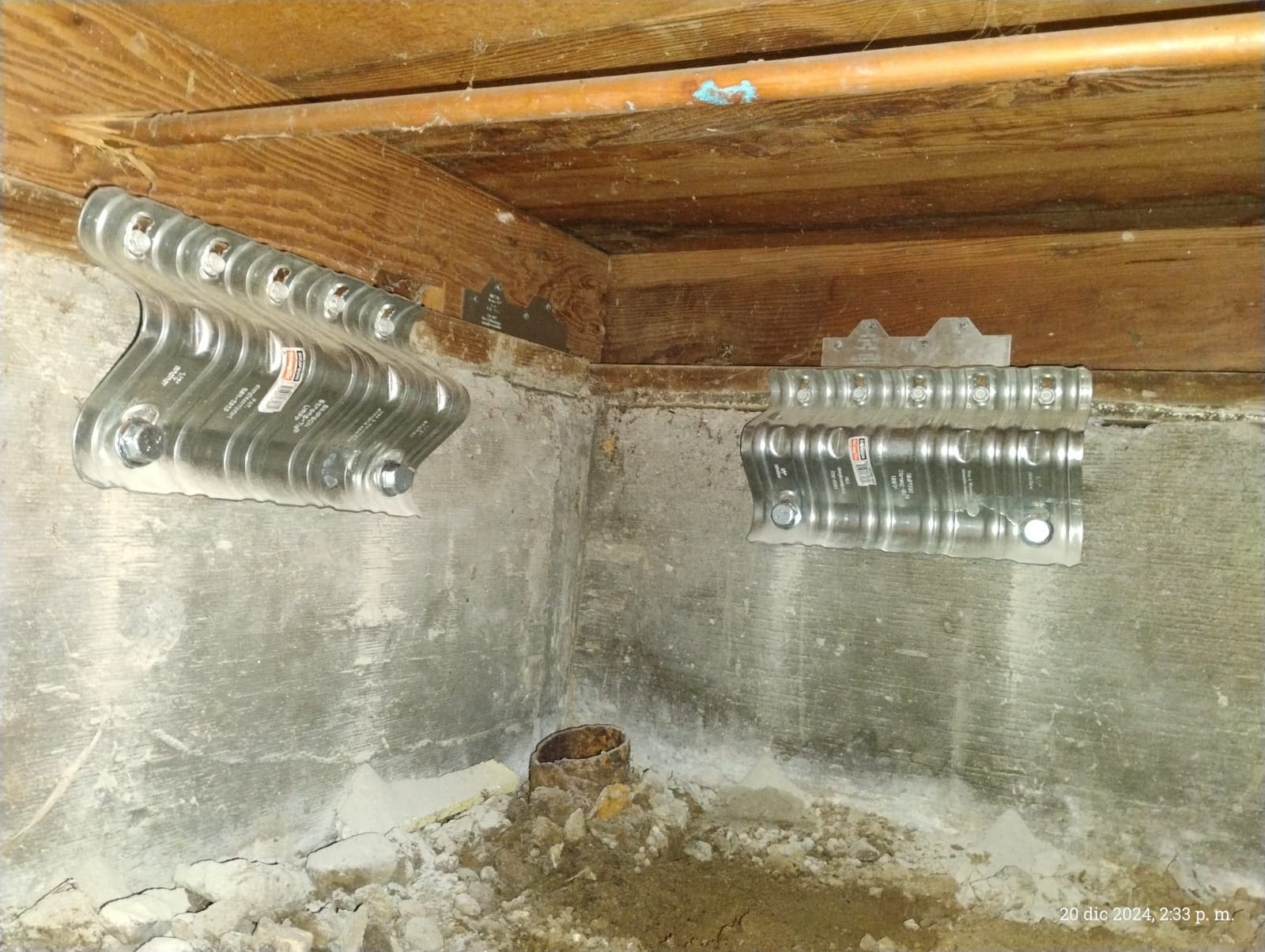
The Fallacy of Modern Construction and Structural Immunity
Newly constructed residential properties frequently experience severe foundation instability due to uncompacted slope fill, localized soil expansion, rapid concrete curing, and inadequate surface drainage. Modern municipal building codes establish minimum structural safety standards, but they do not eliminate site-specific geotechnical risks or regional soil moisture fluctuations throughout the San Francisco Bay Area.
When buyers invest in newly built communities in Oakland, Walnut Creek, Concord, or Berkeley, they often assume that new concrete slab footings or stem walls are completely immune to structural distress. However, our field inspections across Contra Costa and Alameda counties regularly reveal foundation deflection in homes less than three years old. Developers often face tight construction schedules, which can lead to rushed site grading and insufficient soil pre-hydration before concrete pouring. Furthermore, standard municipal building inspections focus on plan compliance rather than long-term soil interaction under changing weather conditions.
Concrete requires a controlled curing environment to achieve its engineered compressive strength. When builders pour foundations during summer heat waves without proper moisture retention, micro-fracturing can occur before framing even begins. Over time, seasonal soil movement turns these minor curing fissures into major structural pathways for water intrusion and settlement. We routinely counsel homeowners that building age is secondary to geotechnical stability when assessing overall foundation health.
Primary Mechanisms of New-Build Foundation Failure in the Bay Area
Foundation damage in recent construction stems primarily from the high swelling potential of expansive clay soil, deep movement within uncompacted backfill, poor stormwater grading, and seasonal soil desiccation. When moisture saturates clay deposits during heavy Bay Area winters, the lateral and upward soil pressure exceeds the design thresholds of residential footings.
The geology of the San Francisco Bay Area presents serious challenges for residential foundations. Heavy concentrations of smectite and montmorillonite clay dominate valleys and hillsides from Clayton to Concord and down through the South Bay. Data published in the U.S. Geological Survey (USGS) San Francisco Bay Region Geologic Mapping demonstrates how complex surficial deposits expand and contract dramatically between rainy winters and dry summers.
In our field assessments, we find that new homes typically fail due to four specific site vulnerabilities:
- Unconsolidated utility trench backfill allowing localized foundation settlement beneath exterior garage walls.
- Highly expansive clay soils that lift edge footings while interior slabs remain stationary, causing center-doming.
- Inadequate gutter downspout discharge placing hundreds of gallons of water directly adjacent to newly cured stem walls.
- Cut-and-fill pad transitions where one side of a house rests on solid bedrock while the other sits on compacted soil fill.
When these soil dynamics interact with initial concrete shrinkage, structural movement occurs rapidly. Even a displacement of half an inch across a thirty-foot span creates visible interior drywall shearing and jammed entry doors. Without timely intervention, structural stress accumulates across framing members and roof trusses.
Field Insights: Real-World Structural Solutions for Recent Builds
Resolving structural distress in new homes requires structural engineering assessments followed by targeted mechanical interventions like helical pier underpinning, deep soil chemical grouting, and foundation reinforcement. Modern remediation stabilizes shifting footings without requiring full home demolition, permanently transferring structural weight onto load-bearing strata while arresting future foundation movement across unstable site soils.
In Walnut Creek, we inspected a two-year-old custom hillside home exhibiting severe interior drywall cracking and a three-quarter-inch floor slope toward the rear yard. Geotechnical soil borings revealed that the builder placed deep rear footings into engineered fill that had not been fully compacted to ninety-five percent relative density. The fill layer softened during winter rains, causing differential settlement along the foundation’s perimeter beam. We resolved this issue by installing twelve heavy-duty steel helical piers beneath the sinking footings, driving them down twenty-four feet until reaching competent bedrock. Using dual-acting hydraulic jacks, we lifted the foundation back to level, restoring structural integrity and framing alignment.
In Concord, we tackled a three-year-old master-planned residence built over highly expansive clay soil where the stem wall developed vertical shear fractures wider than one-quarter inch. Surface runoff from an adjacent hillside saturated the front footing, causing six-tenths of an inch of differential heave compared to the dry rear slab. To eliminate future moisture movement, we injected high-density hydrophobic polyurethane resins deep into the soil matrix, sealing voids and reducing soil expansion potential. We then installed a custom sub-surface drainage system along the uphill perimeter and applied carbon-fiber grid straps across the stem wall fractures. This comprehensive approach permanently stabilized the home without disturbing the interior living space.
Technical Comparison of Foundation Mitigation Strategies
Selecting an appropriate foundation mitigation method depends on soil density, moisture saturation levels, structural settlement severity, and underlying bedrock depth. Geotechnical engineers weigh permanent load transfer techniques against deep soil injection methods to eliminate differential movement, ensuring the structural stability of the residential footprint while optimizing long-term performance and home repair investments.
To assist property owners in evaluating their options, we have structured a comparative analysis of the primary remediation techniques used for modern foundations:
| Remediation Technique | Target Substructure Failure | Installation Duration | Average Cost Range (US Dollars) | Long-Term Structural Lifespan |
|---|---|---|---|---|
| Steel Helical Underpinning Piers | Deep foundation settlement, uncompacted fill, and hillside slope movement | 3 to 5 business days | 1,200 dollars to 2,500 dollars per pier location | Permanent (75+ years rated life) |
| Deep Hydraulic Push Piers | Heavy multi-story slab settlement over dense soil strata | 2 to 4 business days | 1,400 dollars to 2,800 dollars per pier location | Permanent (75+ years rated life) |
| Hydrophobic Polyurethane Soil Stabilization | Soft, poorly compacted upper soil layers and moisture-sensitive clay soils | 1 to 2 business days | 6,000 dollars to 14,000 dollars complete project | 25 to 50 years depending on drainage |
| Carbon-Fiber Structural Stem Wall Strapping | Concrete tension cracking, shear fracturing, and wall bow | 1 business day | 4,000 dollars to 9,000 dollars complete repair | Permanent (Lifetime of structure) |
| Exterior Perimeter French Drain Systems | Hydrostatic water pressure build-up and localized clay soil swelling | 2 to 3 business days | 5,000 dollars to 12,000 dollars complete installation | 20 to 30 years with annual flushing |
If a modern foundation suffers from deep structural movement into soft lower soil layers, prioritize steel helical underpinning over surface repairs. Conversely, if minor stem wall cracking occurs alongside localized moisture pooling, installing perimeter drainage and carbon-fiber reinforcement offers a cost-effective, long-term fix without extensive excavation.
Decision Framework: Evaluating Risk and Repair Timing
Homeowners should establish a diagnostic monitoring timeline based on crack width, wall displacement, door binding, and soil moisture variations around their home’s perimeter foundation. Minor cosmetic shrinkage cracks require initial observation, whereas structural shear fractures, floor slumping, or exterior stem wall separations demand immediate geotechnical engineering evaluation and professional repair intervention.
Evaluating foundation distress requires clear decision criteria based on observable physical symptoms. We recommend applying conditional logic when determining whether to monitor an issue or hire structural professionals. Guidance from the California Geological Survey guidelines highlights how early intervention prevents minor slope movement or clay expansion from turning into severe structural displacement.
In our engineering practice, we guide homeowners through this sequential decision framework:
- Conduct a perimeter visual inspection every six months to document wall surfaces, concrete stem walls, and soil-to-foundation contact lines.
- Measure and record any hairline concrete cracks using a digital caliper; if cracks remain under one-sixteenth of an inch without widening over twelve months, continue regular observation.
- Schedule an immediate engineering inspection if crack widths exceed one-eighth of an inch, if diagonal stair-step cracks appear in stucco, or if interior doors stick in their frames.
- Execute structural repairs, soil stabilization, or drainage modifications promptly if an engineering report identifies ongoing differential settlement.
Delaying repairs on a moving foundation increases remediation costs significantly over time. When structural frames warp, interior finishes, plumbing lines, and roof systems also suffer secondary damage. Addressing soil instability early protects both physical safety and financial equity.
Frequently Asked Questions
Can brand-new homes experience severe foundation problems immediately after construction?
Yes, newly constructed homes can experience immediate foundation distress due to uncompacted fill soil, rapid concrete drying, or active clay soil swelling beneath footings. Modern municipal building inspections confirm code compliance at the time of construction, but they do not guarantee long-term site stability against sub-surface soil movement or weather changes. In our field work across the Bay Area, we routinely discover settlement issues in properties that are less than three years old.
How do expansive clay soils in the Bay Area damage new concrete slab and stem wall foundations?
Expansive clay soils absorb water during winter rains, swelling significantly and exerting immense upward pressure against concrete slabs and stem walls. As the clay dries during dry summers, it shrinks away from footings, causing differential settlement, floor slumping, and concrete shear cracking. We design custom drainage and chemical stabilization strategies specifically to counteract these rapid expansion and contraction cycles.
Will standard homeowner insurance cover foundation repair for new builds in California?
No, standard homeowners insurance policies in California explicitly exclude coverage for damage caused by earth movement, soil settling, clay expansion, or improper construction grading. Property owners must usually address structural repairs through builder warranties or independent foundation repair specialists. We recommend reviewing original construction documentation and soil reports to explore warranty coverage options.
What warning signs indicate structural foundation failure rather than routine concrete curing cracks?
Structural failure is indicated by diagonal wall cracks wider than one-eighth of an inch, sticking entry doors, sloping floors, and visible gaps between exterior walls and concrete footings. In contrast, routine curing cracks are micro-fine, uniform in width, and do not cause secondary framing misalignments. When we conduct on-site evaluations, we utilize laser leveling tools to distinguish cosmetic curing lines from true structural movement.
How long do permanent foundation repair interventions like helical underpinning typically last?
Helical steel underpinning systems are engineered to last over seventy-five years and provide permanent structural support for residential foundations. By transferring structural loads directly to dense lower bedrock layers, helical piers decouple the home from unstable surface soil movement permanently. Our team specifies hot-dipped galvanized steel piers to ensure maximum corrosion resistance in wet soil conditions.
Sources
- U.S. Geological Survey (USGS) San Francisco Bay Region Geologic Mapping: https://pubs.usgs.gov/sim/2918/
- California Geological Survey (CGS) Geologic Hazards Guidelines: https://www.conservation.ca.gov/cgs
People Also Ask
Yes, new homes can absolutely have foundation issues. Even with modern construction standards, problems can arise from improper soil compaction before the foundation is poured, poor drainage around the property, or the use of substandard materials. In areas like Walnut Creek and Contra Costa County, expansive clay soils are common, which can shift and swell with moisture changes, putting stress on a new foundation. For homes built in colder microclimates, freeze-thaw cycles can also cause early damage. If you suspect a problem, it is wise to consult a professional. For more details, please see our internal article titled Repairing Frost- Damaged Foundations In Colder Microclimates. Golden Bay Foundation Builders recommends scheduling an inspection within the first year to catch any settling or cracking early.
The biggest red flag in a home inspection is significant, unresolved foundation damage, such as extensive cracks, uneven floors, or doors that stick. These issues often indicate serious structural problems that can compromise the safety and value of the home. A professional inspection should always include a thorough evaluation of the foundation. For homeowners in Walnut Creek and Contra Costa County, understanding these risks is crucial. At Golden Bay Foundation Builders, we recommend that if you see signs of shifting or water damage near the foundation, you should consult a specialist immediately. For a deeper understanding of what to look for, you can read our internal article titled Top-Rated Foundation Inspections Contractor | San Francisco & Bay Area.
Yes, a house can be sold with foundation problems, though it presents significant challenges. In most real estate transactions, sellers are legally required to disclose known material defects, including foundation issues. If you attempt to sell without disclosure, you risk future lawsuits. When foundation problems are disclosed, buyers may still purchase the home, but they will typically negotiate a lower price to account for repair costs. Some buyers will only proceed if the seller provides a professional repair estimate or completes the work beforehand. For homeowners in Walnut Creek and Contra Costa County, we recommend reading our internal article titled Essential Questions To Ask A Foundation Contractor to understand the full implications. Golden Bay Foundation Builders emphasizes that transparency is the best policy to ensure a smooth transaction.
It is generally unwise to buy a house with foundation issues without a thorough professional inspection. Foundation problems can range from minor cosmetic cracks to severe structural damage that compromises the home's safety and value. You should always hire a licensed structural engineer to assess the severity. While some issues are repairable, they can be expensive, often costing tens of thousands of dollars. For homeowners in Walnut Creek, CA, understanding local soil conditions is crucial. For more insight, please read our internal article How Do Earthquakes Affect Foundations?. Golden Bay Foundation Builders recommends always negotiating the repair cost into the purchase price or requiring the seller to fix the problem before closing.