

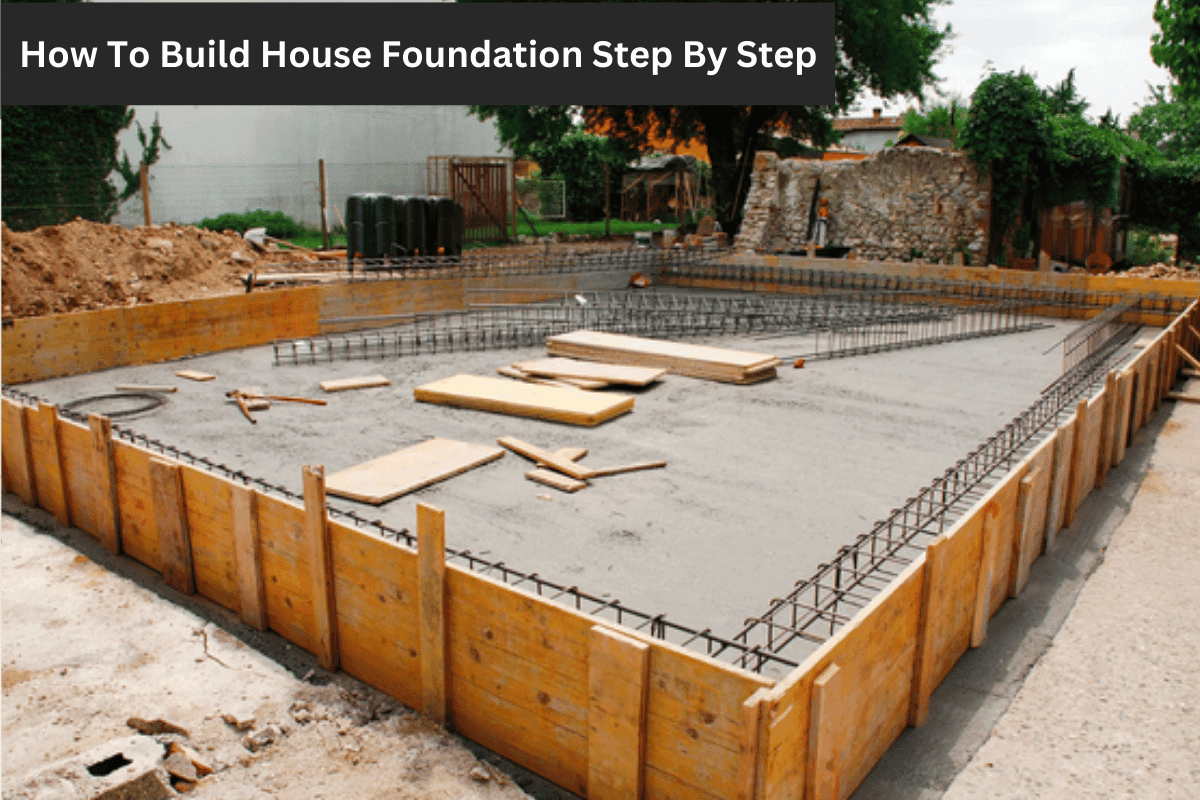
A residential foundation is built in a strict sequence: (1) Site preparation and soil testing → (2) Layout and excavation → (3) Footing construction → (4) Foundation wall or slab formwork → (5) Steel reinforcement → (6) Concrete pouring and curing → (7) Waterproofing and drainage → (8) Backfilling and final grading. Skipping any single step—especially soil evaluation, rebar placement, or proper curing—causes 90% of foundation failures. A 2,000 sq. ft. foundation typically costs 16,000–40,000 and requires 1–8 weeks from excavation to backfill.
Every house rests on its foundation. When the foundation shifts, cracks, or leaks, the entire structure suffers. This guide provides the complete construction sequence, technical specifications, and decision-making frameworks required to build a foundation that meets code and withstands decades of soil movement, moisture, and load.
Why Foundation Sequence Matters
Foundation failures are almost always traced to a skipped or poorly executed step. Understanding why each step exists—and what happens when it goes wrong—is essential for homeowners, general contractors, and DIY builders alike. The table below maps the eight critical stages to their primary failure risks.
| Step | Common Failure When Skipped |
|---|---|
| 1. Soil Testing & Site Prep | Differential settlement, slab cracking |
| 2. Layout & Excavation | Misaligned walls, inadequate frost depth |
| 3. Footing Construction | Uneven load transfer, structural rotation |
| 4. Formwork | Blowouts, incorrect dimensions |
| 5. Rebar/Reinforcement | Tensile cracking, brittle failure |
| 6. Concrete Pouring & Curing | Low compressive strength, surface scaling |
| 7. Waterproofing & Drainage | Hydrostatic pressure, mold, efflorescence |
| 8. Backfilling & Grading | Foundation wall movement, water pooling |
Step 1: Site Preparation and Soil Testing
Before breaking ground, the soil must be evaluated and the site cleared. Soil is the foundation’s foundation.
Soil Bearing Capacity and Types
Soil bearing capacity determines footing width and depth. The International Residential Code (IRC) presumes a minimum allowable bearing pressure of 1,500 psf for most soils, but actual values vary dramatically.
| Soil Type | Bearing Capacity (psf) | Shrink-Swell Potential | Foundation Recommendation |
|---|---|---|---|
| Bedrock | 12,000+ | None | Any type, minimal reinforcement |
| Gravel/Sand | 3,000–5,000 | Low | Slab-on-grade, shallow footings |
| Silt | 1,500–2,000 | Moderate | Wider footings, compacted base |
| Clay | 1,000–2,000 | High | Deep footings, steel reinforcement, soil treatment |
| Organic/Peat | Unacceptable | Very High | Remove and replace with engineered fill |
Expansive Clay Warning: Soils rich in montmorillonite clay can swell by 10% or more when wet, exerting uplift pressures exceeding 15,000 psf. In such soils, a geotechnical engineer must prescribe specific foundation designs—often involving deeper footings, void forms, or chemical stabilization.
Site Clearing and Grading Specifications
-
Remove all vegetation, topsoil (typically 4–6 inches), roots, and debris.
-
Rough-grade the building pad to a uniform slope of no less than 1/2 inch per foot away from the future foundation footprint for the first 10 feet.
-
Compact the subgrade in 6–8-inch lifts to a minimum of 95% Standard Proctor density, verified by a nuclear density gauge or sand cone test.
Step 2: Layout and Excavation
Establishing the Foundation Footprint
Professional layout uses batter boards set outside the excavation zone. Strings establish the outer wall lines. Square the corners using the 3-4-5 triangle method or a laser. Check diagonals: for a rectangle, diagonal A must equal diagonal B within a 1/4-inch tolerance.
Excavation Depths and Frost Lines
Excavation depth is determined by:
-
Frost line depth (the maximum depth at which soil freezes), mandated by local code.
-
Foundation type (slab, crawl space, or basement).
-
Footing thickness (minimum 6 inches per IRC R403.1).
| Region | Typical Frost Line Depth | Minimum Footing Depth (Below Grade) |
|---|---|---|
| Southern U.S. (FL, TX Gulf) | 0–6 inches | 12 inches |
| Mid-Atlantic / Midwest | 30–36 inches | 36–42 inches |
| Northern U.S. / New England | 48–60 inches | 54–66 inches |
| Canada (Southern Ontario) | 48–60 inches | 54–66 inches |
Excavate footings to undisturbed, load-bearing soil. Over-excavation of 4–6 inches and backfill with compacted crushed stone where soils are suspect.
Step 3: Footing Construction
Footings spread the building load over enough soil area to avoid exceeding the soil’s bearing capacity.
Footing Dimensions
IRC R403.1 specifies minimum footing width based on the number of stories and soil type. For a typical two-story home on 2,000 psf soil, continuous footings must be at least 12 inches wide and 6 inches thick. Pier footings for point loads must be sized per structural engineer calculations.
Rebar and Reinforcement
All footings require continuous steel reinforcement. At minimum:
-
Two #4 (1/2-inch) rebar placed horizontally, 3 inches clear from the bottom and sides.
-
Lap splices of at least 40 bar diameters (20 inches for #4).
-
Vertical dowels projecting upward to tie foundation walls to footings.
Table: Recommended Footing Reinforcement
| House Size | Footing Width | Horizontal Rebar | Vertical Dowels |
|---|---|---|---|
| 1-story, 1,500 sq. ft. | 12 inches | (2) #4 continuous | #4 @ 48 inches o.c. |
| 2-story, 2,500 sq. ft. | 15 inches | (2) #5 continuous | #5 @ 32 inches o.c. |
| 3-story, 3,500 sq. ft. | 18 inches | (3) #5 continuous | #5 @ 24 inches o.c. |
After rebar is placed and inspected, pour the footing concrete. Use a minimum 3,000 psi mix (often specified as 3,500 psi for residential). Consolidate with a vibrator and strike off level. Cure footings a minimum of 48 hours before proceeding.
Step 4: Foundation Type Selection
The three primary foundation types are slab-on-grade, crawl space, and basement. Selection depends on climate, soil, budget, and desired use.
| Foundation Type | Cost (2,000 sq. ft.) | Best Climate | Advantages | Disadvantages |
|---|---|---|---|---|
| Slab-on-Grade | 16,000–24,000 | Warm, dry | Fast construction, low cost | No under-floor access, plumbing embedded in concrete |
| Crawl Space | 20,000–32,000 | Moderate, some moisture | Access to utilities, air circulation | Moisture and pest risk if not sealed |
| Basement | 36,000–60,000+ | Cold climates | Additional living/storage space, storm shelter | Highest cost, waterproofing critical |
Monolithic Slab: Footings and slab poured simultaneously. Stem Wall: Footings poured first, then walls, then slab.
Step 5: Formwork and Steel Reinforcement
Formwork Materials and Setup
Forms contain the fluid concrete. Use 3/4-inch plywood backed by 2×4 studs at 12-inch spacing for walls. Align with string lines. Brace every 4 feet with kickers anchored to stakes. For slabs, edge forms of 2× lumber suffice.
Formwork Checklist:
-
Clean and apply form-release agent.
-
Check plumb and level within 1/8 inch in 10 feet.
-
Secure all joints with screws; staple joints must not leak paste.
-
Install sleeves or blockouts for plumbing, electrical, and HVAC penetrations.
Steel Reinforcement Schedule
Steel resists tensile forces. Rebar must be precisely placed per structural drawings.
-
Foundation Walls: #4 rebar vertical at 16–24 inches on-center; horizontal #4 at 12–24 inches on-center.
-
Concrete Slab: 6×6 W2.9/W2.9 welded wire mesh or #3 rebar grid at 18 inches on-center, suspended in the middle of the slab with chairs.
-
Clear Cover: 3 inches for concrete cast against earth; 2 inches for formed surfaces exposed to weather.
Step 6: Concrete Pouring
Concrete Mix Specifications
Order concrete by strength (psi), not by “bags.” Residential foundations typically require:
-
Footings: 3,000–3,500 psi, 3–4-inch slump.
-
Walls: 3,500–4,000 psi, 4–5-inch slump.
-
Slabs: 3,000–3,500 psi, 4-inch slump (add air entrainment for cold climates).
Use a water-cement ratio (w/c) of 0.45–0.50 for durability. Never add water on site beyond the mix design.
Placing and Consolidation
Pour in continuous lifts no deeper than 18–24 inches. Consolidate with an immersion vibrator (no more than 10 seconds per insertion, on a 12-inch grid). Over-vibration causes segregation; under-vibration leaves honeycomb voids.
Screeding and Finishing
For slabs, screed immediately after placement. Float the surface with a magnesium bull float. Wait until bleed water disappears before final troweling. Control joints should be cut within 24 hours at 12-foot intervals (or 2× the slab thickness in feet for thickness over 6 inches).
Step 7: Curing Concrete
Concrete gains strength through a chemical reaction called hydration, not through drying. Curing must retain moisture and maintain temperature.
Curing Methods:
| Method | Duration | Best For |
|---|---|---|
| Water Ponding | 7 days | Flat slabs |
| Wet Burlap / Cotton Mats | 7 days | Walls and slabs |
| Plastic Sheeting (polyethylene film) | 7 days | All surfaces |
| Curing Compounds (spray) | Per manufacturer | When water curing impractical |
Ideal curing temperature is 50°F–85°F. Below 40°F, use insulated blankets or heated enclosures. Above 90°F, use evaporative retarders and cool mixing water.
Concrete Strength Gain Over Time (at 70°F):
| Days | Percent of 28-Day Strength |
|---|---|
| 1 | 16% |
| 3 | 40% |
| 7 | 65% |
| 14 | 90% |
| 28 | 100% |
Structural loads should not be applied before 7 days; full loading at 28 days. Walls can be stripped at 24–48 hours if curing continues.
Step 8: Waterproofing and Drainage
Water is the number one enemy of foundations. A multi-layer defense system is mandatory.
Exterior Waterproofing Strategy
-
Dampproofing vs. Waterproofing: Dampproofing (asphalt cutback) resists damp soil; waterproofing (elastomeric membrane) resists hydrostatic pressure. Use waterproofing for basements and high-water-table areas.
-
Membrane Application: Apply by spray, roller, or self-adhered sheet to clean, cured concrete. Terminate 6 inches above final grade.
-
Protection Board: 1/2-inch asphalt-impregnated fiberglass board protects membrane during backfill.
Foundation Drain Systems
-
Perimeter Drain (French Drain): 4-inch perforated PVC pipe, laid in a minimum 12-inch-wide trench of washed gravel, wrapped in filter fabric, sloped minimum 1%.
-
Sump Pump: Required where gravity drainage is not possible. Choose a 1/3–1/2 HP submersible pump with battery backup.
-
Vapor Barrier: 10-mil polyethylene sheeting under all slabs; tape all seams.
Grading
Final grade must slope 6 inches of fall over the first 10 feet away from the foundation (5% slope). Use non-expansive fill and compact.
Step 9: Backfilling and Final Grading
Backfill only after the foundation is fully cured and waterproofing is complete. Use granular, free-draining soil. Compact in 12-inch lifts at 85% density within 5 feet of walls; 95% beyond.
-
Do not backfill with boulders, clay lumps, or organic material.
-
Backfill equally on both sides of basement walls to avoid uneven pressure.
-
Install a capillary break (gravel layer) between the footing and slab.
Step 10: Inspection Milestones
A third-party inspection at each stage ensures code compliance and catches defects before they are buried.
| Inspection Stage | What is Checked |
|---|---|
| Excavation | Depth, bearing soil, utility clearance |
| Footing | Rebar, dimensions, clean-out |
| Formwork and Reinforcement | Wall rebar, form alignment, bracing |
| Concrete Placement | Slump, consolidation, weather conditions |
| Waterproofing and Drainage | Membrane application, drain slope, gravel cover |
| Final Backfill | Compaction, grading, downspout extensions |
Common Foundation Mistakes and How to Avoid Them
| Mistake | Consequence | Prevention |
|---|---|---|
| Skipping soil test | Settlement, wall cracks | Hire geotechnical engineer |
| Adding water to concrete on site | Reduced strength, cracking | Reject loads that are too dry; order proper slump |
| Pouring on frozen ground | Differential settlement | Delay pour until ground thawed; use insulated blankets |
| Inadequate rebar cover | Corrosion, spalling | Use plastic chairs; inspect before pour |
| Rushing cure time | Low early strength, surface dusting | Maintain moisture for 7 days minimum |
| Backfilling before waterproofing | Leaks, foundation damage | Sequence properly on schedule |
Tools and Materials Checklist
Tools
| Tool | Purpose |
|---|---|
| Laser level and transit rod | Grade and alignment |
| Plate compactor | Subbase compaction |
| Concrete vibrator | Consolidation |
| Bull float, trowel, edger | Slab finishing |
| Rebar cutter and bender | Steel fabrication |
| Concrete saw | Control joint cutting |
Materials (for 2,000 sq. ft. slab)
| Material | Quantity |
|---|---|
| 3,500 psi ready-mix concrete | 25 cubic yards |
| #4 rebar (20-foot lengths) | 80 pieces |
| 6×6 W2.9 welded wire mesh | 2,000 sq. ft. |
| 10-mil polyethylene vapor barrier | 2,000 sq. ft. |
| 2× lumber for forms (12-foot) | 40 pieces |
| Form release agent | 1 gallon |
| Curing compound | 5 gallons |
Regional and Code-Specific Considerations
Southern U.S.: Frost depth is shallow or zero; slab-on-grade is common. Termite pretreatment is mandatory per IRC R320.
Northern U.S. / Canada: Frost depth dictates footing depth. Insulated Concrete Forms (ICFs) are increasingly popular for basement walls, providing R-20+ insulation and acting as formwork and waterproofing backup.
Coastal and High-Wind Zones: Foundation anchors must resist hurricane-force uplift. Use embedded straps or bolts at 6-foot spacing maximum, per IRC R403.1.6.
Seismic Zones: Additional reinforcement and positive connections between footings, walls, and floors are required. Consult a structural engineer familiar with ASCE 7.
Foundation Cost Breakdown (2025 Estimates)
Costs vary by region, site conditions, and foundation type. The table below represents national averages for a 2,000-square-foot home, excluding land and superstructure.
| Cost Component | Slab-on-Grade | Crawl Space | Basement |
|---|---|---|---|
| Site Prep & Excavation | 2,000–4,000 | 3,000–5,000 | 6,000–12,000 |
| Footings | 2,500–4,000 | 3,000–5,000 | 4,000–6,000 |
| Formwork & Rebar | 3,000–5,000 | 4,000–7,000 | 6,000–10,000 |
| Concrete (material + labor) | 5,000–8,000 | 6,000–10,000 | 10,000–18,000 |
| Waterproofing & Drainage | 1,000–2,000 | 2,000–4,000 | 5,000–8,000 |
| Backfill & Grading | 500–1,000 | 1,000–2,000 | 2,000–4,000 |
| Inspections & Permits | 500–1,000 | 500–1,000 | 500–1,000 |
| Total Range | 14,500–25,000 | 19,500–34,000 | 33,500–59,000 |
Add 10–20% contingency for unexpected soil conditions, weather delays, or material price fluctuations.
Frequently Asked Questions
How long does it take to build a foundation?
Slab foundations: 5–10 working days. Crawl spaces: 10–15 days. Basements: 20–35 days. Delays typically arise from weather, inspection scheduling, or concrete delivery logistics.
Can a homeowner build their own foundation?
Only with significant construction experience, proper equipment, and a thorough understanding of local codes. Most jurisdictions require licensed contractors for structural concrete work and inspections. DIY errors in layout, rebar, or curing can result in a foundation that fails within years.
What is the single most expensive mistake in foundation construction?
Inadequate soil preparation and compaction. Repairing settlement damage after the house is built often costs more than the original foundation.
How deep should footings be?
Footings must extend below the local frost line and bear on undisturbed, competent soil. Minimum depth per IRC is 12 inches, but northern climates require 48–60 inches.
What causes foundation cracks?
Concrete shrinks as it cures; this normal shrinkage produces hairline cracks if not controlled by joints. Structural cracks—wider than 1/4 inch or with vertical displacement—suggest soil movement, inadequate reinforcement, or overloading.
Is waterproofing required for slab foundations?
A vapor barrier is essential under all slabs. Exterior waterproofing is only required for below-grade walls (basements). Slabs in areas with high water tables may additionally require a capillary break and perimeter drain.
Summary Checklist
-
Geotechnical soil report obtained
-
Permits and zoning approved
-
Site cleared, grubbed, and rough-graded
-
Layout verified (diagonals within 1/4 inch)
-
Excavation to frost line and bearing soil
-
Footing rebar placed and inspected
-
Footing concrete poured and cured 48+ hours
-
Foundation type selected (slab, crawl, basement)
-
Wall/slab formwork erected, plumb, and braced
-
Rebar/wire mesh placed per schedule
-
Concrete ordered (correct psi, slump, air content)
-
Concrete poured, vibrated, screeded, and finished
-
Control joints cut within 24 hours
-
Curing maintained 7 days minimum
-
Waterproofing membrane applied (basements)
-
Perimeter drain installed, gravel-wrapped
-
Vapor barrier placed under slab
-
Backfill compacted in lifts
-
Final grade slopes away 6 inches / 10 feet
-
All inspections passed
-
Documentation and photos retained
Building a foundation requires precision in every phase. Shortcuts are exponentially more expensive to fix after the house is framed. When in doubt, hire a licensed foundation contractor and a third-party inspector—the long-term integrity of the home depends on it.
Related Articles
How To Read A Foundation Report?
Stem Wall vs Foundation Wall: Key Differences and Benefits Explained
Concrete Pilings For House
What Are The Top-rated Foundation Repair Companies Near California
People Also Ask
Building a foundation yourself is a major undertaking that requires a deep understanding of soil mechanics, local building codes, and precise engineering. For a small shed or non-habitable structure, a DIY approach might be possible. However, for a home or any structure that will be lived in, professional expertise is strongly recommended. Mistakes in foundation work can lead to severe structural issues, water damage, and costly repairs. For detailed guidance on material options, we recommend reviewing our internal article titled Comprehensive Guide to Cinder Block Foundations: Benefits, Construction & Maintenance. Golden Bay Foundation Builders always advises consulting with a licensed contractor to ensure your foundation meets all safety and regulatory standards in Walnut Creek and Contra Costa County.
Building a house for $100,000 is extremely challenging with current construction costs. In Walnut Creek and Contra Costa County, standard new home construction typically ranges from $200 to $400 per square foot. For $100,000, you would be limited to a very small structure, likely under 500 square feet, and it would require significant compromises. This budget might only cover a basic studio or a tiny home shell, excluding land costs, permits, utility connections, and finishing work. At Golden Bay Foundation Builders, we advise clients that realistic budgeting for a modest home in this area usually starts well above $200,000. For a $100,000 budget, you may need to consider a prefabricated structure or a major renovation of an existing small building instead.
For a 20x20 concrete foundation in Walnut Creek and Contra Costa County, costs typically range from $4,000 to $8,000 for a standard slab, but this can vary significantly based on soil conditions and seismic requirements. A basic 4-inch thick slab with minimal reinforcement may be on the lower end, while a thicker, reinforced mat foundation designed for expansive clay soils common in this area will be higher. Site preparation, including grading and compaction, adds to the total. For a comprehensive breakdown of how different foundation types affect pricing, including cost comparisons for your specific project size, we recommend our internal article titled 'Mat Foundation vs Slab-on-Grade: The Complete Guide to Choosing the Right Foundation (With Cost, Soil, Seismic & Climate Data)' at Mat Foundation vs Slab-on-Grade: The Complete Guide to Choosing the Right Foundation (With Cost, Soil, Seismic & Climate Data). Golden Bay Foundation Builders always advises obtaining a site-specific estimate to account for local soil reports and permit fees.
Pouring concrete directly on dirt is not recommended for any permanent structure. The soil must be properly prepared to ensure a stable, long-lasting foundation. If you pour concrete directly on unprepared dirt, the organic material in the topsoil will decompose, causing the slab to settle and crack. Additionally, moisture from the ground can weaken the concrete over time. For a durable foundation, you must excavate the topsoil, compact the subgrade, and add a base layer of gravel. This gravel layer provides drainage and prevents soil movement from damaging the slab. For more details on the risks of improper concrete placement, we recommend reading our internal article titled What Are The Problems With Concrete Slab Foundations?. Golden Bay Foundation Builders always emphasizes proper site preparation to avoid costly repairs.
Building a concrete foundation for a house is a complex process that begins with proper soil analysis and site preparation. After excavation, you must install forms and reinforcement steel (rebar) to ensure structural integrity. The concrete mix is then poured and must be properly cured to achieve maximum strength. For homeowners in Walnut Creek and Contra Costa County, understanding the specifics of your soil type is critical, as local conditions can vary significantly. We recommend always reviewing a professional engineer's report before starting. For a deeper understanding of what these documents contain, please refer to our internal article How To Read A Foundation Report?. Golden Bay Foundation Builders emphasizes that while DIY may seem tempting, a foundation is too critical to risk without expert guidance.
Building a house step-by-step involves several key phases, starting with site preparation and foundation work. First, you must clear and level the land, then pour a concrete foundation. Next, framing creates the skeleton of the home, including walls, floors, and roof. After that, rough-in work for plumbing, electrical, and HVAC systems is installed. Insulation and drywall follow, then interior and exterior finishes like siding, flooring, and painting. For a visual guide, professional construction manuals or reputable home-building websites offer detailed photo sequences. At Golden Bay Foundation Builders, we emphasize that while pictures help, a licensed contractor is essential for safety and code compliance in Walnut Creek and Contra Costa County. Always consult local building departments for permit requirements before starting.