

Understanding Old House Foundation Types: Essential Insights for Homeowners
Old houses across the San Francisco Bay Area rely primarily on four vintage foundation systems: unreinforced stone, brick unreinforced masonry, early unreinforced poured concrete, and wood post-and-pier setups. Built prior to modern seismic building codes, these foundational structures require specialized engineering interventions to survive severe seismic shaking and unstable expansive soils.
In our decades inspecting and retrofitting historic residential structures across San Francisco, Oakland, Berkeley, and the Peninsula, we have analyzed how vintage framing reacts to regional geological stresses. The coastal Bay Mud, expansive Lick clays, and steep hillside topography create dynamic ground movement patterns that continuously stress aging building footings. Properties positioned within official hazard zones mapped by the California Geological Survey require structural evaluations tailored to their specific historical build type.
When we evaluate a century-old Craftsman bungalow or Victorian multi-story home, our priority is determining whether historical foundation movement has stabilized or represents active structural failure. Understanding the original structural framing design, material limitations, and vulnerability factors allows us to implement durable engineering solutions rather than temporary surface fixes.
Structural Breakdown of Historic Bay Area Foundation Types
Identifying your home foundation type requires analyzing structural building materials, load-bearing configurations, and historical construction dates ranging from the 1880s to the 1940s. Unreinforced fieldstone, multi-wythe brick, hand-mixed unreinforced concrete, and post-and-pier systems each exhibit distinct load distribution properties, structural vulnerability profiles, and specific seismic failure mechanisms under environmental stress.
Unreinforced Fieldstone Foundations (1850s–1890s)
Fieldstone foundations feature irregular river rocks or quarried granite bound together using soft lime-based mortar without structural rebar reinforcement. Common in mid-19th-century structures, these systems possess high compressive strength but exhibit negligible tensile capacity, making them susceptible to mortar leaching and lateral shear displacement under seismic vibration.
During our field inspections, we frequently observe severe mortar deterioration in fieldstone basements caused by chronic groundwater intrusion. As rainwater percolates through acidic soil, lime mortar converts to powdery calcium carbonate, causing individual granite boulders to shift out of alignment. Under strong ground acceleration, unreinforced stone walls easily bulge inward, threatening localized structural collapse if not supported with interior concrete stem wall reinforcement.
Unreinforced Brick Masonry (1870s–1910s)
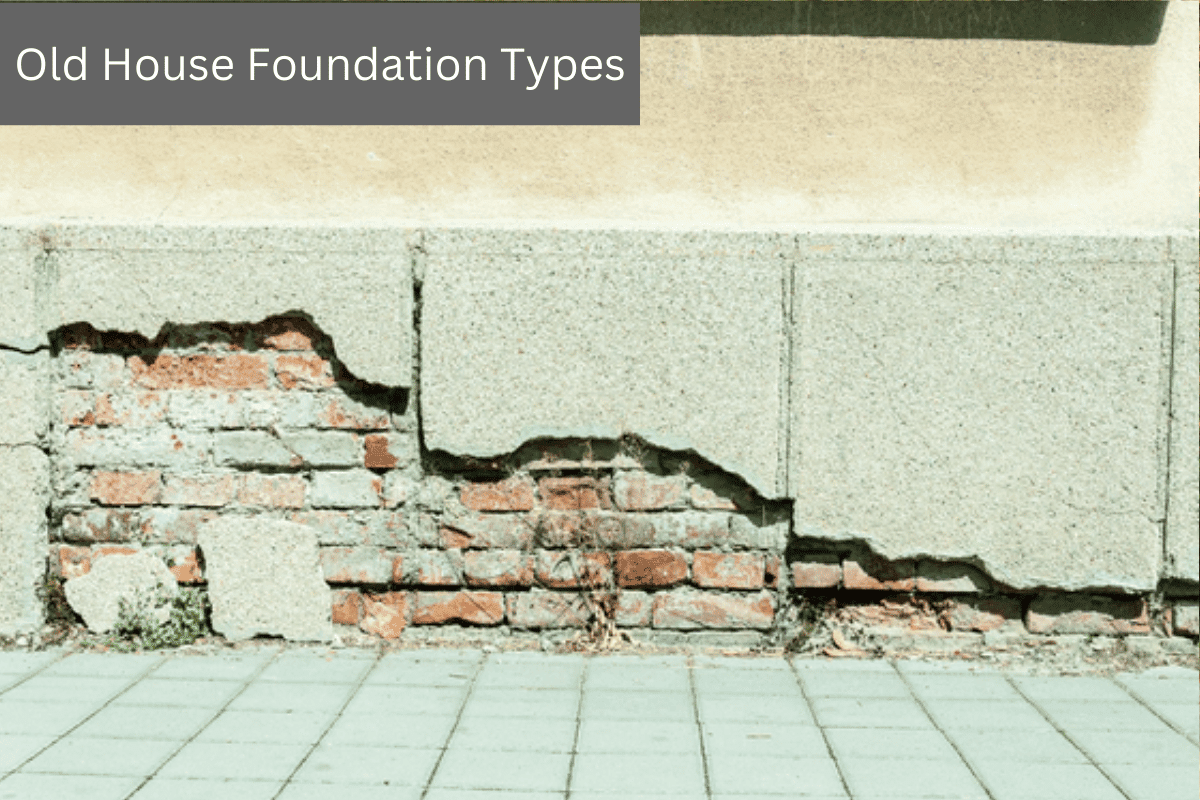
Brick masonry foundations utilize multi-wythe fired clay bricks set in historical lime mortar beds to support structural loads. While offering uniform stacking patterns for Victorian home designs, these porous walls deteriorate under moisture exposure, suffer from spalling, and lack ductile earthquake resistance unless fortified with steel structural ties or shotcrete overlays.
We routinely evaluate brick footings in historical neighborhoods where high soil moisture causes moisture wicking through the brick courses. This capillary action triggers spalling, where the brick face flakes off and crumbles under compressive loads. Because vintage brick footings lack horizontal steel reinforcement, seismic shear waves can cause diagonal mortar shearing, severing the connection between the wood floor framing and the foundation base.
Early Unreinforced Concrete Foundations (1900s–1930s)
Early poured-concrete foundations utilized aggregate mixtures of local gravel, sand, and Portland cement without steel rebar reinforcing grids. Built prior to modern concrete engineering standards, these footings often suffer from concrete carbonation, aggregate segregation, and deep structural fracturing under localized soil expansion or fault-line ground movement.
In our structural laboratory testing, unreinforced concrete samples from early 20th-century footings reveal high variation in density and compressive strength. Lacking structural rebar, these foundations cannot resist bending forces caused by soil movement during wet seasons. When expansive clay beneath the footing swells or shrinks, the concrete breaks into isolated blocks, allowing sections of the perimeter frame to sag unevenly.
Post-and-Pier Foundations (1880s–1940s)
Post-and-pier foundations elevate timber framing on individual redwood posts or unreinforced concrete piers above a subfloor crawlspace. Popular in Craftsman bungalows, this structural configuration provides ventilated floor access but vulnerable lateral stability, leaving framing prone to rack-and-topple failure during intense lateral earthquake movement.
When we inspect post-and-pier systems, we frequently uncover advanced wood rot at the junction where timber posts meet damp soil or unreinforced concrete footings. Termite activity and dry rot weaken these vertical posts, reducing their structural capacity to support dead loads. Without continuous perimeter stem walls or diagonal steel bracing, lateral earthquake forces easily push the house frame off its supports.
Field Study Case Files: Complex Bay Area Structural Repairs
Resolving complex structural failures in historic Bay Area homes requires custom engineering, underpinning, and soil stabilization methodologies tailored to regional geology. Our field operations regularly solve complex challenges, including severe lateral slope movement on expansive hill clays and differential structural settlement caused by high water tables and liquefaction zones.
In one notable project in San Francisco’s Mission District, we stabilized an 1895 three-story Victorian built on unreinforced brick footings above high-water Bay Mud deposit zones. The home had settled over five inches along its eastern wall, causing interior floor slopes and binding exterior doors. Ground shaking concerns were heightened due to nearby faults documented by the United States Geological Survey.
We engineered a dual-phase remediation plan that preserved the historic architectural exterior while restoring full structural integrity. Our crew installed temporary hydraulic shoring beams inside the basement to transfer building loads off the failing brick walls. We then excavated beneath the footing, drove steel helical piers forty feet down into solid bedrock strata, lifted the building back to level within quarter-inch tolerances, and reinforced the brick wall with structural shotcrete and epoxy anchor bolts.
In another complex assignment in the Berkeley Hills, we resolved a progressive foundation failure on a 1920s Craftsman bungalow resting on post-and-pier supports over downhill-creeping clay soil. The foundation piers were tilting downhill due to seasonal soil movement, creating severe floor distortion and structural instability.
To resolve this slope instability, we excavated the perimeter soil to establish a deep keyway into stable subsurface rock. We replaced the decaying timber posts with a continuous, steel-reinforced concrete grade beam anchored into subterranean piers. We integrated a subsurface French drainage system to divert hillside runoff away from the foundation, permanently stopping downhill soil movement and securing the home against future ground movement.
Foundation System Comparison and Risk Assessment
Selecting an optimal foundation repair or replacement method depends on evaluating structural failure risks, soil conditions, and seismic retrofitting feasibility across vintage construction styles. Comparing material durability, moisture vulnerability, and dynamic load capacity allows property owners to prioritize critical structural remediation investments effectively.
| Foundation Construction Type | Common Era of Installation | Primary Structural Vulnerability | Regional Soil & Seismic Risk Profile | Recommended Engineering Remediation Method | Structural Durability Rating |
|---|---|---|---|---|---|
| Unreinforced Fieldstone | 1850 – 1890 | Mortar leaching, lack of tensile strength, lateral wall bulging | High risk in clay soil and liquefaction zones; prone to collapsed walls | Shotcrete wall encapsulation, steel underpinning piers, sill anchor ties | Low (Requires ongoing retrofit) |
| Multi-Wythe Brick Masonry | 1870 – 1910 | Brick spalling, mortar crumble, zero ductile seismic capacity | High seismic shear risk; susceptible to moisture absorption failure | Underpinning piers, perimeter shotcrete lining, epoxy sill anchor bolts | Low to Moderate |
| Early Unreinforced Concrete | 1900 – 1930 | Structural cracking, carbonation, lack of internal rebar reinforcement | Moderate to high risk; vulnerable to differential settlement | Carbon fiber grid reinforcement, foundation underpinning, grade beams | Moderate |
| Vintage Post-and-Pier | 1880 – 1940 | Lateral shear failure, timber rot, pier rotation under dynamic load | High vulnerability to lateral earthquake displacement | Continuous concrete perimeter stem wall, steel shear bracing, pier upgrades | Low (Untreated) / High (Retrofitted) |
Diagnostic Framework: Distinguishing Settling from Active Damage
Homeowners can differentiate minor historical building settling from dangerous structural failure by inspecting crack geometry, wall displacement, and mechanical alignment issues across the property. Vertical hairline cracks under three millimeters usually indicate non-structural settling, whereas horizontal fissures, stair-step masonry cracks, and out-of-plumb doorframes signal active soil movement or foundation rotation.
During our diagnostic structural walkthroughs, we evaluate crack direction and width changes to determine ground movement vectors beneath the footings. Vertical cracks that maintain uniform width from top to bottom usually reflect minor historical settling that occurred shortly after construction. Conversely, cracks that widen at the top suggest the underlying foundation footing is dropping outward away from the core structure.
Horizontal cracking along unreinforced concrete or brick basement walls indicates hydrostatic pressure from poor surface drainage surrounding the building perimeter. When damp soil expands against the foundation exterior, it exerts intense lateral force that bows unreinforced walls inward. If left unaddressed, this pressure can cause sudden structural wall failure during prolonged winter rain storms.
Interior architectural warning signs provide crucial evidence regarding foundation stability across upper floor levels. When we observe diagonal drywall cracks radiating from door framing corners alongside sticking windows, we measure subfloor levels using digital elevation mapping equipment. Elevations varying by more than one inch across a fifteen-foot span confirm active foundation settlement that demands structural repair.
Seismic Retrofitting and Engineering Protocols for Historic Homes
Retrofitting historic foundations requires anchoring timber frame structures to reinforced concrete footings and strengthening unreinforced masonry or concrete against lateral seismic shear forces. Implementing engineering standards compliant with current building codes prevents structural displacement, soft-story collapse, and foundation separation during major seismic events.
Our standard seismic retrofitting process follows strict structural engineering protocols designed for northern California conditions. We first secure the wood sill plate to the underlying concrete foundation using heavy-duty expansion anchor bolts or epoxy-set anchor rods placed every four feet. This mechanical attachment prevents the entire house frame from sliding off its foundation during horizontal ground acceleration.
Next, we address lateral rack instability by installing structural plywood shear paneling across the interior cripple wall framing in crawlspaces. These shear walls transfer dynamic building loads directly into the concrete footings, preventing soft-story collapse during ground motion. We complete the mechanical connection using steel hold-down brackets anchored through the floor framing down into the continuous concrete foundation wall.
For historic stone or unreinforced brick foundations where direct bolt mechanical anchoring is impossible, we install continuous reinforced concrete interior stem walls bonded directly to the existing masonry. This process transforms a brittle, unreinforced foundation into a ductile structural assembly capable of absorbing dynamic earthquake vibrations without losing load-bearing capacity.
Frequently Asked Questions
Can an old house foundation be retrofitted without complete replacement?
Yes, most historic foundations can be stabilized and seismically retrofitted without full structural removal through techniques like steel underpin piers, shotcrete encapsulation, and sill plate anchor bolts. Our engineering team routinely installs interior concrete stem walls and helical piers directly beneath existing footings, preserving the historic structure while bringing load capacity up to modern engineering codes. Complete foundation replacement is only required when structural materials have degraded beyond repair.
How much does historic foundation repair typically cost in the Bay Area?
Historic foundation repair costs in the Bay Area typically range from five thousand US Dollars for minor mortar repointing to over seventy-five thousand US Dollars for complex structural underpinning or full foundation replacement. Minor seismic bolt retrofitting and crawlspace cripple wall bracing generally cost between six thousand US Dollars and fifteen thousand US Dollars depending on structural access. Complex engineering projects involving deep helical pier installations beneath historic Victorians on expansive soils require greater labor and engineering investment.
How do active fault lines and expansive soils impact historic foundations?
Active fault lines generate high ground acceleration while expansive soils expand during wet winters and shrink in dry summers, creating severe cyclical shear stress on unreinforced foundations. Expansive clay soils beneath home footings exert upward pressure during rainy months and withdraw support during dry periods, causing differential foundation settlement. Unreinforced stone, brick, and early concrete lack internal rebar tension reinforcement, causing them to crack, rotate, or separate under dynamic soil movements.
What are the main warning signs that an old foundation requires immediate structural repair?
Immediate red flags include horizontal foundation cracks wider than six millimeters, diagonal stair-step cracks in brick mortar, bowing basement walls, and noticeable structural sloping on upper floors. Homeowners should also monitor exterior doors that stick shut, wide gaps between framing and footings, and crumbling mortar dust accumulating along basement floor perimeters. Discovering any of these conditions indicates active structural deflection that requires immediate geotechnical and foundation engineering inspection.
Is a geotechnical soil inspection required before undertaking historic foundation repair?
Yes, a professional geotechnical soil inspection is essential prior to major foundation engineering to evaluate subsoil load capacity, groundwater tables, and liquefaction risk profiles. Geotechnical soil borings identify whether a foundation rests on stable bedrock, expansive clay, or uncompacted fill material susceptible to liquefaction during earthquakes. Our structural engineering designs utilize soil lab report data to calculate precise pier depths, concrete footing sizes, and anchor load requirements for permanent stability.
Sources
- California Geological Survey – Seismic Hazards Zonation Program: https://www.conservation.ca.gov/cgs/shzp
- United States Geological Survey – Earthquake Hazards Program: https://www.usgs.gov/programs/earthquake-hazards
- San Francisco Department of Building Inspection – Building Codes & Seismic Retrofit Guidelines: https://sf.gov/departments/department-building-inspection
Related Articles
Foundation Repair and Stabilization Service in East Bay, CA
What Is The Best Foundation For A Summer House?
How To Find A Good Foundation Repair Company?
What Type Of Foundation Is Best For An Earthquake?
Pier and Beam Foundation Repair Services in East Bay, CA
Bay Area Foundation Maintenance: A Seasonal Guide For Homeowners
House Foundation Repair
What Are The Different Types Of Crack Filling?
People Also Ask
The four main types of home foundations are basement, crawlspace, slab-on-grade, and pier and beam. A basement foundation provides a full underground level, offering additional living or storage space. A crawlspace foundation elevates the home slightly, allowing access to plumbing and wiring. A slab-on-grade is a single concrete layer poured directly on the ground, common for warmer climates. Pier and beam foundations use concrete piers to support the structure, often used in areas with unstable soil. For professional guidance on selecting the best option for your Walnut Creek home, Golden Bay Foundation Builders recommends reviewing our internal article titled How to Choose the Right Foundation for Your House.
In the 1920s, foundation construction primarily relied on two main types: rubble trench foundations and concrete piers. Rubble trenches were dug, filled with stones, and topped with a concrete grade beam, offering drainage but limited strength. Concrete piers were poured into holes to support wooden posts, a common method for lighter structures. For heavier buildings, poured concrete or concrete block foundations began to emerge, though they were less refined than modern standards. If you are researching historic homes in Walnut Creek or Contra Costa County, understanding these early methods is crucial for renovation planning. For a comprehensive guide on selecting the right foundation for any project, we recommend reading How to Choose the Right Foundation for Your House. Golden Bay Foundation Builders can help assess whether a 1920s foundation meets current building codes.
To identify your home's foundation type, start by checking your crawl space or basement. A concrete slab foundation is a single, solid concrete layer at ground level, with no space underneath. A basement foundation features full-height concrete walls. If you see a gap of 18 inches or more between the ground and the floor joists, you likely have a pier and beam foundation. This system uses concrete piers and wooden beams to support the structure. For homeowners in Walnut Creek, Golden Bay Foundation Builders recommends inspecting the access panel in your crawl space for visible piers and beams. For more detailed guidance, refer to our article Pier And Beam Foundation to understand the specific characteristics and maintenance needs of this system.
The seven primary types of foundations used in residential construction are: 1) Basement Foundation, which provides full-height living space below grade; 2) Crawl Space Foundation, which elevates the home slightly above ground; 3) Slab-on-Grade Foundation, a single concrete layer poured directly on the soil; 4) Pier and Beam Foundation, using vertical piers to support a beam structure; 5) T-Shaped Foundation, common in colder climates where frost lines are deep; 6) Pile Foundation, driven deep into the ground for unstable soil; and 7) Raft Foundation, a thick concrete mat that distributes weight over a large area. For homeowners in Walnut Creek and Contra Costa County, understanding these options is critical. Golden Bay Foundation Builders recommends reviewing our internal article titled Crawl Space Foundation: The Complete Guide for Homeowners and Builders for a detailed comparison of these systems tailored to local soil conditions.