
Key Drivers of Foundation Repair Costs in the Bay Area
Foundation repair costs in the San Francisco Bay Area are primarily driven by local geological conditions, house construction type, structural depth requirements, and accessibility. Minor repairs like minor crack epoxy injection cost as low as 500 US Dollars, whereas complex deep-underpinning projects using push piers on hillside slopes can exceed 25,000 US Dollars due to deep soil settlement.
In our field operations across Alameda, Contra Costa, and San Francisco counties, we routinely encounter complex structural failures driven by severe microclimates and steep terrain. For example, during a structural intervention on a hillside Craftsman home in the Berkeley Hills, we evaluated three inches of active differential settlement along the rear elevation. The structure sat on a hybrid post-and-pier assembly supported by unreinforced redwood posts resting on shallow concrete pads embedded in expansive clay. Heavy seasonal rains saturated the slope, causing the clay to expand and creep downhill, which sheared two primary support posts and rotated the concrete stem wall outward.
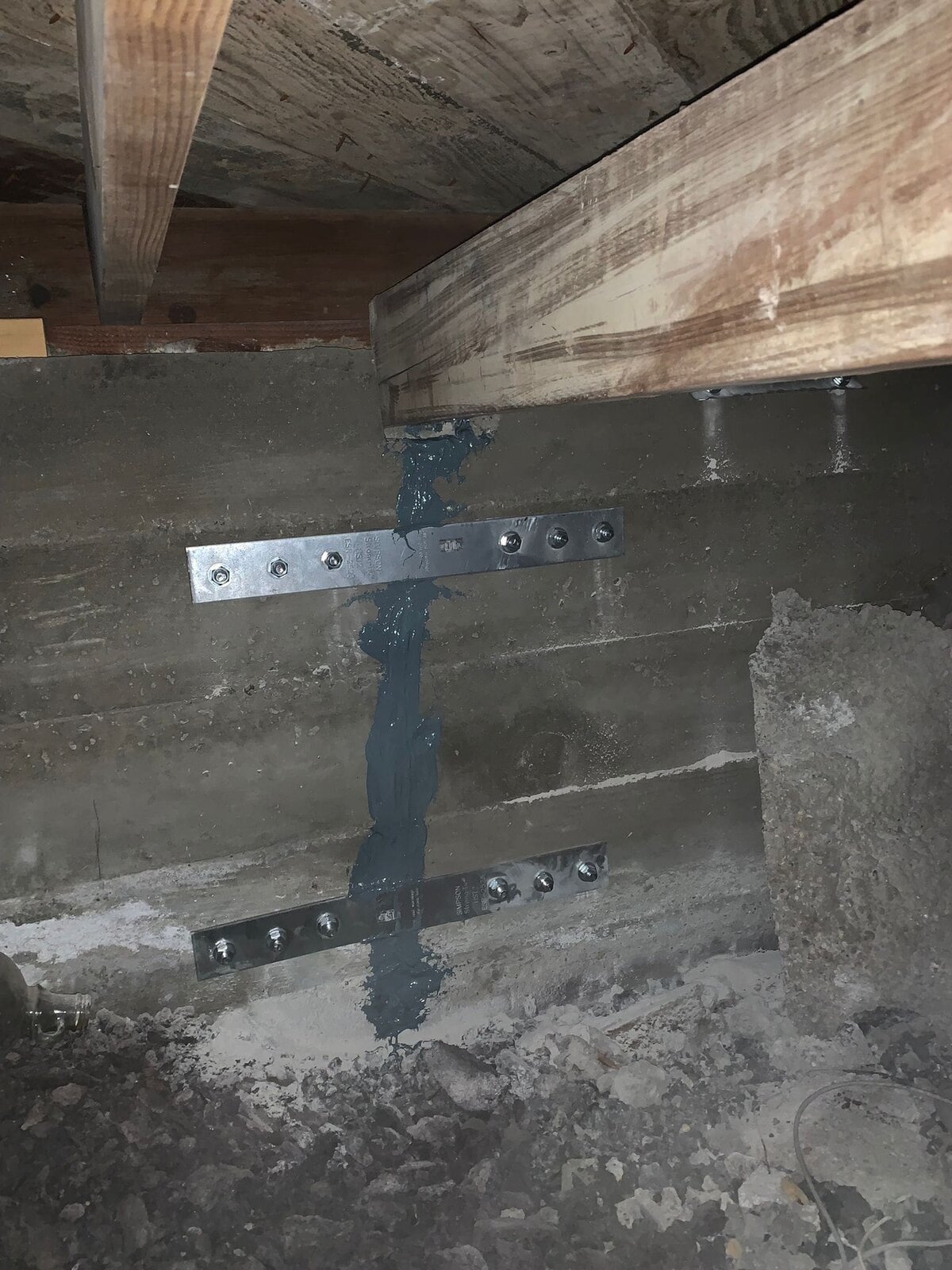
To resolve this complex failure, our engineering team executed a multi-stage stabilization plan. We temporarily supported the structure using hydraulic jacking towers and structural steel beams to stabilize the floor grid. We then installed eight heavy-duty helical piers driven to an average depth of 28 feet until they achieved required installation torque in dense bedrock. After securing heavy-duty foundation bracket assemblies to the piers, we gently lifted the structure two and a half inches back toward level alignment, replaced the damaged posts with pressure-treated lumber on engineered footings, and installed a deep subsurface French drain system to divert rainwater away from the foundation perimeter.
Structural repairs in our region demand tailored strategies rather than one-size-fits-all fixes. Factors such as crawl space clearance, labor accessibility, local municipal permit fees, and structural engineering specifications directly dictate total investment levels. Understanding these specific variables allows property owners to address root causes rather than superficial symptoms.
Local Soil Mechanics and Geotechnical Factors
The San Francisco Bay Area features highly dynamic geological profiles, where expansive clay soils expand during wet winter months and shrink in summer, exerting massive hydrostatic and soil pressure on concrete stem walls. Additionally, low-lying coastal zones contain liquefiable fill materials, requiring engineered soil stabilization or deep underpinning solutions to ensure lasting structural integrity.
Data from the U.S. Geological Survey Liquefaction Hazard Mapping Program indicates that approximately 25 percent of the nine-county Bay Area region is situated on soils classified with moderate to very high liquefaction susceptibility during seismic events. When earthquake shaking saturates granular soils or fine sands near the bay shore, the soil loses load-bearing strength and behaves like liquid. In interior valleys like Concord and Walnut Creek, expansive clay dominates, creating seasonal heave and contraction cycles that crack concrete stem walls.
Managing these geological conditions requires a firm understanding of water management and soil mechanics. Uncontrolled roof runoff or poor yard grading accelerates soil expansion around foundation footings, causing localized lifting or perimeter settlement. We routinely advise property owners that installing proper surface drainage and subsurface catch basins represents the most cost-effective defensive measure against catastrophic soil-driven structural damage.
When soil movement exceeds the tolerance of shallow footings, standard cosmetic repairs fail rapidly. Soil stabilization techniques, such as deep chemical grout injection or mechanical underpinning, become necessary to transfer building loads to stable geotechnical layers. Addressing underlying soil dynamics ensures that primary structural repairs remain permanent over decades of environmental stress.
Foundation Repair Methodologies and Cost Trade-Offs
Choosing between foundation repair methods involves balancing upfront installation expenses, site accessibility constraints, and long-term structural durability. While carbon fiber strap reinforcement offers an economical solution for bowing stem walls, severe differential settlement requires push piers or helical piers anchored into stable bedrock layer systems to prevent ongoing structural movement.
| Repair Method | Primary Structural Application | Relative Durability | Site Clearance Needed | Typical Cost Range (US Dollars) |
|---|---|---|---|---|
| Epoxy Injection & Crack Sealing | Non-structural foundation wall cracks | Moderate (moisture barrier only) | Minimal clearance | 500 to 1,500 US Dollars |
| Carbon Fiber Wall Strapping | Bowing or cracked concrete stem walls | High (prevents lateral shear) | Low to moderate access | 1,500 to 4,500 US Dollars |
| Post & Pier Support Replacement | Sinking or rotting crawl space posts | High (with drainage controls) | Crawl space clearance required | 1,500 to 5,000 US Dollars |
| Seismic Retrofit (Bolt & Brace) | Pre-1980 raised foundation wood frames | High (meets CEBC Chapter A3) | Perimeter crawl space access | 3,000 to 7,000 US Dollars |
| Steel Push or Helical Underpinning | Major differential settlement or sinking slab walls | Very High (permanent bedrock anchor) | Heavy equipment access preferred | 1,200 to 3,000 US Dollars per pier |
Our field trade-off evaluations rely on precise conditional logic to select the correct engineering approach. If your structure suffers from localized settlement on stable shallow rock, prioritize concrete piers; if your home sits on deep expansive clay, select steel helical piers; if you need to stabilize bowing stem walls without structural excavation, build carbon fiber reinforcement assemblies.
Common failure modes we observe in the field stem from misdiagnosing the primary root cause of movement. For instance, applying rigid epoxy mortar to an active expansion crack in clay soil without addressing exterior water drainage guarantees that the concrete will fracture again in the following rain cycle. Similarly, placing shallow concrete pads under settling crawl space posts provides only temporary support if the underlying clay continues to expand and contract.
Underpinning systems utilizing industrial steel push piers or helical anchors provide superior long-term performance by bypassing active surface soil layers entirely. Although the initial cost per pier is higher than traditional concrete underpinning, driving steel shafts deep into stable soil strata or bedrock eliminates future settlement risks completely.
Seismic Retrofitting and Local Code Compliance
Seismic retrofitting secures older unreinforced homes against lateral earthquake forces by anchoring wood framing to concrete foundations and bracing crawl space cripple walls. Cost factors include crawl space clearance, perimeter linear footage, city permitting fees, and compliance with California Existing Building Code Chapter A3 guidelines for light wood-frame residential structures.
The Earthquake Brace + Bolt Program, administered by the California Residential Mitigation Program, offers grant funding up to 3,000 US Dollars for qualifying pre-1980 wood-framed homes with raised foundations to complete standardized seismic retrofits. This work entails installing anchor bolts through the sill plate into the concrete foundation, along with securing structural plywood sheathing to short cripple walls. These structural enhancements prevent the framing from sliding or buckling off the foundation during intense ground motion.
Municipalities across Northern California enforce specific permit standards and seismic upgrade triggers. In cities like Oakland, Berkeley, and San Francisco, structural modifications or major residential renovations trigger mandatory seismic compliance reviews. Working with specialized contractors familiar with local building department submittal requirements ensures smooth approval processes and prevents costly project delays.
A completed seismic retrofit also yields direct financial advantages beyond structural safety. The California Earthquake Authority offers policy premium discounts up to 25 percent for retrofitted homes meeting specific building age and construction criteria. Investing in structural retrofitting enhances building resilience while simultaneously lowering ongoing property insurance expenses.
Step-by-Step Decision Framework for Homeowners
Navigating foundation repairs requires a systematic approach to accurately diagnose structural failure, secure municipal permits, and execute targeted engineering solutions. Homeowners must avoid premature cosmetic patches and instead systematically evaluate soil mechanics, hire licensed structural inspectors, select specialized repair methods, and obtain formal sign-offs from local building departments.
- Schedule a comprehensive diagnostic inspection by a licensed structural engineer or specialized foundation contractor to map floor elevation profiles and identify active crack movement.
- Perform targeted soil testing or geotechnical evaluation if site conditions indicate expansive clay, high groundwater levels, or hillside slope instability.
- Compare engineered repair plans, carefully evaluating structural load calculations, depth requirements, and warranty terms across proposed pier or brace options.
- Secure required municipal building permits from your local city building department, verifying plan compliance with California Existing Building Code standards.
- Execute structural repairs, install supporting drainage management systems, and complete final engineering inspections to obtain formal building permit sign-offs.
Following this structured process prevents common homeowner pitfalls, such as paying for superficial cosmetic repairs that fail to resolve underlying structural movement. Working systematically protects property capital and establishes a clear documentation trail for future real estate transactions.
Establishing a routine monitoring schedule after repairs are complete ensures long-term structural integrity. Keeping gutters clean, maintaining consistent moisture levels around concrete footings, and keeping drainage outlets clear preserves foundation stability for decades.
Frequently Asked Questions
Is foundation repair covered by standard homeowners insurance policies in California?
Standard California homeowners insurance policies do not cover foundation repairs caused by soil movement, expansive clay expansion, settling, or normal age-related wear and tear. Insurance policies generally exclude earth movement, requiring property owners to purchase specialized earthquake coverage or pay out-of-pocket for soil stabilization and structural underpinning repairs.
How long does a typical Bay Area residential foundation repair take to complete?
A standard residential foundation repair project in the Bay Area takes between three days and three weeks to complete, depending on project complexity and engineering specifications. Minor crack repairs or straightforward seismic retrofits are completed within three to five days, whereas full structural underpinning with deep steel piers on steep hillside sites requires several weeks of site excavation and installation work.
What is the difference between push piers and helical piers for foundation underpinning?
Push piers are driven deep into the ground using the weight of the structure until they reach competent load-bearing strata, whereas helical piers feature screw blades that are twisted mechanically into the ground regardless of building weight. Push piers work best on heavy concrete structures resting on stable rock layers, while helical piers excel in lighter homes or sites situated on deep, highly expansive clay soils.
Will completing a foundation repair or seismic retrofit increase my property value?
Completing a permitted, engineer-certified foundation repair or seismic retrofit directly protects and increases property value by removing structural defects that impair real estate transactions. Prospective home buyers and mortgage lenders require sound structural foundations, and documenting certified repairs eliminates major red flags during real estate disclosures and home inspections.
How do I know if diagonal drywall cracks indicate structural foundation failure?
Diagonal drywall cracks wider than one-eighth of an inch that originate at door or window corners and expand over time indicate active foundation settlement or movement. When accompanied by sticking door frames, sloping floors, or exterior concrete wall fractures, these interior cracks signal that the underlying structure requires immediate professional evaluation.
Sources
- U.S. Geological Survey Liquefaction Hazard Mapping: https://www.usgs.gov/programs/earthquake-hazards/science/liquefaction-hazard-maps
- California Residential Mitigation Program (Earthquake Brace + Bolt): https://www.earthquakebracebolt.com/
- California Geological Survey Seismic Hazard Zones: https://www.conservation.ca.gov/cgs
- California Earthquake Authority Insurance Retrofit Discounts: https://www.earthquakeauthority.com/
Related Articles
Foundation Repair Cost Calculator
How Can I Tell If My Foundation Is Sinking?
What Are The Top-rated Foundation Repair Companies Near California
Foundation Underpinning Services San Francisco Bay Area | Golden Bay Foundation Repair
What Type Of Foundation Repair Is Best?
People Also Ask
The cost to fix foundation issues varies widely based on the severity of the problem, the type of repair needed, and the size of your home. For minor cracks or settling, repairs might range from $500 to $3,000. More significant issues, such as piering or underpinning to stabilize a sinking foundation, can cost between $5,000 and $15,000 or more. In severe cases involving major structural work, expenses may exceed $20,000. For homeowners in Walnut Creek and Contra Costa County, a professional inspection is the first critical step. At Golden Bay Foundation Builders, we always recommend starting with a thorough evaluation. For more on protecting your investment, see our internal article titled Best Exterior Foundation Waterproofing Products, which covers industry-leading solutions.
The best time for foundation repair in Walnut Creek and Contra Costa County is typically during the dry summer and early fall months. This period offers stable soil conditions, which are crucial for concrete curing and proper foundation leveling. Rainy winter months can saturate the soil, causing delays and potential complications with excavation and material setting. For a deeper dive into seasonal considerations, we recommend reading our internal article What Is The Best Time Of Year For Foundation Repair?. At Golden Bay Foundation Builders, we always assess the specific soil moisture and weather forecast to schedule work for optimal results, ensuring your foundation repair is both durable and effective regardless of the season.
The most expensive type of foundation repair is typically piering or underpinning, especially when it involves deep helical or steel push piers. This method is required for major structural settlement, where the foundation must be stabilized by transferring the building's weight to load-bearing soil or bedrock far below the surface. The high cost comes from the extensive engineering analysis, heavy equipment, deep excavation, and the labor-intensive process of installing multiple piers. For homeowners in Walnut Creek and Contra Costa County, soil conditions like expansive clay often necessitate this advanced solution. At Golden Bay Foundation Builders, we provide thorough assessments for such complex needs. For a detailed breakdown of this process, you can refer to our internal article Foundation Underpinning Services San Francisco Bay Area | Golden Bay Foundation Repair.
A properly completed foundation repair does not inherently devalue a home; in fact, it can often restore or even increase the property's value. The key factor is the quality and documentation of the repair. A home with a history of foundation issues that were professionally fixed, with a transferable warranty and engineering reports, is generally more marketable than one with unresolved problems. Buyers are typically wary of unaddressed cracks or uneven floors. A certified structural repair, performed by a company like Golden Bay Foundation Builders, provides peace of mind. For a deeper understanding of how water affects your structure, we recommend reviewing our internal article titled The Role Of Drainage Systems In Protecting Your Foundation Class. Ultimately, a documented repair is an asset, not a liability.
When evaluating basement foundation repair cost, homeowners in Walnut Creek and Contra Costa County should understand that pricing varies significantly based on the severity of the issue, the type of foundation, and the repair method required. Minor crack injections may cost a few hundred dollars, while major structural repairs like underpinning or helical pier installation can range from several thousand to over ten thousand dollars. A professional inspection is essential to determine the specific cause, such as soil settlement or water damage. For a detailed breakdown of pricing and trusted service providers, we recommend reviewing our internal article What Are The Top-rated Foundation Repair Companies Near California. Golden Bay Foundation Builders advises obtaining multiple quotes to ensure fair pricing and quality workmanship for your specific situation.