

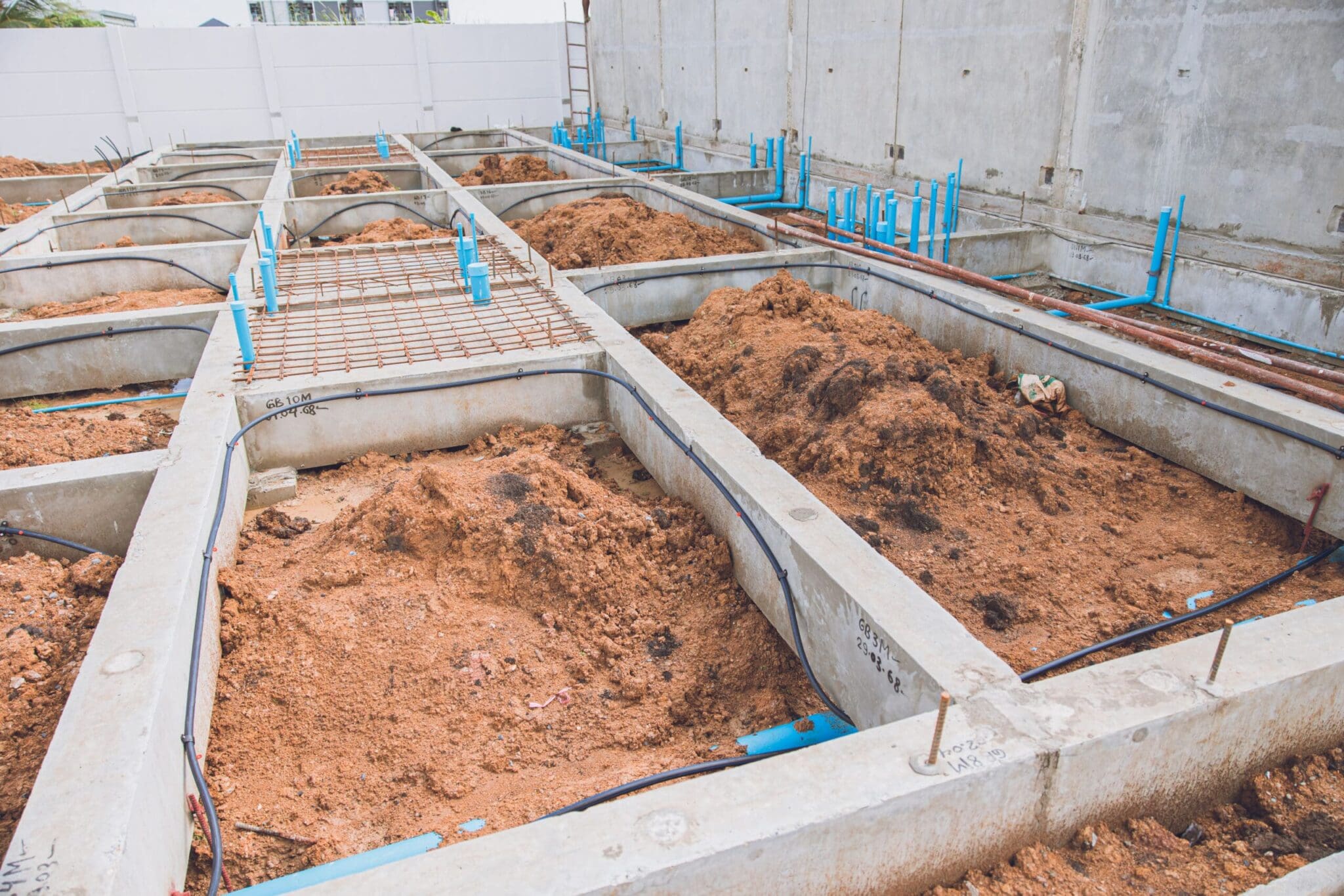
Understanding the True Cost of a 2000 Square Foot Foundation in the Bay Area
For a 2000 square foot home in the San Francisco Bay Area, constructing or replacing a foundation typically ranges from 24,000 US dollars to 90,000 US dollars, averaging 12 to 45 US dollars per square foot. Major structural repairs using underpinning piers generally cost between 15,000 US dollars and 45,000 US dollars depending on localized geotechnical conditions.
Building or repairing a foundation in Northern California demands higher capital allocation than in most national real estate markets. Localized factors such as stringent building codes, seismic safety mandates, and labor costs influence project pricing across San Francisco, Alameda, and Contra Costa counties.
When evaluating a 2000 square foot floor plan, costs vary significantly depending on whether we are pouring a new concrete slab, building a raised crawl space, or executing structural foundation underpinning. The table below illustrates typical financial commitments for new construction versus major remediation across common foundation configurations.
| Foundation Type / Service | Average Cost Range (2000 Sq Ft) | Estimated Cost Per Sq Ft | Primary Application |
|---|---|---|---|
| Monolithic Slab Concrete Construction | 12,000 US dollars – 32,000 US dollars | 6 US dollars – 16 US dollars | Level lots, minor active soil movement |
| Raised Crawl Space / Concrete Stem Wall | 20,000 US dollars – 50,000 US dollars | 10 US dollars – 25 US dollars | Sloped lots, elevated moisture zones |
| Full Perimeter Underpinning (Steel Piers) | 18,000 US dollars – 45,000 US dollars | 9 US dollars – 22.50 US dollars | Structural settlement, sinking perimeter |
| Complete Demolition and Replacement | 50,000 US dollars – 100,000 US dollars | 25 US dollars – 50 US dollars | Severe crumbling concrete, major seismic failure |
Key Factors Driving 2000 Square Foot Foundation Costs
Foundation pricing for a 2000 square foot footprint depends heavily on structural foundation type, local seismic retrofitting mandates, site access restrictions, and subsurface geotechnical traits. In East Bay communities like Oakland, Berkeley, and Concord, expansive clay soils and steep hillside grades require specialized engineering, push piers, and permitting that increase labor and material expenses significantly beyond standard baseline metrics.
Our field assessments consistently demonstrate that geological variance across the region dictates structural requirements. The primary variables influencing total project estimates include the following critical factors:
- Subsurface Soil Mechanics: Highly expansive clay swells during wet winters and contracts in summer dry spells, requiring deeper footings or steel piers driven to bedrock.
- Site Accessibility and Slope: Narrow accessways between tight parcel lots or steep hillside properties require specialized mini-excavations, hand-digging, or pumping concrete over extended distances.
- Seismic Safety Retrofitting: Adhering to standards set by the U.S. Geological Survey regarding fault proximity often requires anchor bolts, hold-downs, and cripple wall plywood shear reinforcement.
- Municipal Permits and Engineering Stamps: Comprehensive geotechnical soil reports and structural engineering plans cost between 3,000 US dollars and 7,000 US dollars before excavation work even begins.
If your property sits on active expansive clay with high seasonal moisture fluctuation, prioritize deep steel pier underpinning over superficial concrete pouring; if you require seismic upgrading for a cripple wall on a stable grade, build engineered shear wall bracing with anchor bolting.
Comparing Foundation Systems: Total Investment and Trade-Off Analysis
Choosing an appropriate foundation system requires evaluating upfront capital against long-term resistance to seismic movement and soil expansion. Poured concrete slabs offer the most budget-friendly baseline between 10,000 US dollars and 32,000 US dollars, whereas raised crawl spaces and concrete stem walls cost between 18,000 US dollars and 45,000 US dollars while delivering critical crawl space access, ventilation control, and superior soil adaptability.
Each foundation system presents distinct structural advantages and systemic failure risks under Northern California environmental stress. Understanding these operational trade-offs ensures homeowners choose the right system for their lot topography.
| Foundation Architecture | Financial Investment | Primary Strengths | Vulnerabilities | Best Bay Area Suitability |
|---|---|---|---|---|
| Monolithic Slab | 12,000 US dollars – 32,000 US dollars | Low upfront expense, fast pour schedule | Utility pipe repair difficulty, slab cracking from clay heave | Flat valley lots with low soil expansion |
| Concrete Stem Wall & Crawl Space | 20,000 US dollars – 50,000 US dollars | Easy utility access, adaptable to slopes | Vulnerable to moisture intrusion, wood rot, cripple wall movement | Sloped East Bay hillsides, high moisture areas |
| Post and Pier Foundation | 16,000 US dollars – 38,000 US dollars | Excellent air ventilation, minimal grading needs | Higher vulnerability to seismic shaking without lateral bracing | Historic structures, steep wooded properties |
| Engineered Mat / Raft Foundation | 28,000 US dollars – 65,000 US dollars | Distributes weight evenly across poor soil | Higher material volume and rebar costs | Moderate liquefaction zones, soft fill soil |
Real-World Case Studies: Field Solutions for Complex Bay Area Foundations
Resolving severe structural foundation failure demands precise geotechnical interventions rather than superficial fixes. When we managed a complex project in Berkeley on a 22-degree slope, expansive soil shrinkage caused a 3.5-inch corner settlement on a 2000 square foot home. We stabilized the structure by driving 16 deep heavy-duty steel piers into load-bearing bedrock and constructing a reinforced concrete retaining grade beam.
During another challenging project in Clayton, we encountered a 1970s post and pier foundation experiencing differential settlement due to saturated clay soils. The floor had unlevelled by over two inches across the living room, causing door frames to pinch tight.
We resolved this by implementing a comprehensive two-phase remediation plan:
- We installed a heavy-duty perimeter French drain and active sump pump system to divert subsurface water runoff away from the home foundation footprint.
- We excavated strategic access pits and drove hydraulic push piers down to non-expansive strata, carefully lifting the sagging structure back toward plumb level before installing heavy-duty steel brackets.
Without addressing the underlying water drainage issue, simply driving piers or pouring extra concrete would have left the foundation susceptible to lateral soil pressure and erosion. Regional hazard tracking provided by the Association of Bay Area Governments emphasizes that managing subsurface water is essential for maintaining foundation integrity in high-risk seismic zones.
Step-by-Step Framework for Evaluating and Executing Foundation Repairs
Navigating foundation repairs efficiently requires a logical sequence to protect home stability and avoid premature cosmetic work. Homeowners must begin with a comprehensive structural evaluation, secure detailed civil engineering specifications, address site drainage issues, execute mechanical underpinning or slab lifting, and finish with final cosmetic interior crack restoration. Following this structured pathway eliminates wasted expenditure and prevents recurrent structural movement.
To maximize structural longevity and control project costs, we recommend carrying out foundation work according to the following sequential order:
- Commission an independent structural engineering report and geotechnical soil analysis to pinpoint exact failure mechanisms.
- Secure all required municipal building permits and review historical seismic retrofitting compliance for your specific city.
- Fix underlying water management issues by installing perimeter drainage systems, extending downspouts, and regrading soil away from stem walls.
- Execute heavy structural stabilization, such as installing steel push piers, pouring grade beams, or applying epoxy crack injection.
- Allow the home structure to settle into its stabilized posture for 30 to 60 days before repairing interior drywall, trim, or tile cosmetic cracks.
Frequently Asked Questions
How much does it cost to repair a settling 2000 square foot foundation?
Repairing a settling 2000 square foot foundation in the Bay Area typically ranges from 12,000 US dollars to 38,000 US dollars depending on the required pier count and excavation complexity. Isolated settlement affecting a single corner may cost around 8,000 US dollars, whereas full perimeter underpinning involving 15 to 25 steel push piers can reach 45,000 US dollars. Final pricing depends on geotechnical conditions, equipment accessibility, and depth to solid bedrock.
What is the average lifespan of a residential concrete foundation?
A properly designed and poured residential concrete foundation can last 80 to 100 years or longer when protected from continuous soil shear and severe moisture intrusion. However, unmitigated expansive clay soil movement or untreated seismic settling can degrade structural integrity within 20 to 30 years. Regular drainage maintenance and timely crack repairs ensure the foundation reaches its full engineering lifespan.
How do expansive clay soils impact total foundation repair expenses?
Expansive clay soils increase total repair expenses because they require deeper helical or steel push piers to anchor load-bearing rock strata below the active moisture zone. Standard shallow footings on expansive clay frequently fail over time as soil swells in winter and shrinks in summer. Reaching stable depth often means driving piers 15 to 30 feet beneath the surface, raising both equipment and labor costs.
Is seismic retrofitting typically included in standard foundation replacement quotes?
Standard foundation replacement quotes usually exclude full seismic retrofitting, which requires separate framing anchors, foundation hold-downs, and cripple wall shear bracing adding 3,500 US dollars to 9,000 US dollars. Homeowners should explicitly request that seismic bracing be integrated into the scope of structural work during major foundation repairs. Combining retrofitting with foundation replacement saves on total labor costs compared to performing them separately.
When should interior drywall cracks be repaired during foundation work?
Interior drywall cracks should only be repaired after all structural foundation piering, jacking, and soil stabilization processes have completely settled and stabilized. Performing cosmetic repairs before or during foundation lifting will cause fresh plaster and tape to crack as the house frame adjusts. We advise waiting 30 to 60 days after structural repair completion before hiring drywall contractors.
Sources
- U.S. Geological Survey (USGS) Earthquake Hazards Program: https://www.usgs.gov
- Association of Bay Area Governments (ABAG) Resilience Program: https://abag.ca.gov
Related Articles
Foundation Underpinning Services San Francisco Bay Area | Golden Bay Foundation Repair
Mat Foundation Vs Slab-on-Grade: The Complete Guide To Choosing The Right Foundation (With Cost, Soil, Seismic & Climate Data)
ICF Foundations Vs. Poured Concrete Foundations: Which One Delivers The Best Value For Your Home?
Push Pier Foundation Repair Systems Service in Orinda, CA
Concrete Block Foundation Calculator
What Type Of Foundation Repair Is Best?
Crawl Space Foundation: The Complete Guide For Homeowners And Builders
People Also Ask
For a 2000 square foot home in Walnut Creek or Contra Costa County, the cost to build a foundation typically ranges from $15,000 to $35,000. This wide range depends on the type of foundation, with slab-on-grade being the most economical and full basements or raised foundations costing significantly more. Factors like soil conditions, excavation needs, and local permit fees also heavily influence the final price. For homeowners weighing their options, it is crucial to consider long-term value over initial cost. Golden Bay Foundation Builders recommends reviewing our internal article titled ICF Foundations vs. Poured Concrete Foundations: Which One Delivers the Best Value for Your Home? to understand how different materials impact both budget and durability. Always get multiple quotes and ensure your contractor is licensed for work in Contra Costa County.
For a 2000 square foot concrete slab, costs can vary significantly based on thickness, soil conditions, and reinforcement. In the Walnut Creek and Contra Costa County area, a standard 4-inch slab for a garage or shed typically ranges from $5 to $7 per square foot, putting the total between $10,000 and $14,000. However, for a home foundation requiring a 6-inch slab with proper rebar and vapor barriers, you should expect $8 to $12 per square foot, or $16,000 to $24,000. These figures do not include site preparation, grading, or permits. For a detailed breakdown of slab types and their specific costs for our region, we highly recommend reading our internal article titled Mat Foundation vs Slab-on-Grade: The Complete Guide to Choosing the Right Foundation (With Cost, Soil, Seismic & Climate Data). Golden Bay Foundation Builders always advises getting a site-specific quote, as soil compaction and seismic requirements in Contra Costa County can impact the final price.
The most expensive type of foundation is typically a full basement or a poured concrete basement foundation. This is due to the extensive excavation, high material costs, and complex waterproofing required. For homeowners in Walnut Creek and Contra Costa County, the cost can be further elevated by the need to address local soil conditions and seismic requirements. For more insight on ground stability, we recommend reviewing our internal article titled Which Soil Is Not Suitable For Foundation?. While slab-on-grade foundations are more budget-friendly, a basement offers valuable living or storage space. Golden Bay Foundation Builders always advises balancing long-term value with upfront investment when selecting a foundation type.
Calculating the cost of a foundation requires evaluating several key factors. First, determine the size and depth of the foundation, as square footage directly impacts material and labor costs. Soil conditions in Walnut Creek and Contra Costa County can vary, so a geotechnical report is essential to assess if reinforcement or deeper footings are needed. The type of foundation—such as slab, crawl space, or basement—also plays a major role, with poured concrete and ICF being common choices. For a detailed comparison on value, refer to our internal article ICF Foundations vs. Poured Concrete Foundations: Which One Delivers the Best Value for Your Home? to guide your decision. Additionally, local permit fees and contractor rates must be factored in. At Golden Bay Foundation Builders, we recommend getting at least three itemized quotes to account for these variables, ensuring an accurate budget for your specific project.
When estimating the cost of a basement foundation, several key factors come into play including excavation depth, soil conditions, concrete volume, and reinforcement requirements. A typical poured concrete basement wall costs between $50 and $100 per linear foot installed, with total project costs ranging from $20,000 to $50,000 or more for a standard home. For accurate budgeting, we recommend using our internal article titled Concrete Block Foundation Calculator, which provides a detailed breakdown of material quantities and labor estimates specific to your project size. Golden Bay Foundation Builders always advises homeowners to account for waterproofing, drainage systems, and permit fees in their calculations. Remember that local building codes in Walnut Creek CA and Contra Costa County may require specific reinforcement standards that affect final pricing.