Improve Your Home’s Earthquake Resistance with Bolt and Brace

Earthquakes pose significant risks to homes in Carlifornia , making proactive preparation imperative. In this comprehensive guide, we’ll explore the importance of earthquake retrofitting and how specialists like Golden Bay Foundation Builders play a pivotal role in fortifying homes against seismic events.

Understanding the Importance of Earthquake Retrofitting

What is Earthquake Retrofitting?

Earthquake retrofitting is the process of reinforcing a building’s structure to enhance its ability to withstand seismic activity. In California, where earthquakes are a constant concern, retrofitting is a vital step in ensuring the safety and stability of homes. Golden Bay Foundation brings unparalleled expertise to this process, offering tailored solutions to meet the unique needs of homeowners in the region.

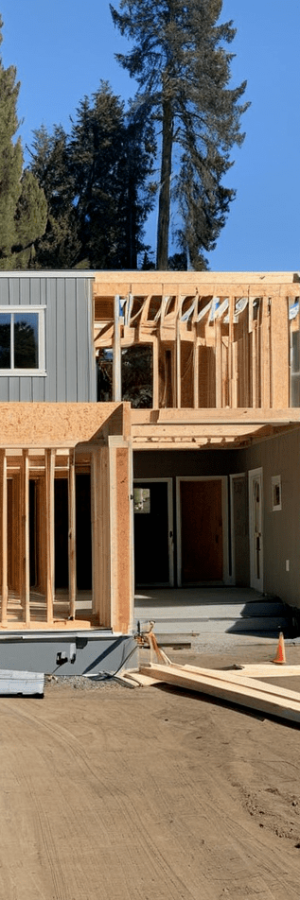
A construction site photograph of a two-story modern house with gray vertical siding in progress. The house features multiple white-framed windows and a wooden second-floor deck frame. The deck is supported by exposed wooden beams and posts. The foundation is visible with dirt and construction materials scattered around. The house has a contemporary architectural design with clean lines and a flat roof. In the background, tall evergreen trees, including Douglas firs, create a natural backdrop against a bright blue sky. The construction site shows exposed wooden framing for an attached garage on the left side of the house. Construction materials and orange safety cones are visible on the ground. The dirt around the foundation is freshly graded and is a light brown color. The image is taken from a slight angle, showing both the front and side of the house during the construction phase.

1. Assessment and Inspection

Before initiating any retrofitting project, a thorough assessment of your home is crucial. Golden Bay Foundation’s experts conduct detailed inspections to identify vulnerabilities and design a customized retrofitting plan.

2. Foundation Strengthening

A strong foundation is the cornerstone of earthquake resistance. Our seismic retrofitting process often includes reinforcing and strengthening the foundation, ensuring it can withstand the lateral forces exerted during an earthquake.

3. Wall Bracing

Walls are vulnerable points during seismic events. Golden Bay Foundation employs advanced techniques to brace and strengthen walls, minimizing the risk of cracks and structural damage.

4. Anchor and Bolting Systems

Securing your home to its foundation is essential. Our retrofitting experts utilize state-of-the-art anchor and bolting systems to ensure your house remains firmly anchored during an earthquake.

5. Soft-Story Retrofitting

Homes with soft or open-front stories are particularly susceptible to earthquake damage. Golden Bay specializes in soft-story retrofitting, a process that reinforces these vulnerable areas, enhancing overall structural integrity.

Exploring Seismic Retrofitting Approaches

1. California Earthquake Retrofit Program 2022

Stay informed about the latest regulations and programs aimed at earthquake preparedness. The California Earthquake Retrofit Program 2022 provides valuable resources and guidelines for homeowners looking to retrofit their properties.

2. Cost Considerations: Understanding Earthquake Retrofit Costs

Many homeowners are curious about the earthquake retrofit cost. Golden Bay Foundation provides transparent pricing, and our experts can guide you through the various factors influencing the cost of seismic retrofitting.

3. Seismic Retrofitting in Action: Los Angeles Case Studies

Explore real-life examples of seismic retrofitting projects in Los Angeles. Case studies offer insights into the challenges faced by homeowners and how Golden Bay Foundation’s retrofitting solutions provided effective and lasting results.

4. Earthquake-Proof Homes: Myth or Reality?

Delve into the concept of earthquake-proof homes and understand the realistic expectations associated with seismic retrofitting. While no home is entirely earthquake-proof, retrofitting significantly improves a home’s ability to withstand seismic forces.

Frequently Asked Questions: Earthquake Preparedness

Q: How can I prepare for an earthquake? A: Comprehensive earthquake preparedness involves a combination of emergency planning, securing furniture and belongings, and investing in seismic retrofitting. Golden Bay Foundation offers a holistic approach to earthquake readiness.

Q: Can earthquakes be prevented? A: Earthquakes are natural events that cannot be prevented. However, their impact on structures can be minimized through proper earthquake preparedness measures, including retrofitting.

Q: How can we prevent earthquakes? A: Earthquakes are geological phenomena caused by the movement of tectonic plates. Preventing earthquakes is beyond human control, but preparing for them is crucial.

Q: What is seismic retrofitting? A: Seismic retrofitting involves strengthening a building’s structure to withstand seismic activity. It is a proactive measure to minimize damage during earthquakes.

Golden Bay Foundation's Commitment to Your Safety

Contact Golden Bay Foundation Builders Today!

In conclusion, earthquake preparedness is a shared responsibility. Golden Bay Foundation is dedicated to empowering California homeowners with the knowledge and solutions needed to safeguard their homes against seismic events. Our seismic retrofitting expertise, combined with a commitment to transparency and excellence, makes us your trusted partner in earthquake preparedness. Contact Golden Bay Foundation today to take the first step toward a safer and more resilient home.

Related Articles

People Also Ask

Yes, the Earthquake Brace and Bolt (EBB) program is a legitimate and highly regarded state-run initiative. It is administered by the California Earthquake Authority (CEA) in partnership with the California Governor’s Office of Emergency Services (Cal OES). The program provides financial grants to qualifying homeowners to seismically retrofit older houses, specifically those built before 1980 with raised foundations, to help protect against earthquake damage. Funding is limited and application-based. For a detailed analysis of the program's benefits and eligibility, we recommend reviewing our internal resource, Earthquake Brace and Bolt Program. This article provides essential guidance on navigating the application process and understanding the critical safety standards involved.

The cost of an Earthquake Brace and Bolt (EBB) retrofit varies significantly based on home size, design, and regional labor rates. On average, homeowners can expect to pay between $3,000 and $7,000 for a complete seismic retrofit that includes bolting the wood frame to the foundation and adding plywood shear walls. Many states, particularly in high-risk seismic zones like California, offer grant programs that can substantially offset this cost, sometimes covering a large portion for qualifying homeowners. It is a critical investment for structural safety, potentially preventing catastrophic damage. For foundational cost context, our detailed guide How Much Does A Concrete Block Foundation Cost? provides related budgeting insights for new construction.

An earthquake brace and bolt (EBB) system is a seismic retrofit technique designed to protect older homes, particularly those built before modern building codes, from significant damage during an earthquake. The primary components involve bolting the wooden frame of the house directly to its concrete foundation and adding braces (typically plywood shear panels) to the crawl space to resist lateral shaking forces. This prevents the structure from sliding or toppling off its base. Programs like California's Earthquake Brace + Bolt initiative offer grants to help homeowners fund these critical upgrades. Retrofitting is a key industry standard for improving community resilience and safeguarding property and lives against seismic events.

The concept of California being "overdue" for a major earthquake, often called "the Big One," is a simplification of complex seismic science. The San Andreas Fault system is locked and accumulating stress, with a high probability of a magnitude 6.7 or greater quake in the next 30 years. However, earthquakes do not follow a predictable schedule. The term "overdue" stems from average recurrence intervals, like the roughly 150-year cycle for the southern San Andreas, which last ruptured in 1857. While the state is in a period of elevated risk and preparedness is critical, seismologists avoid definitive timetables, emphasizing constant readiness over a countdown to a specific date.

The Earthquake Brace and Bolt (EBB) program is a crucial initiative designed to help homeowners in high-risk seismic zones retrofit their houses to better withstand earthquakes. It typically provides financial grants to cover a portion of the costs for installing foundation bracing and cripple wall sheathing, which are standard retrofitting techniques to prevent structural collapse. This proactive measure is a key industry standard for improving residential seismic safety. For a detailed guide on eligibility, application processes, and the technical specifications involved, we recommend reviewing our internal resource, Earthquake Brace and Bolt Program. Taking such steps is a fundamental part of responsible homeownership in earthquake-prone regions.

Google Yelp

Overall Rating

5.0
★★★★★

100 reviews