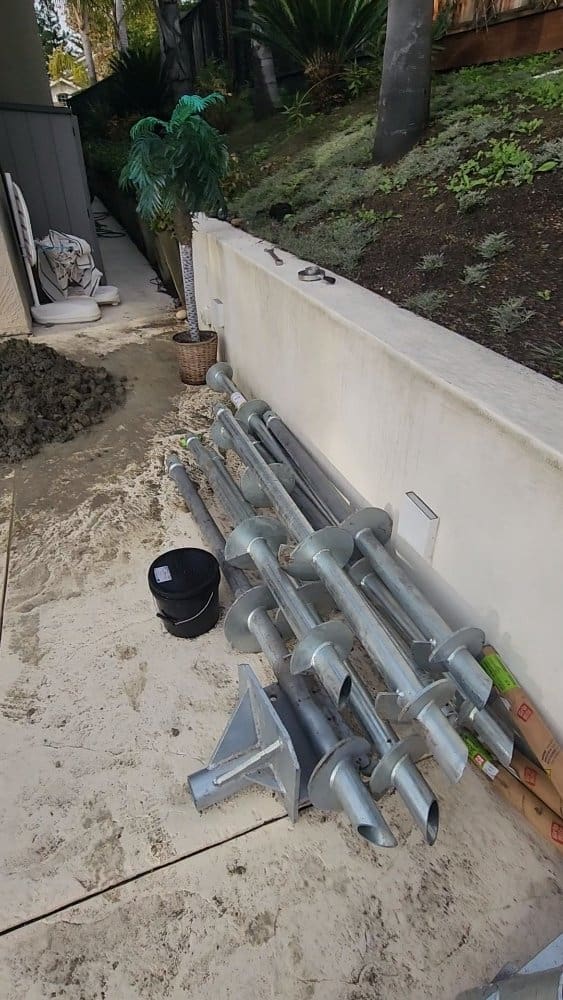
The average cost of a helical pier typically ranges from $1,500 to $3,000 per pier installed, though this can vary significantly based on several factors. Key cost determinants include the project's geographic location, soil conditions, required pier depth and size, and accessibility of the installation site. For a standard residential foundation repair or new construction project, a homeowner might expect a total project cost between $10,000 and $30,000, as multiple piers are almost always needed. It is crucial to obtain detailed, on-site evaluations from licensed foundation contractors, as pricing should account for engineering design, equipment mobilization, and the specific load requirements of the structure. Always ensure any quote includes a warranty for both materials and labor.
Helical piers, while highly effective for many foundation repair and new construction applications, do have some disadvantages. The primary drawback is their cost, which can be significantly higher than other methods like concrete piers or slabjacking, especially for very deep installations requiring specialized equipment and labor. Their effectiveness is also highly dependent on soil conditions; they perform poorly in loose, sandy soils or areas with large boulders or bedrock at shallow depths, as they cannot achieve proper torque and bearing capacity. Installation requires expert engineering design and precise installation to avoid misalignment or insufficient load capacity. Furthermore, the repair process using helical piers is typically invasive, involving significant excavation around the foundation, which disrupts landscaping and can be time-consuming. They are generally not suitable for interior slab repairs without major concrete cutting.
The life expectancy of a helical pier is exceptionally high, often exceeding 100 years when properly installed in suitable soil conditions. This longevity is due to the use of high-strength, hot-dip galvanized steel, which provides robust corrosion resistance. The design life is fundamentally tied to the soil's corrosivity and the pier's load capacity. In most non-aggressive soils, galvanized helical piers can last well over a century, effectively making them a permanent foundation solution. Industry standards and engineering assessments always dictate the specific design, but their durability is a key reason they are chosen for both new construction and underpinning projects requiring long-term stability.
While the concept of installing helical piers may seem straightforward, undertaking this as a DIY project is strongly discouraged for structural foundation work. Proper installation requires specialized hydraulic equipment, precise torque monitoring to verify load capacity, and a deep understanding of soil mechanics and local building codes. Incorrect installation can lead to catastrophic failure, compromising the entire structure's stability. For any permanent foundation repair or new construction project, this work must be performed by licensed professionals. They conduct soil analysis and engineer a system specific to your site's conditions. For a detailed look at the professional process, refer to our resource on Helical Pier & Push Pier Installation.
For foundation repair in Danville, helical piers are a premier solution for stabilizing settling or sinking structures. These steel piers are mechanically screwed into the stable soil or bedrock beneath your home, providing immediate load-bearing capacity without the extensive excavation of traditional methods. The installation process is minimally invasive, causes little site disruption, and is effective for both new construction and repair projects. It is crucial to work with a licensed contractor who conducts a thorough geotechnical assessment to determine the correct depth and torque specifications. For a detailed look at this service in our region, please see our internal article, Helical Pier & Push Pier Installation Services in Contra Costa County, CA.
JES Foundation Repair is a well-regarded company in the foundation repair and waterproofing industry, primarily serving the Virginia, Maryland, and Washington D.C. areas. When considering such a service provider, it is crucial to evaluate their licensing, insurance, and warranty offerings. A reputable firm will conduct a thorough, on-site inspection to diagnose issues like settling, cracks, or water intrusion before recommending solutions such as pier installation, wall stabilization, or drainage systems. Always seek multiple quotes and check references or third-party reviews to ensure quality workmanship. The industry standard emphasizes permanent structural solutions over temporary fixes, prioritizing the long-term safety and integrity of your property.
101 reviews